

Guides to packing and shipping art
Plain-English guides to the questions people ask before sending something valuable: how to move a grandfather clock, how to ship a mirror or a painting, what the stamp on a wooden crate means, and whether a piece needs a crate at all. Each one is written from years of packing and crating, and checked against official sources where rules are involved.
Start here
Sending a painting, an antique or anything valuable for the first time raises a lot of questions. Will it be safe? Will customs stop it? Does it really need a crate? These guides answer the questions we hear most, with the answer first and the detail after.
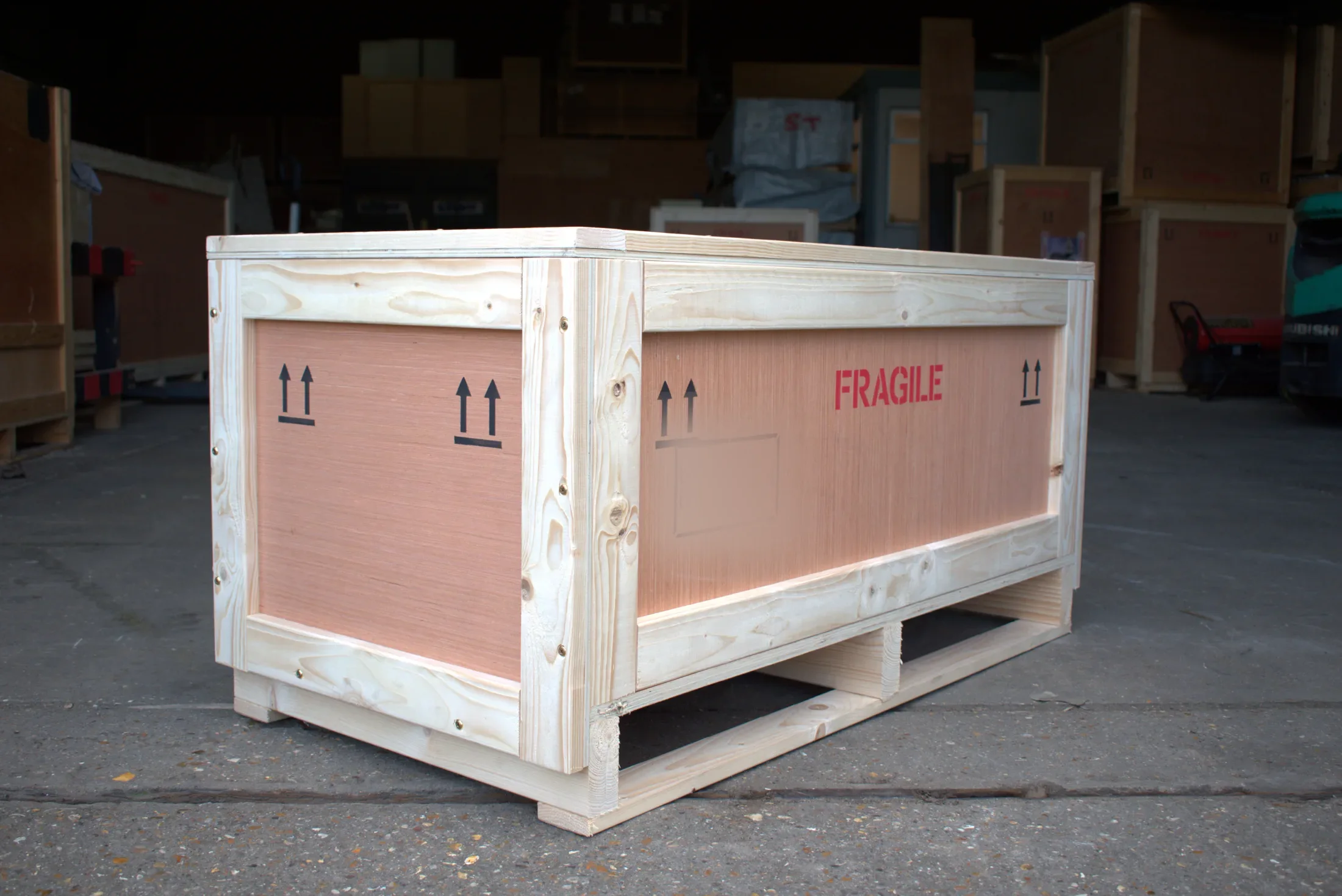
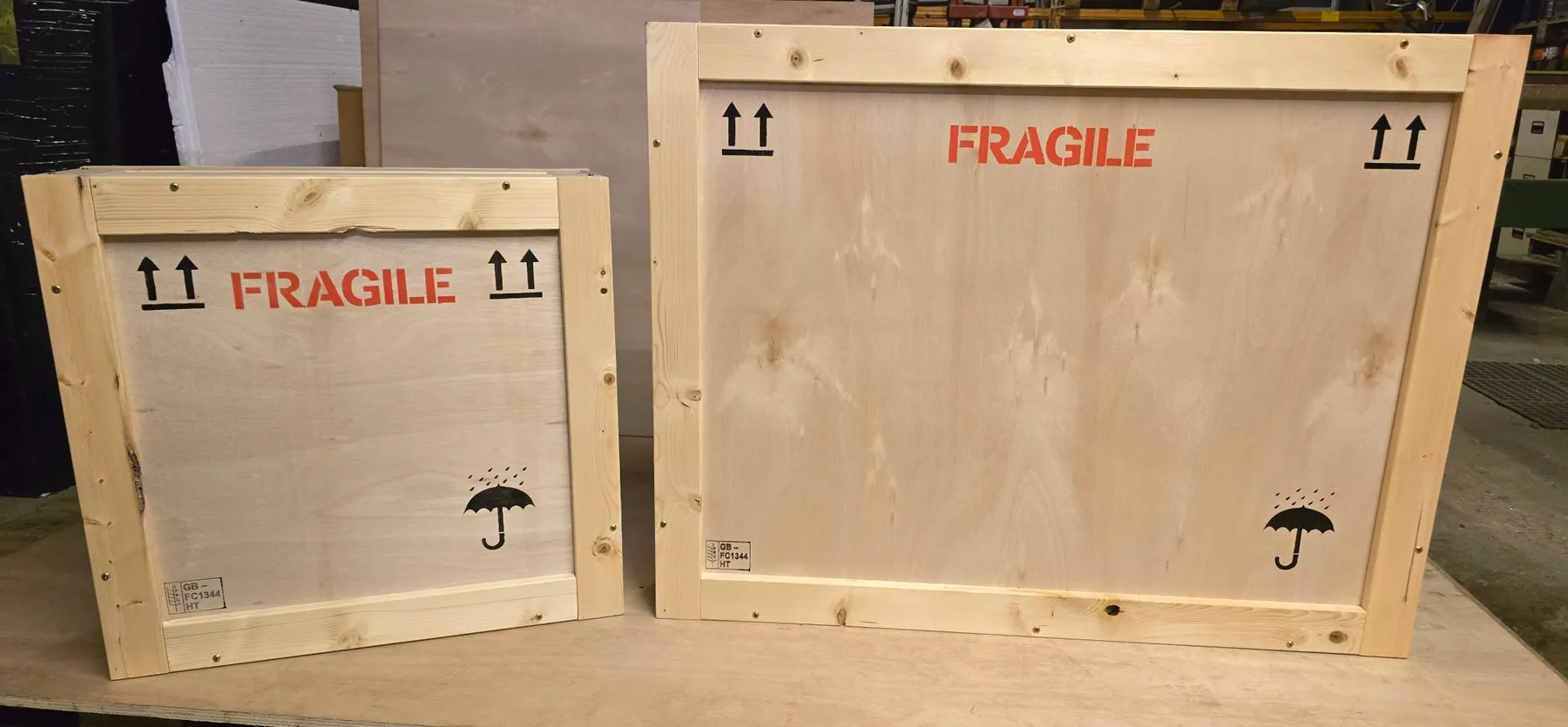
What the stamp on a wooden crate means, why solid wood packaging must be heat treated to go abroad, and why plywood is exempt. Read the guide.
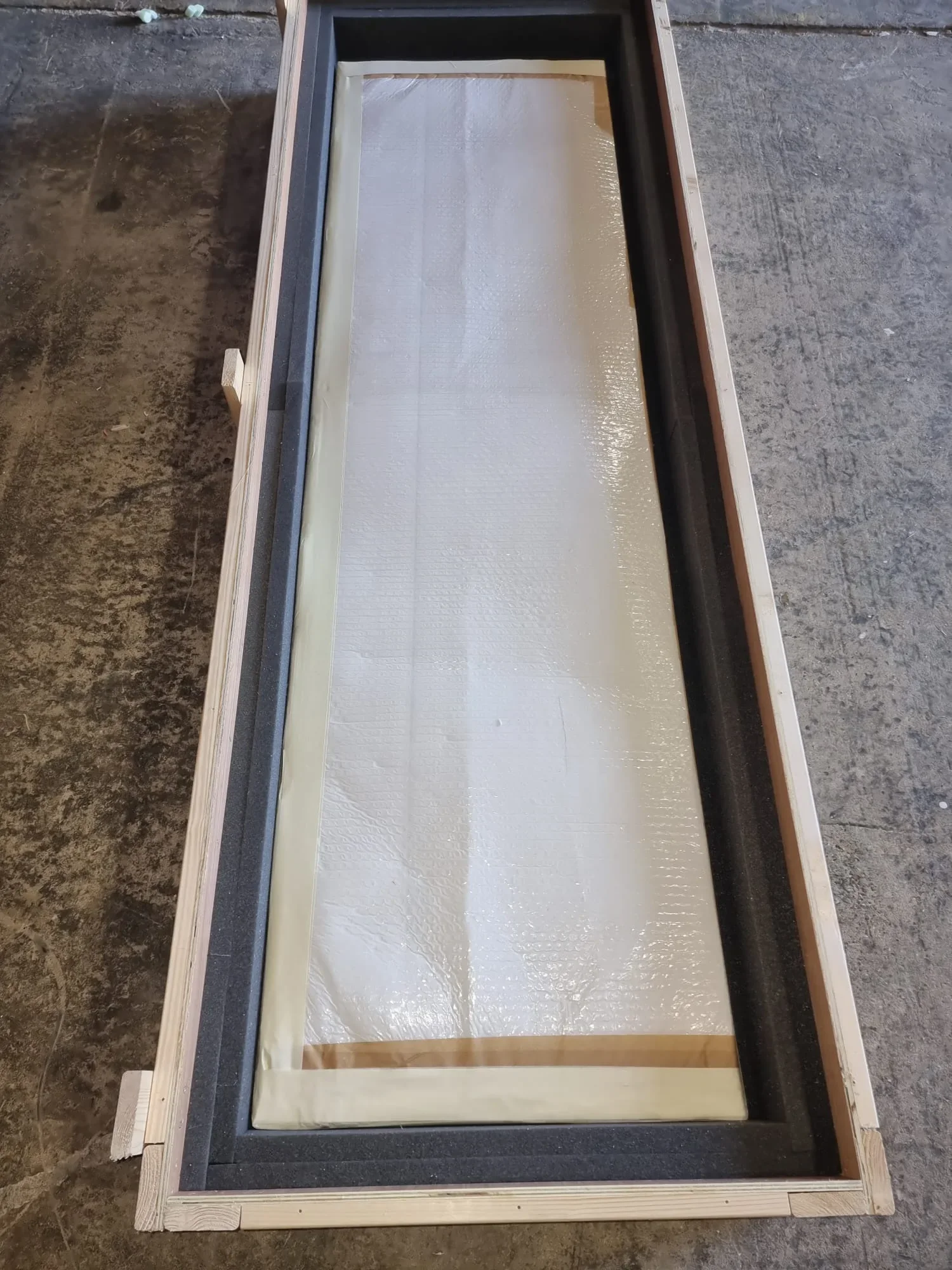
When a painting or antique needs a bespoke wooden crate, when a cardboard box or one of our small presentation boxes is enough, and how to decide. Read the guide.
Pendulum, weights and hood off, case upright: the safe order, step by step. Read the guide.
Taping the glass, protecting the frame and why a mirror always travels on its edge. Read the guide.
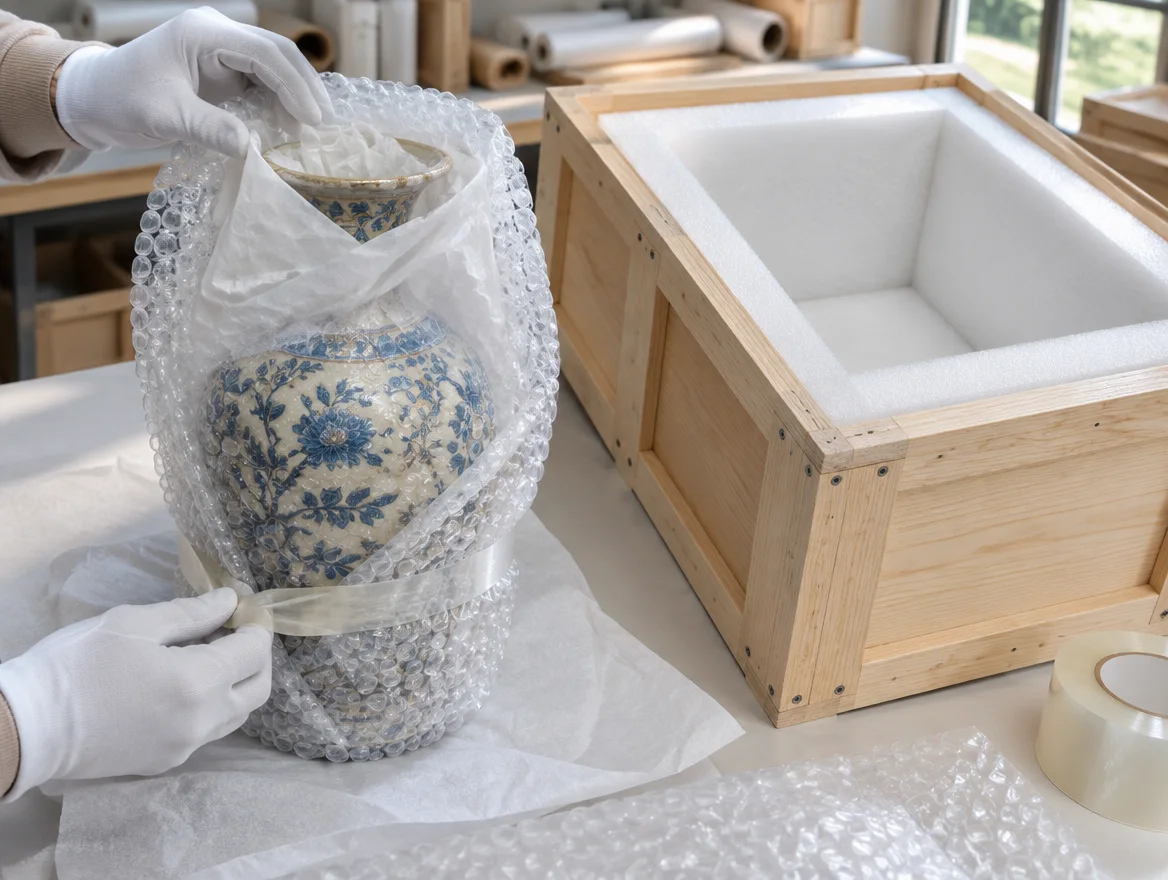
Tissue first, then bubble wrap, then the right crate or box, measured properly. Read the guide.
Which page do I need?
Start with what you're sending. Each row points to the guide that covers it, then the page that explains how we crate it.
| What you're sending | Start with | Then see |
|---|---|---|
| A painting or framed print | How to ship a painting | Paintings and fine art crating |
| A mirror or framed glass | How to ship a mirror | Mirrors and glass |
| A grandfather or longcase clock | How to move a grandfather clock | Antique clocks |
| A piano | Piano shipping | Crating for removal companies |
| A guitar, violin or brass instrument | Shipping musical instruments | Crates built to your measurements |
| Antique furniture | Antique furniture | Shipping furniture to the USA |
| Sculpture, marble or stone | Sculpture and heavy pieces | Marble and stone |
| Anything in a wooden crate going abroad | ISPM 15 explained | Export packing and plywood crates |
Quick answers
Some of the questions the guides answer, in a sentence each.
| Question | Short answer | More |
|---|---|---|
| Do wooden crates need a stamp to go abroad? | Usually yes, for solid wood parts. They must be treated and marked under ISPM 15. | ISPM 15 guide |
| Does ISPM 15 apply to plywood? | No. Plywood, OSB and MDF are processed wood and exempt. A solid timber frame still needs treating. | ISPM 15 guide |
| Does my painting need a crate? | If it's valuable, fragile, glazed or going abroad, a crate is the safest choice. | Crate or box |
| Can bubble wrap touch a painting? | No. Wrap the surface in tissue paper first. | Crate or box |
| Should a painting come out of its frame to travel? | Usually not. The frame is what holds it still in the crate. | Painting guide |
| Should a mirror travel lying flat? | No. It travels standing on edge, its weight along the bottom edge, with the glass taped. | Mirror guide |
| Can a grandfather clock move in one piece? | No. The pendulum and weights come out, the hood comes off and the case stays upright. | Clock guide |
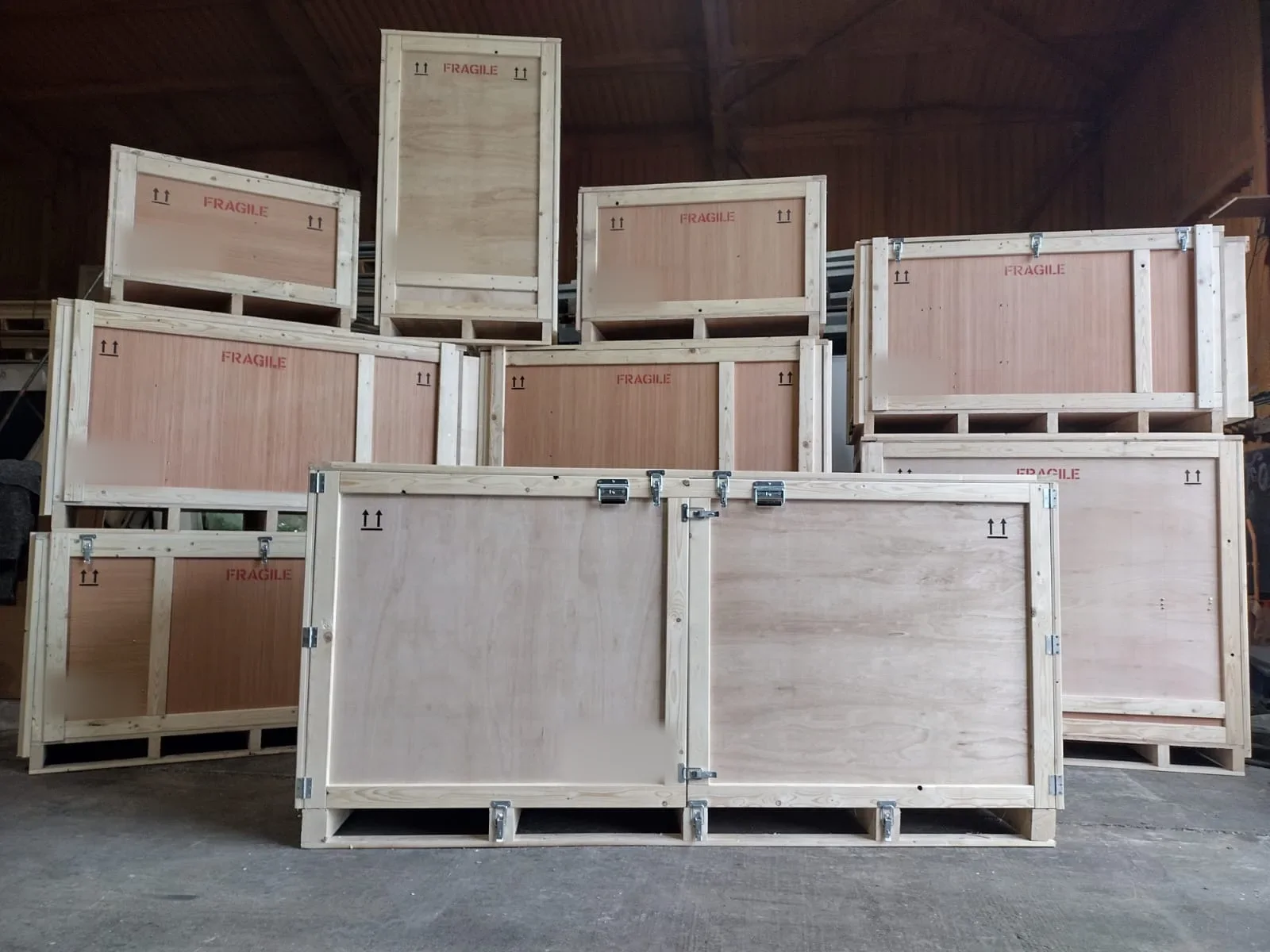
Send us a photo and the measurements.
We’ll recommend the crate, the lining and the supports, and come back with a bespoke quote.
How we write these guides
- Answer first. The first lines of every guide answer the question. The rest is there if you want the detail.
- Checked against official sources. Where a guide covers rules, such as ISPM 15, we check it against official sources like GOV.UK and the IPPC, and say when it was last updated.
- No guesses. Rules on duty, export licences and paperwork change. Where something depends on your piece or the current position, we say so instead of giving a confident answer that might be wrong.
- From the workshop. The packing advice comes from what we do every day: wrapping surfaces, taping glass, lining crates and holding pieces still.
Our guides are general information, not legal or tax advice. For rules that affect your piece, check the current position with the official body, your shipper or a customs agent. We don't handle customs paperwork.
Questions people ask us before they ship
These are the questions that come up again and again. The guides above answer some of them; our other pages answer the rest.
- How much does it cost to ship a painting? It depends on the piece, the crate and the route. See how your quote is worked out.
- Is there import duty on art going to the USA? See shipping art to the USA and check the current position for your piece.
- Do I need an export licence for an antique? Some older objects need one, depending on what they are and their value. See antique shipping.
- Is my piece insured on the way? See insurance.
- How do you pack a mirror or a clock? See mirrors and glass and antique clocks.
Going further
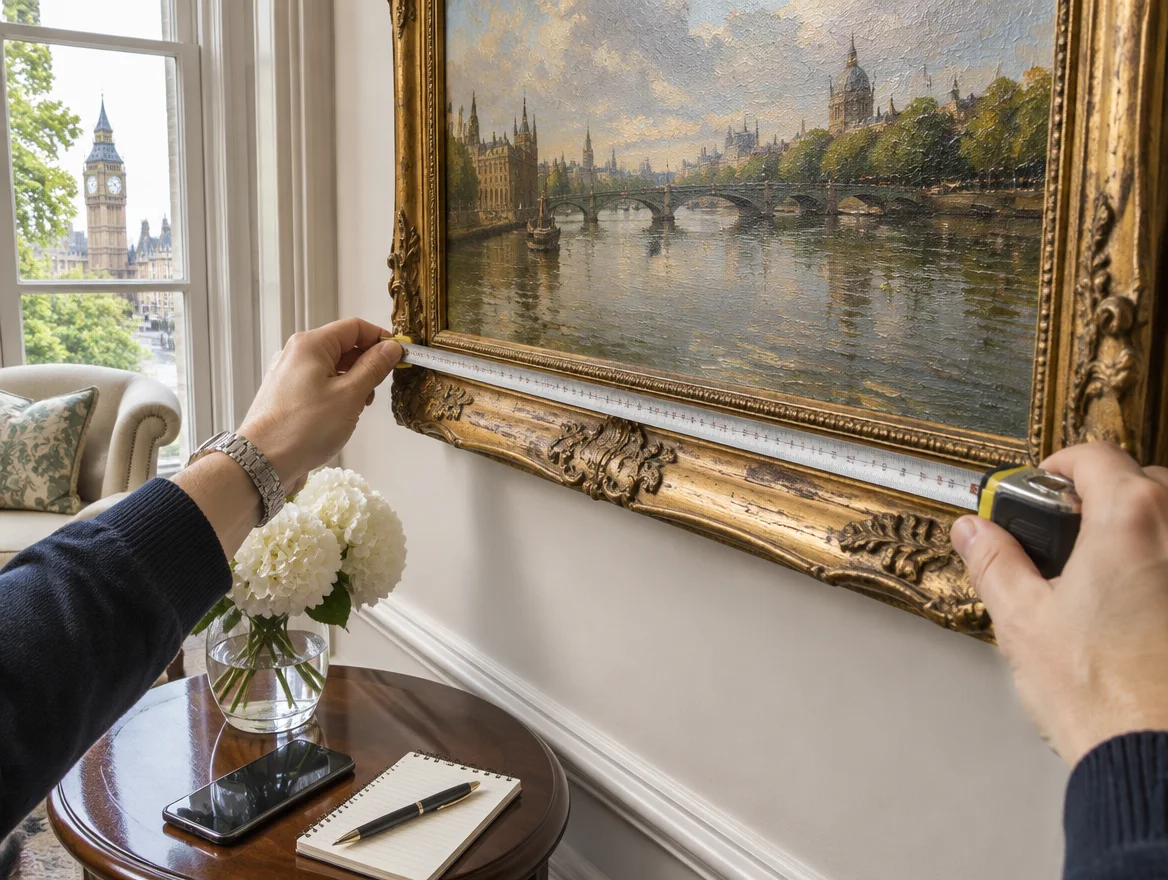
If you're ready to send something, these pages cover each part of the job in more detail:
- How it works: from your first message to delivery, and what happens on collection day.
- Fine art crating: how we wrap and crate paintings, sculpture and installations.
- Shipping art from the UK to the USA: our most common route.
- Shipping art to Europe: what changed after Brexit.
- Art handling and art courier: lifting, wrapping and moving art by hand, across the UK and into Europe.
- Insurance: why transit cover matters for art and antiques.
- Questions: short answers to everything else people ask us.
More guides are on the way. If there's a question you'd like answered, tell us.
Common questions
Which guide should I read first? +
Start with what you're sending: the painting, mirror or clock guide for those pieces. If it's going abroad in a wooden crate, read ISPM 15 explained as well.
Are the guides checked against official rules? +
Where a guide covers rules, such as ISPM 15, we check it against official sources like GOV.UK and the IPPC. Rules change, so check the current position for your piece too.
Can I pack something myself using the guides? +
For a smaller, sturdier piece on a short trip, yes. For anything valuable, fragile, heavy or going abroad, a crate built around the piece is the safest choice.
Can you just build the crate and send it to me? +
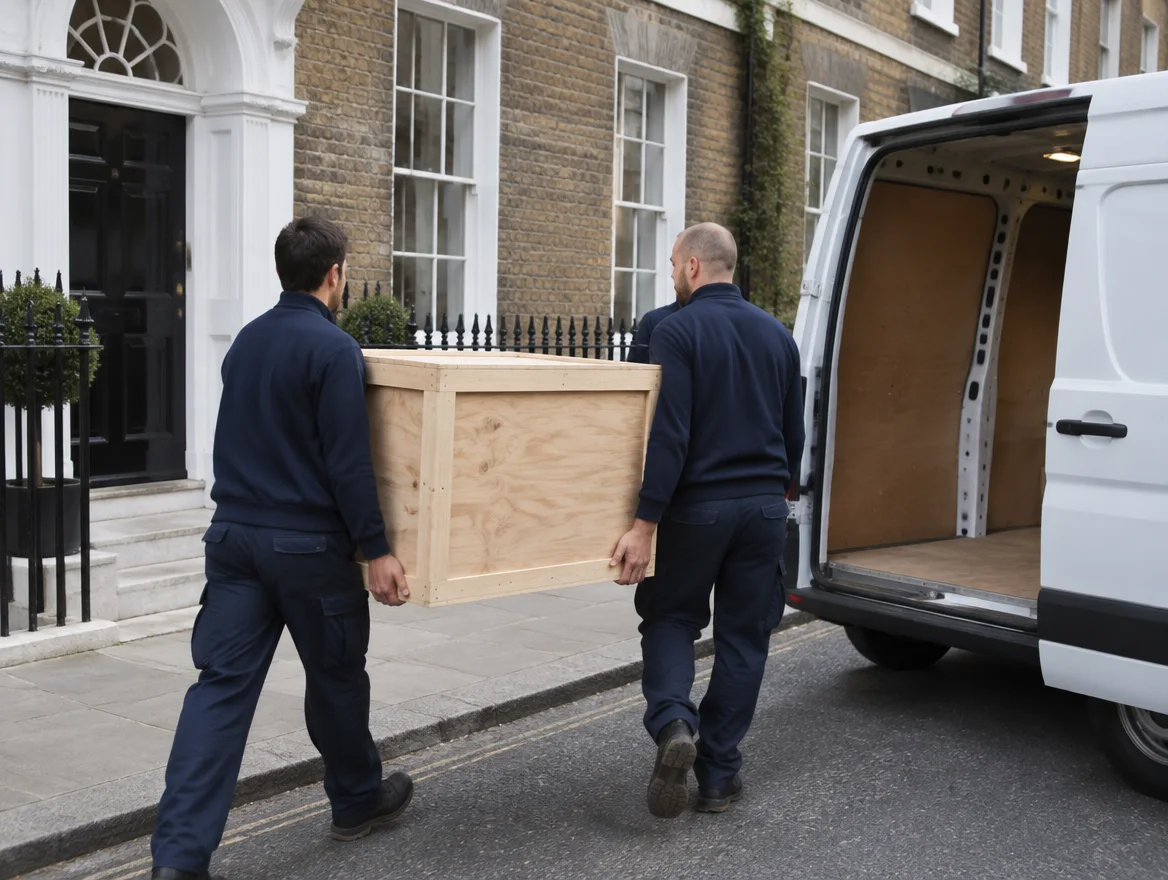
Yes. Send us the measurements and we build a crate to them and deliver it to you. See crates built to your measurements.
Do you handle customs paperwork? +
No. Customs paperwork is arranged by you, your shipper or a customs agent. Our guides say where to check the current position.
Is a guide the same as a quote? +
No. Every quote is bespoke, based on the piece itself, where it's going and how. Send us the details and photos and we'll come back with a price.
Read a guide
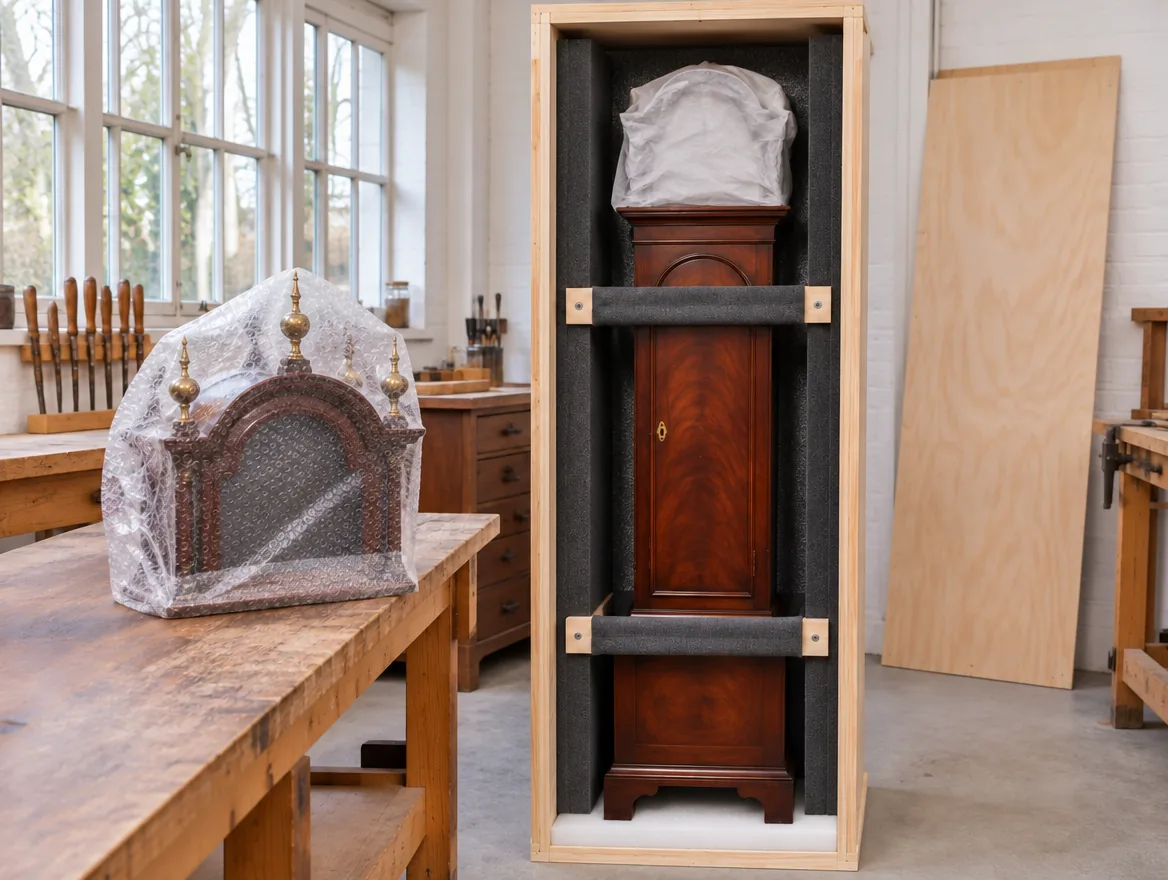
Pendulum, weights, hood and case, in the right order.
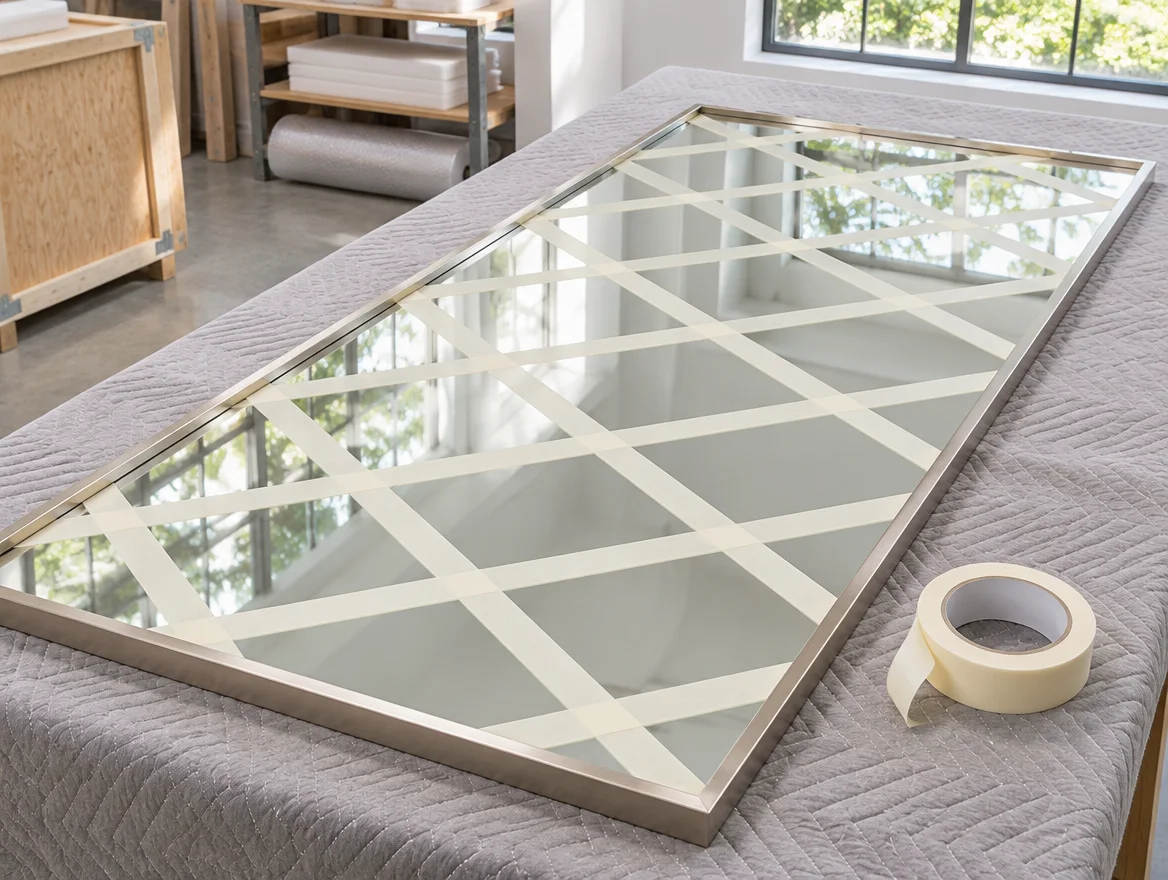
Tape, corners, battens, and why it stands on edge.
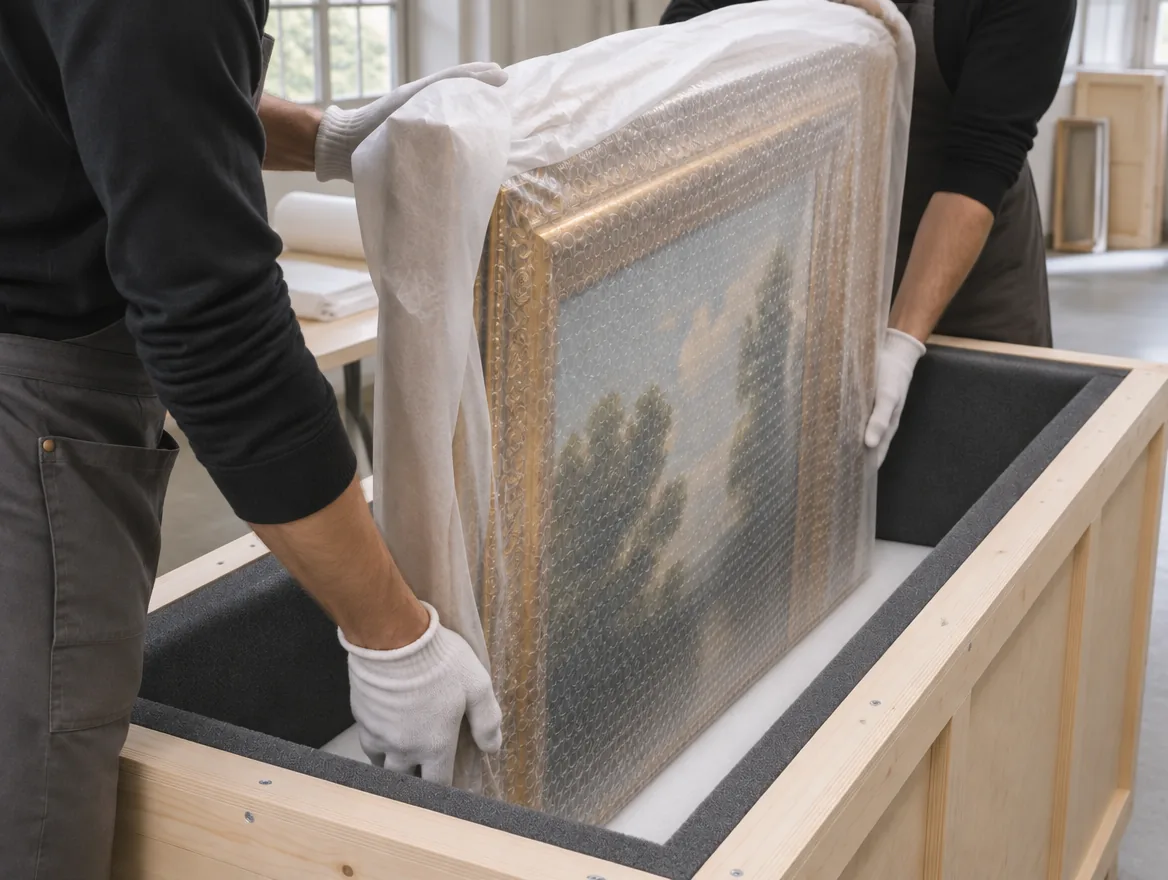
Wrap order, glass, rolling, measuring and crates.
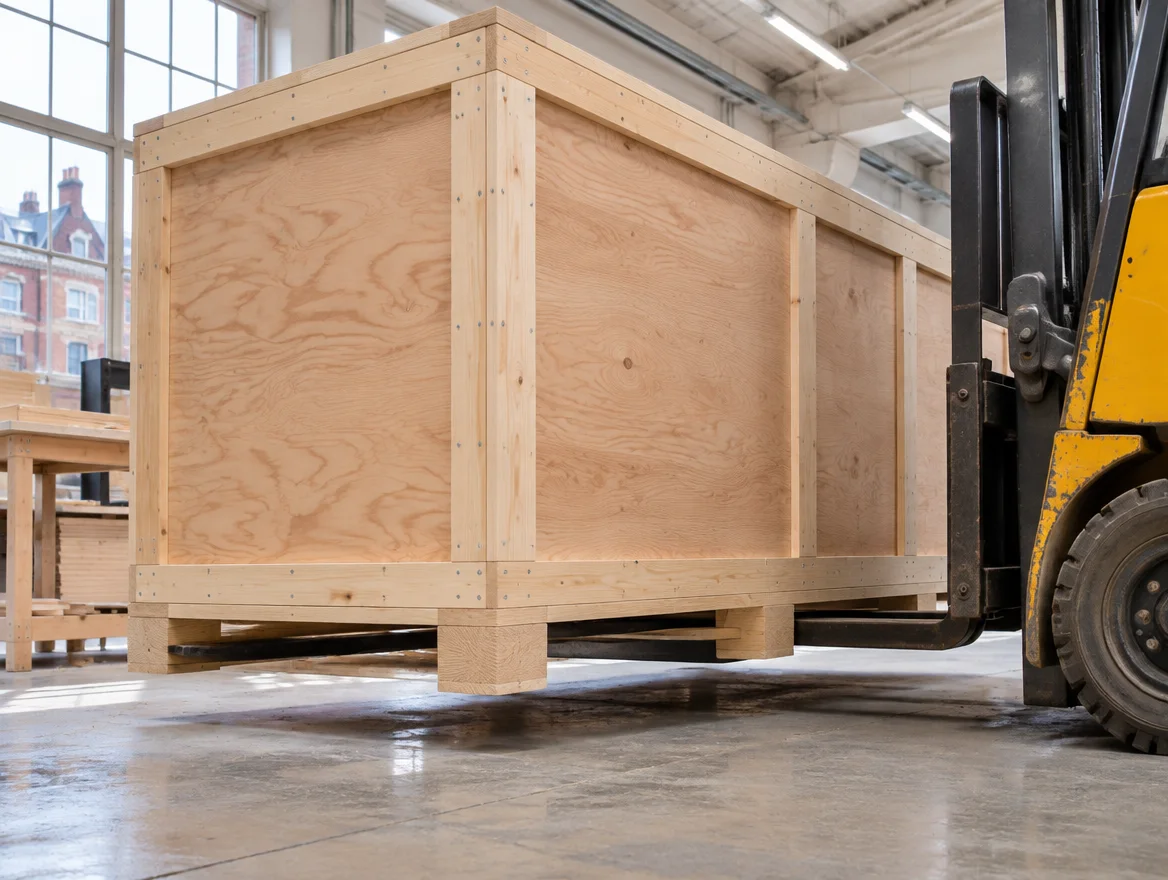
The stamp on a wooden crate.
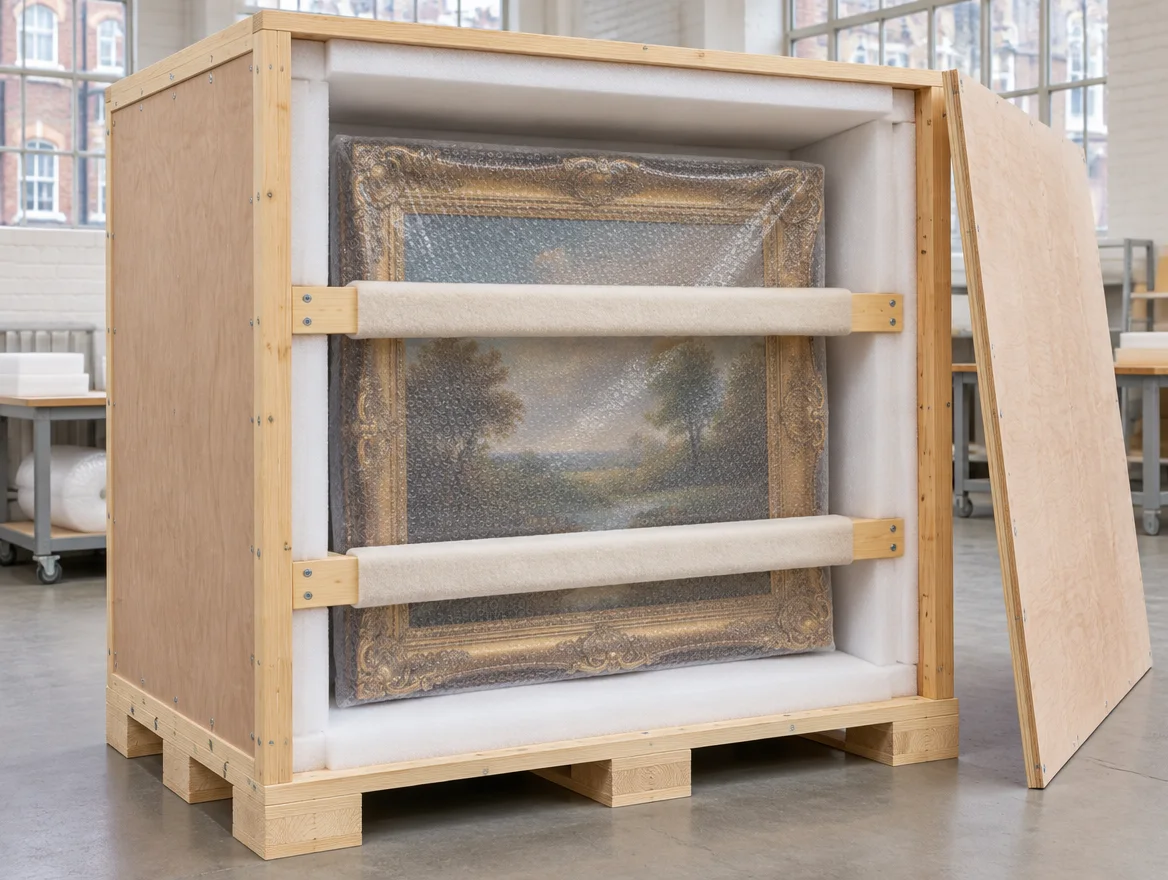
Wooden crate or box: what your piece needs.
Swipe for more →
Tell us what needs to travel.
Every quote is bespoke, based on the piece itself. Send us the details and we'll come back to you.