


Chandelier packing and shipping, drop by drop
Chandelier packing starts before anything comes apart: every drop, arm and candle cup is photographed and labelled, so the chandelier can be put back exactly as it was. Then the drops come off and are wrapped one by one, and the frame travels held still in a crate built around it.
- Pieces
- Chandeliers, lamps, wall lights, lanterns
- Drops
- Wrapped one by one, in labelled trays
- Frame
- Held still on foam supports
- Two ways
- We collect it, or built to your sizes
How does chandelier packing work?
A chandelier is taken apart into its frame and its loose parts, and each travels in its own foam. The crystal drops are the parts most at risk of chipping, and the frame is the part that bends. This is the usual order.
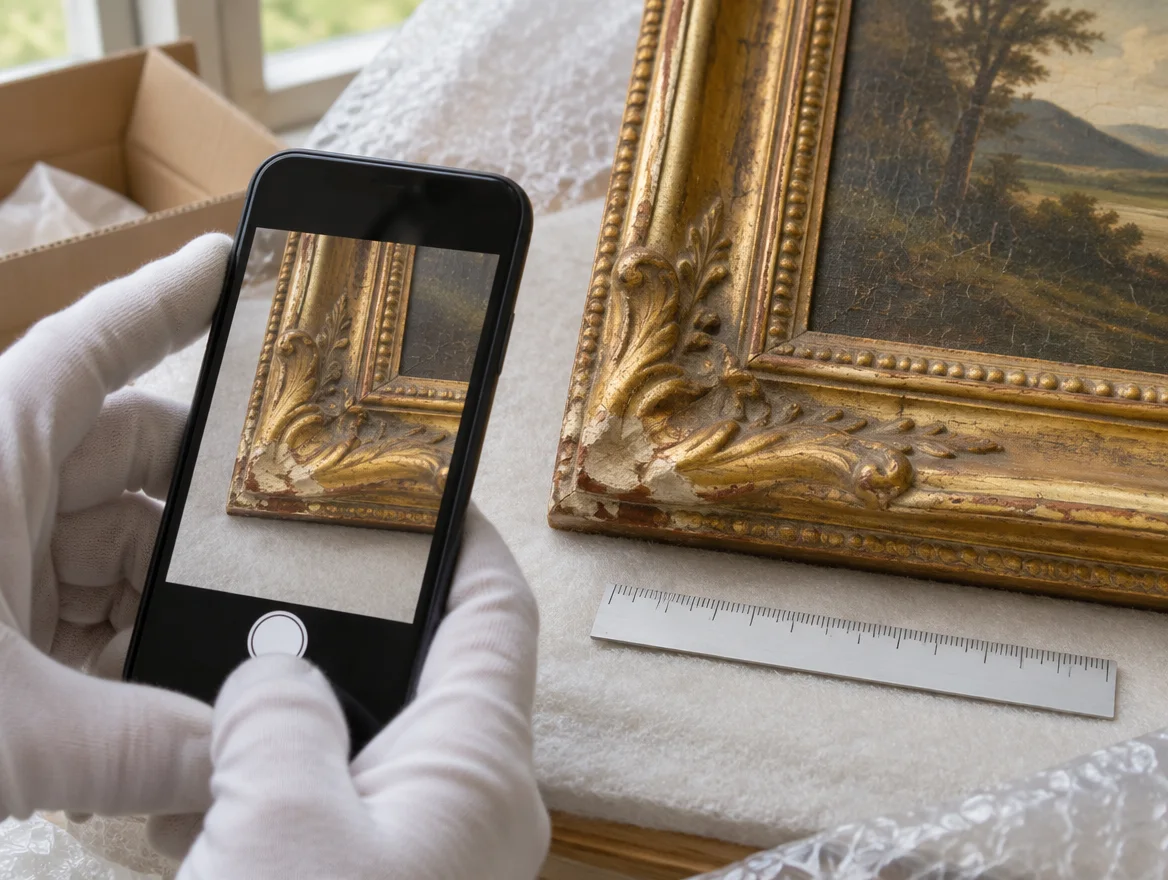
- 01Photograph everything
Before a single drop comes off, the chandelier is photographed from every side and close up, tier by tier, so the pattern of drops, chains and swags is on record.
- 02Label as it comes apart
Arms, drops, chains, candle cups and bobeches are labelled with their tier and position, and kept in their groups.
- 03Drops off, one by one
Each drop is unhooked and wrapped on its own in tissue paper, so no two pieces of glass ever touch.
- 04Into labelled foam trays
Wrapped drops are laid in foam trays, one tray per tier or group, matching the labels.
- 05The frame held still
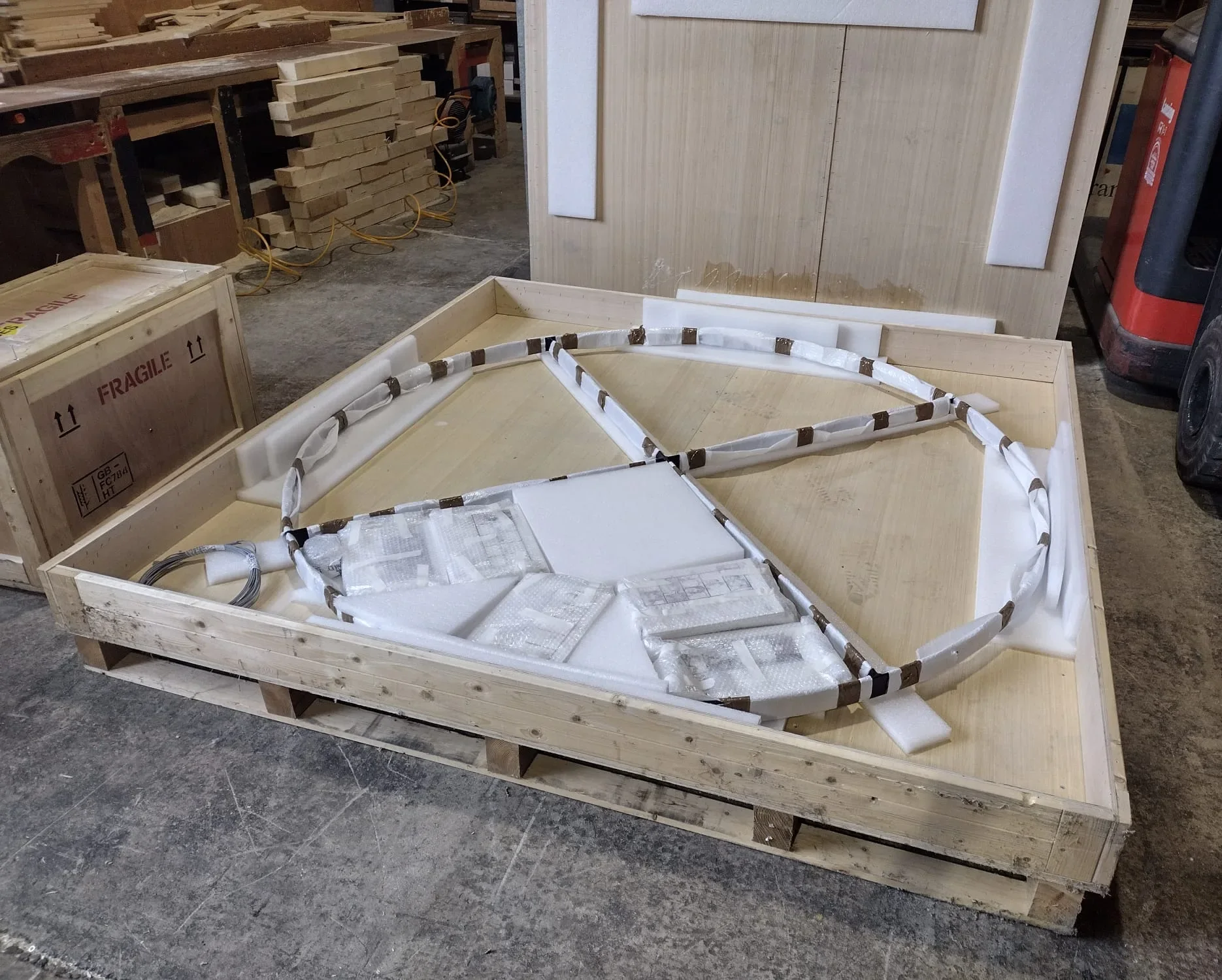
The frame goes into its crate, held at its strong points by foam supports, with the arms padded so they carry no weight.
- 06Close and mark
Trays and frame travel together, with a list of what's inside, marked Fragile and This way up.
Photographing and labelling before dismantling
The most common problem with a chandelier after a move isn't breakage. It's a box of hundreds of drops and nobody sure where they go. A large chandelier can have several tiers and many shapes and sizes of drop, and the pattern is easy to lose.
So the photographs come first: the whole chandelier, then each tier, then close-ups of how the drops link, which pins hold them and how chains and swags hang. Every part is labelled as it comes off and laid in a tray that matches. If you have photos of it hanging and lit, send them too; they're the best guide for whoever puts it back.
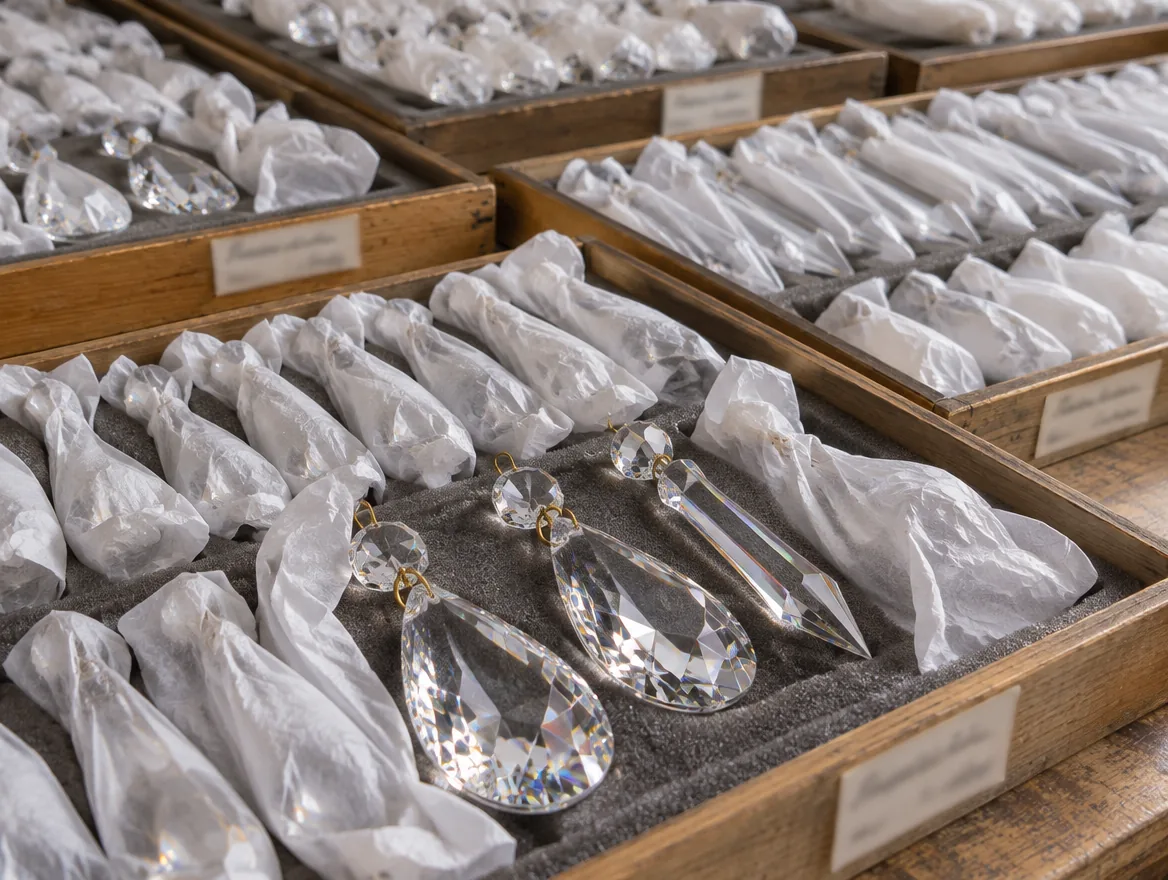
Unhooked, wrapped one by one, laid in a tray per tier.
Kept in their runs, never tangled, labelled by position.
Numbered to their sockets, padded and supported along their length.
Off, wrapped and boxed, labelled to their arm.
Why the drops come off
Crystal drops hang on small brass pins or wire hooks, and they swing. Left on the frame, they knock against each other and against the arms with every bump, and on a long journey that's thousands of small knocks. A chip on a cut crystal drop is hard to hide, and pins bend or pull through.
Off the frame, each drop is wrapped in tissue and laid flat in its own place in a foam tray. It can't swing, it can't touch another drop, and its pin stays straight. Small drops can share a tray, each kept apart from its neighbours.
Holding the frame still
With the drops off, the frame is lighter, but its arms are long and easily bent. The frame is wrapped, then held in its crate by foam supports at its strong points: the central stem, the main ring and the top. The arms are padded so they rest on nothing and carry no weight. The aim is the same as with any piece: the crate takes the knocks, and the frame can't move inside it.
Glass-armed chandeliers, such as Venetian and Murano pieces, are more fragile again. Their glass arms and flowers usually come off the frame and travel like the drops, each wrapped and in its own cut foam space. Tell us what your chandelier is made of when you ask for a quote.
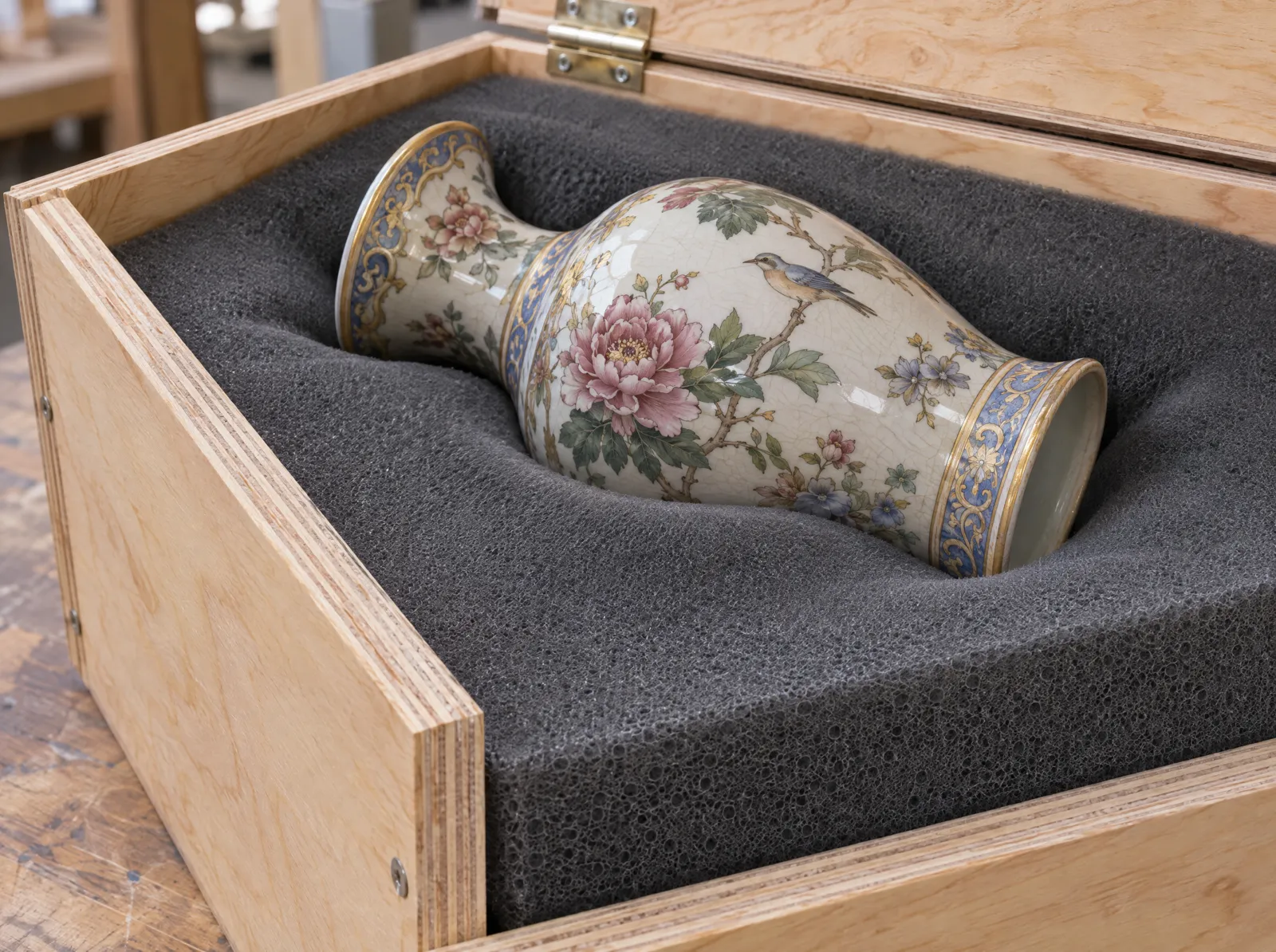
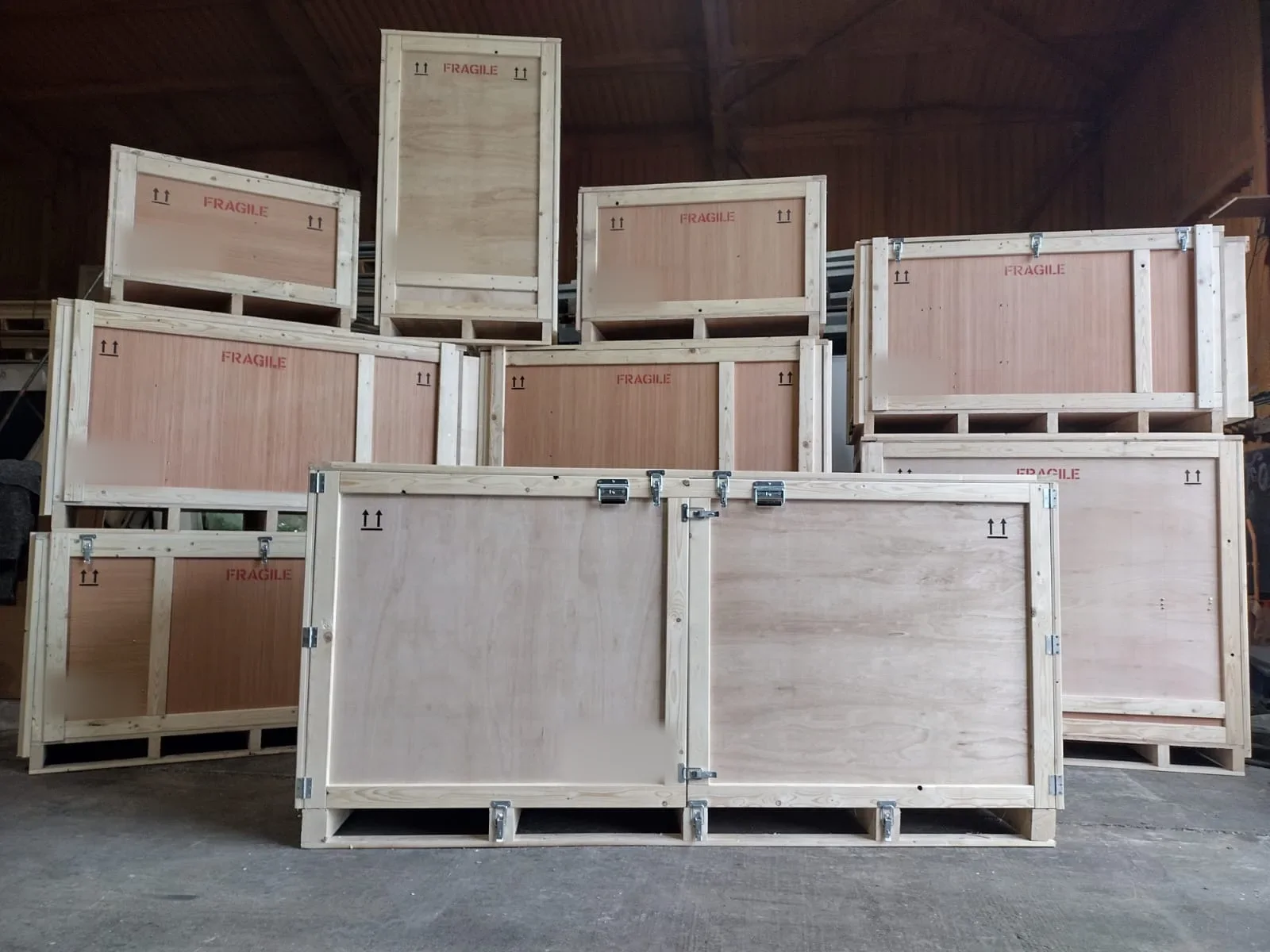
Send us a photo and the measurements.
We’ll recommend the crate, the lining and the supports, and come back with a bespoke quote.
Wiring, candle cups and the ceiling fitting
Taking a chandelier down from a ceiling means disconnecting it from the electrics, which should be done by a qualified electrician who can also make the fitting safe. Tell us whether yours is already down or still hanging, and ask us how we can work around the electrician's visit.
- Bulbs come out and are packed apart, or left behind if you prefer.
- Wiring inside the frame is coiled and secured so it can't snag or be pinched, and loose cable ends are protected.
- Candle cups, sleeves and bobeches come off and are wrapped and boxed, labelled to their arm.
- The ceiling canopy and hook travel with the chandelier, wrapped and labelled, with any fixings bagged.
Going abroad? Electrical standards differ. The US, for example, uses a lower mains voltage than the UK. Have a qualified electrician at the other end check the wiring and fittings before it's hung and switched on.
Table lamps, shades and wall lights
Smaller lighting follows the same thinking: take off what moves, protect what's fragile, and hold the rest still.
- Table and floor lamps. Bulbs out, harps and finials off and packed separately. The base is held by its body, never by the fitting or the stem.
- Shades. A shade crushes easily and marks if anything rests on it. Each travels in its own space, with nothing inside or on top of it, wrapped in tissue so fabric and paper aren't marked.
- Wall lights and sconces. Drops and glass shades off, wrapped and trayed, backplates padded, fixings bagged and labelled to their light.
- Lanterns. Glass panels are taped in a lattice or packed separately, depending on how they're fixed, with the frame held still on foam.

Shipping a chandelier abroad: what changes?
Shipping a chandelier overseas means more handling and longer in the crate, so the packing has to stand up to both. Everything above still applies, plus a few extras.
- Trays are fixed in place, not just set in, because the crate may be handled many times by people who don't know what's inside.
- A contents list goes with it, matched to the labels, so whoever unpacks knows exactly what should be there.
- Paperwork. An antique chandelier is a cultural object like any other antique, and a valuable one may need a UK export licence. Pieces with protected materials may need CITES permits. We don't handle customs paperwork; you, your shipper or a customs agent will arrange it. See antique shipping.
- Rehanging. Plan for an electrician and, for a large chandelier, a specialist to rehang and dress it, using your photographs and the labels.

Two ways to work with us
For a chandelier, the choice usually depends on where it is and who is taking it down.
Measuring a chandelier: the drop from the top of the canopy or hook to the lowest point, the widest span across the arms, and the size of the frame with the drops off. If the arms come off, measure the frame without them too.
If you'd like one company to handle the whole journey, we can arrange the onward shipping as well.
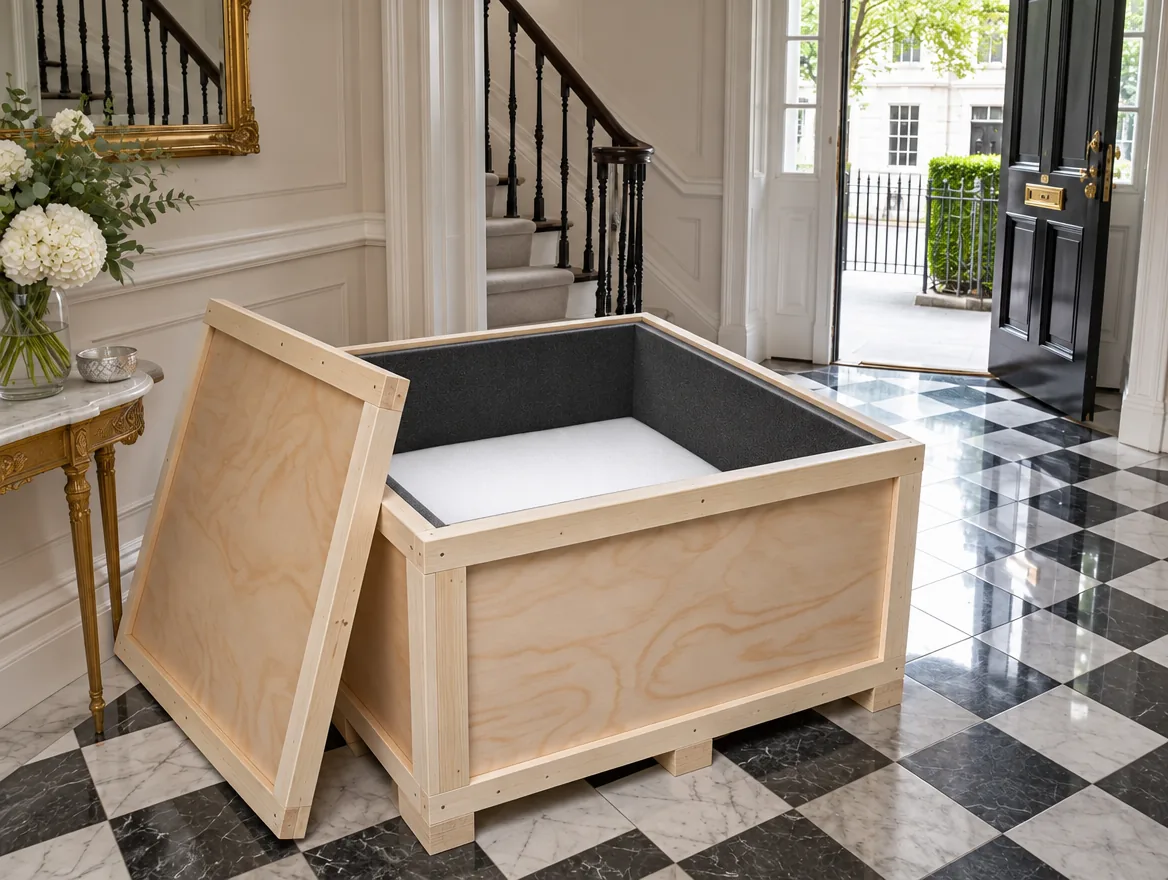
Once it's down, we collect it from your home, a dealer, a saleroom or storage, label and pack every part and build the crate at our warehouse. Your courier or shipper collects the finished crate from us. Collect and crate
If you or your lighting specialist are packing it, send us the measurements of the frame and of the trays or boxes you need. We confirm them with you, build the crate and deliver it to your address. Crates built to your measurements
What to tell us for a quote
- What it's made of: crystal, glass, gilt bronze, brass or wood, and roughly how old it is
- Height, width, and the number of arms and tiers
- Roughly how many drops, if you know
- Is it still hanging, and is an electrician booked to take it down?
- Photos of it hanging, lit if possible, and of any missing or broken drops
- Collection and delivery addresses, and access at both ends
Then request a quote. Transit insurance is bought by you, job by job: see insurance. Designers and dealers sending lighting regularly, see dealers and interior designers.

Common questions
Can a chandelier travel fully assembled? +
Rarely safely. A small chandelier with few drops can sometimes travel whole in a crate built around it, but on most, swinging drops and long arms are a risk. Taking the drops off is the safer choice for almost every chandelier.
Do you take chandeliers down from the ceiling? +
Ask us. Disconnecting a chandelier from the electrics is a job for a qualified electrician, and we can plan the collection around their visit.
Do you rehang the chandelier at the other end? +
Ask us. Most owners use an electrician and, for a large piece, a lighting specialist to rehang it. Our photographs and labels make their job much easier.
What if some drops are already missing or broken? +
Tell us, and send photos. We record them in the condition photos, so nobody mistakes old damage for new. Broken drops are wrapped and packed like the rest, in case they can be repaired.
Can you ship a pair of chandeliers or a set of wall lights? +
Yes. Each light gets its own trays and labels, so parts from one never get mixed with the other. They can share a crate or travel in a set of crates.
How long does it take to pack a chandelier? +
It depends on its size and how many drops it has. Ask us with photos and a rough count of drops, and we'll tell you what to expect when we quote.
How much does chandelier packing cost? +
Every quote is bespoke, based on the chandelier itself: its size, how many parts, how fragile it is, where it's going and how quickly. Send us the details and we'll come back with a price.
Is the chandelier insured in transit? +
Transit insurance is available for every export. It's bought by you, job by job, so the cover matches the piece being shipped. We also have public and product liability insurance.
Related

Every piece in its own foam space.
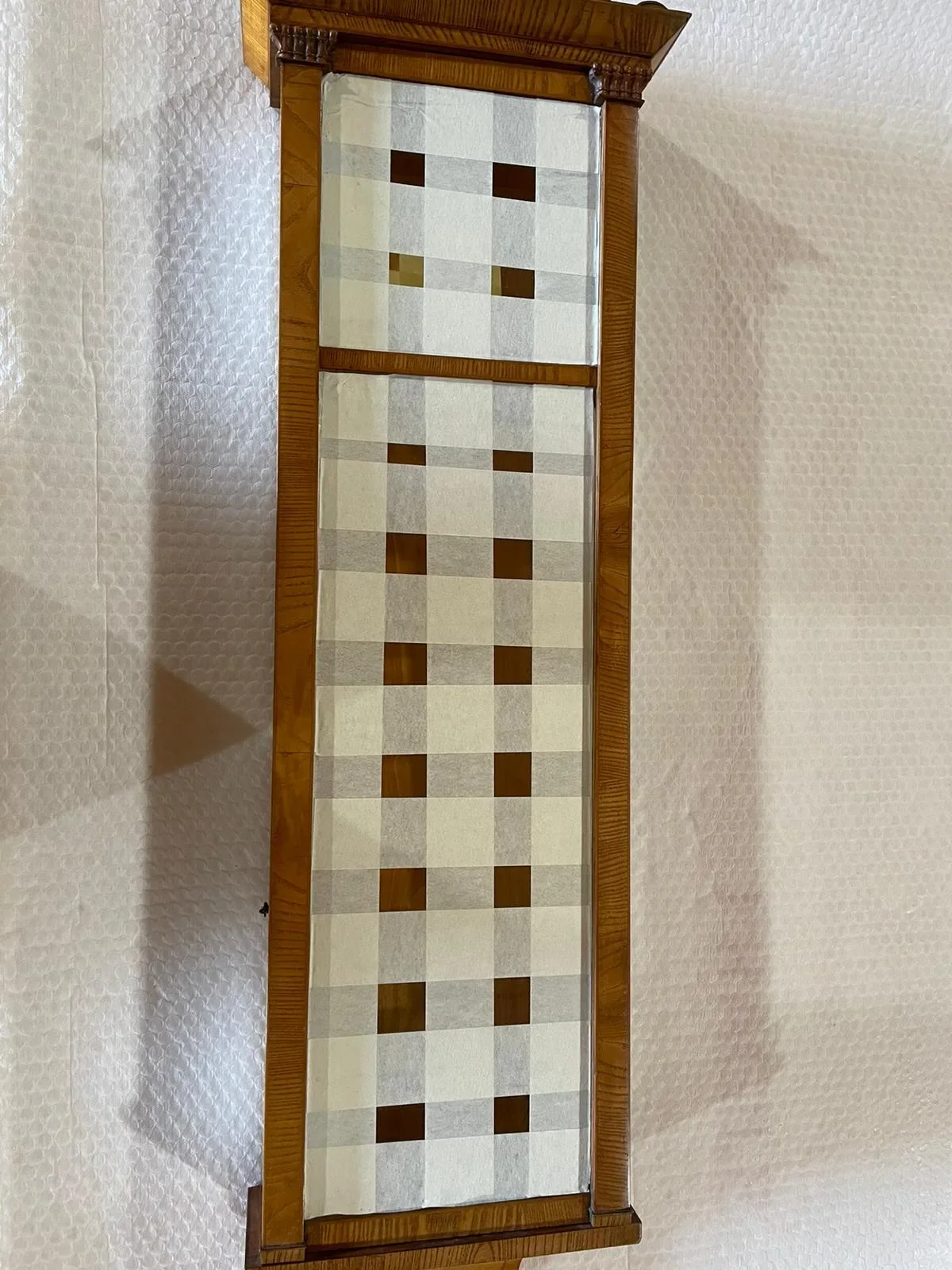
Glass taped, frame padded, crate to measure.

Clocks, mirrors, glass and collections.

Repeat work, many pieces, one point of contact.
Swipe for more →
Tell us what needs to travel.
Every quote is bespoke, based on the piece itself. Send us the details and we'll come back to you.