

Piano shipping: grand, upright and antique pianos
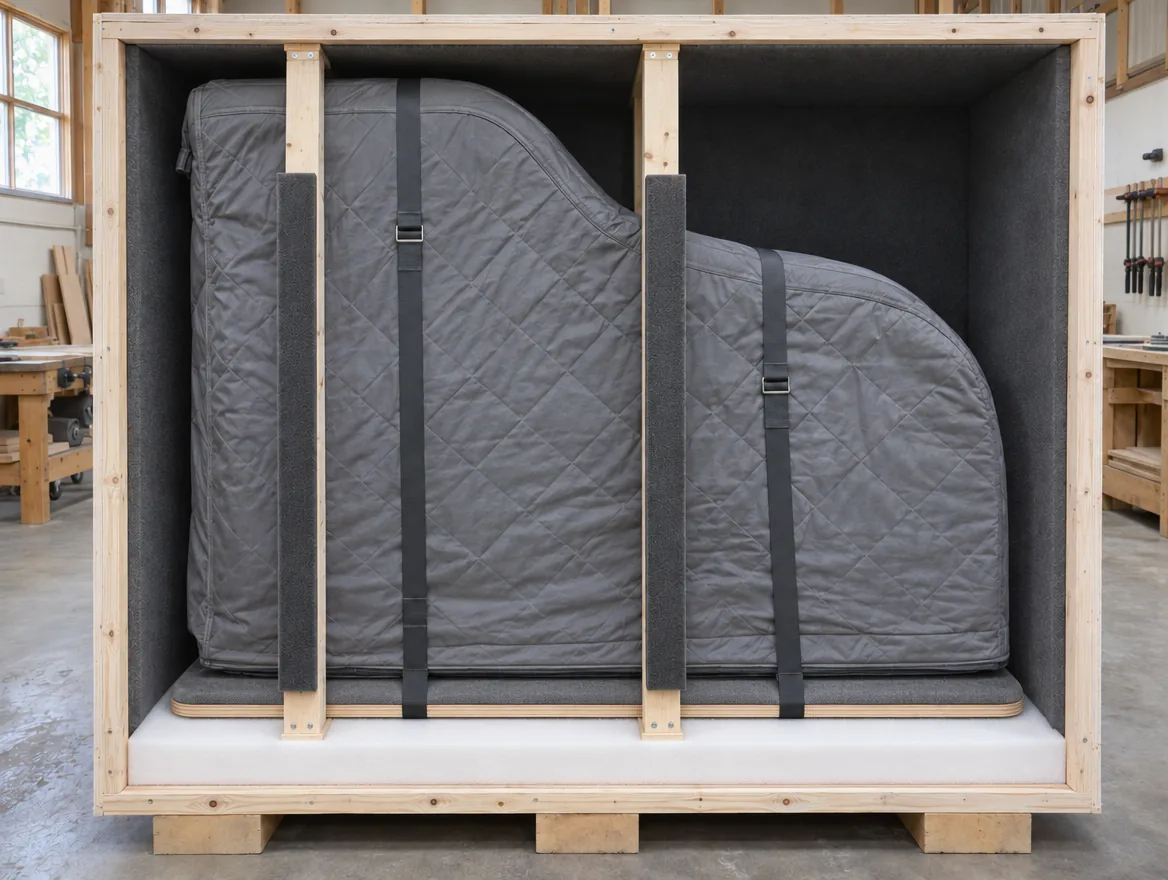
Piano shipping is about weight, balance and a soundboard that hates sudden change. We take a grand piano's legs, lyre and pedals off, stand it on its straight side on a padded piano board and crate it on firm foam; uprights travel standing, as they were built to. Then the crate goes on skids, ready for a forklift and a long journey.
- Pianos
- Grand, baby grand, upright, antique
- Grands
- On their straight side, on a piano board
- Base
- Firm white foam and timber skids
- Two ways
- We collect it, or built to your sizes
What does piano shipping involve?
Piano shipping means taking a very heavy instrument apart only as far as it was designed to come apart, then holding the rest so it can't move, flex or rock. Inside the case are a cast iron frame, a thin wooden soundboard and thousands of small moving parts.
We crate any object, item and weight, pianos included.
Legs, lyre and pedals off. The piano travels on its long straight side on a padded piano board.
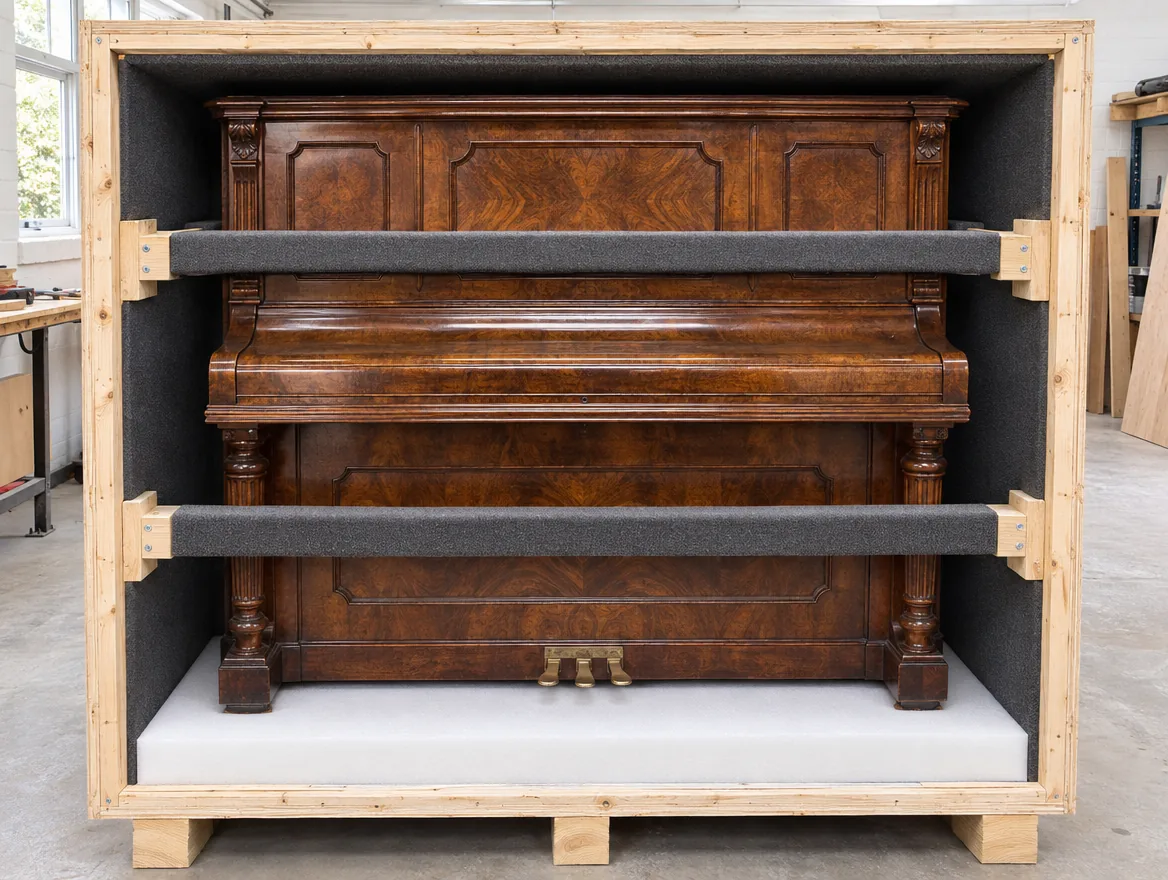
Travel standing up, the way they were built, on a firm foam base held by padded battens.
Older cases, old veneer and sometimes ivory keys or rosewood. Extra care, and sometimes permits.
Crated on skids for forklifts, with the long journey and the climate at the other end in mind.
How is a grand piano prepared for shipping?
A grand on three legs becomes a compact, solid case that can stand on its side. The order matters.
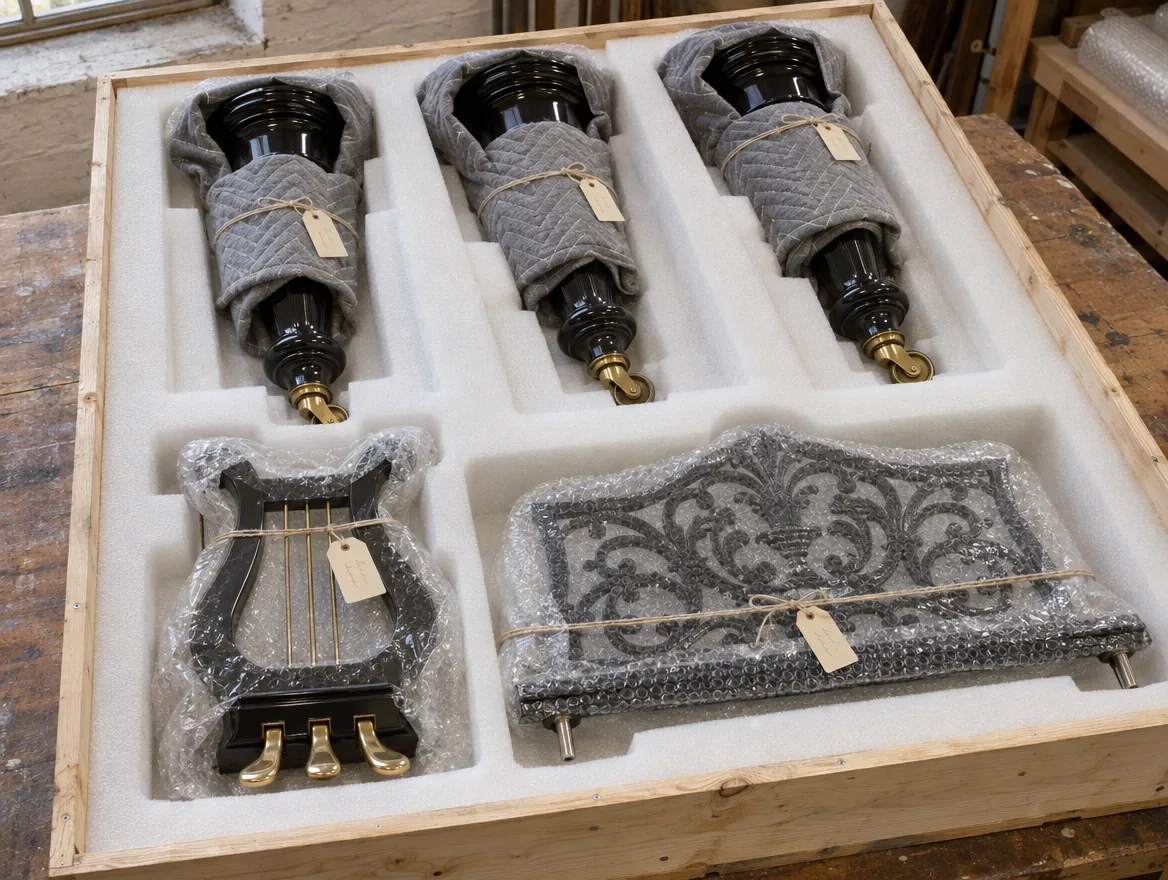
Legs, lyre, pedals and music desk travel in the same crate, each wrapped, labelled and in its own foam space, so nothing is left behind or rattles against the case.
- 01Photograph the condition
The case, finish, legs and any old repairs are photographed, so its condition is on record.
- 02Lid and music desk
The music desk slides out and travels wrapped on its own. The lid is either taken off at its hinges and packed separately, or closed, secured and padded, depending on the piano.
- 03Lyre and pedals off first
The lyre, the frame that carries the pedals, comes off before the piano is tipped. Left on, it would take the weight and snap.
- 04Legs off and labelled
Each leg is removed and labelled with its position, so each one goes back exactly where it came from.
- 05Onto the piano board
The piano is lowered onto its long straight side, onto a padded piano board, with firm support along its whole length.
- 06Wrapped and crated
The polished case is wrapped, then the piano goes into a crate built around it and is held so it can't rock, slide or lean.
Why does a grand piano travel on its side?
Because on its side it's at its strongest and most compact. A grand's legs are made to carry it standing still on a level floor, not to take the jolts of a lorry; every bump would lever at the joints. On its straight side, the weight goes through the solid rim of the case onto the piano board, and the piano becomes a narrow, stable shape that fits through doorways and into a crate.
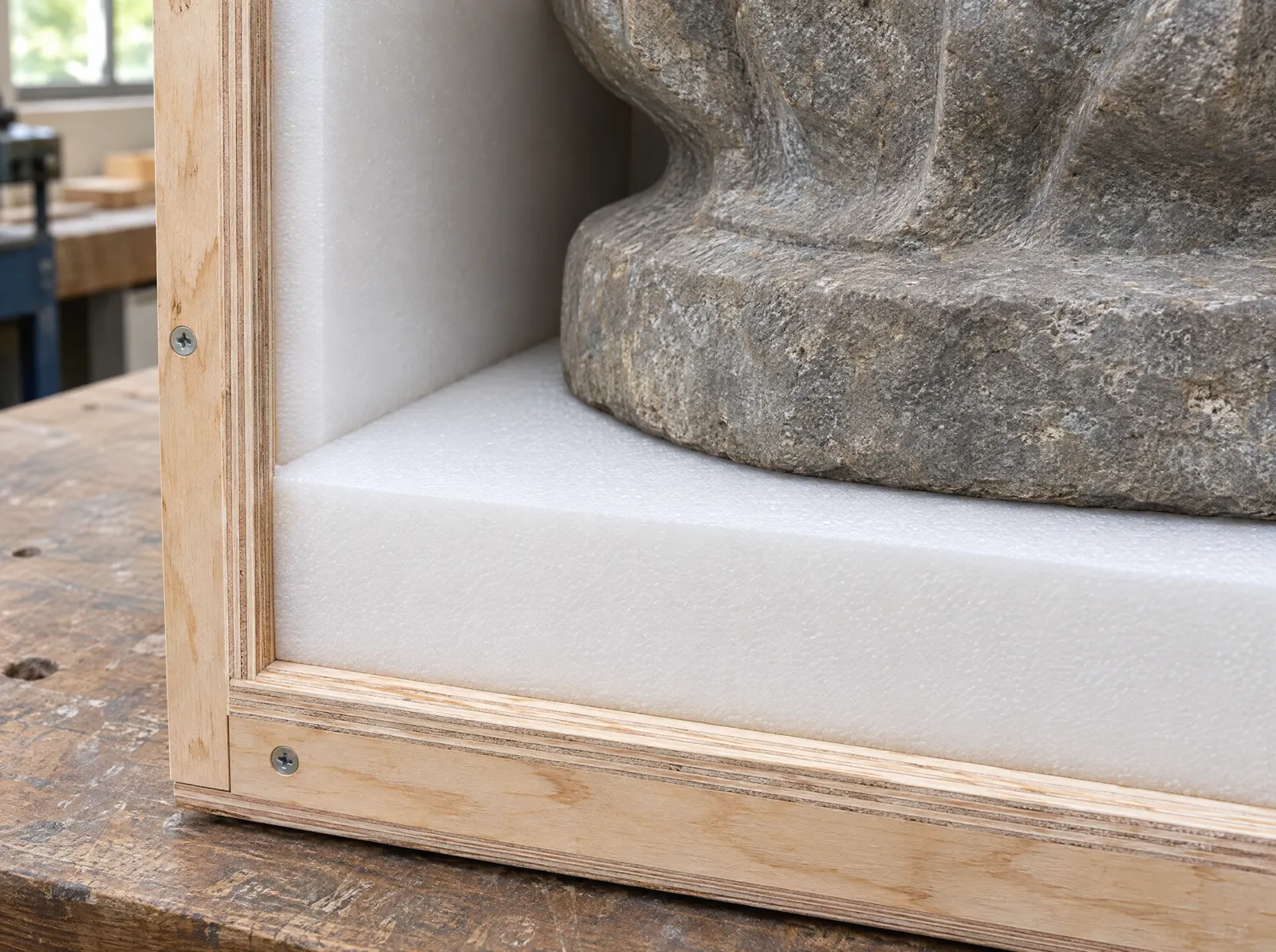
The straight side, called the spine, is the long flat side on the left as you sit at the keys. The piano board carries it along its whole length, never just at the ends. Under the board and the case, firm white high density foam takes the weight without sinking. Where the polished case touches the crate walls, soft charcoal HLB22 foam cushions the finish. Padded battens across the top hold the case at its strong points.
Supports run the full length of the piano, with no gaps. A piano is never held just at its corners.
Upright pianos are crated standing up
An upright piano travels upright, the way it's built to carry its weight. Laid on its back, the weight goes onto the back of the case, which isn't made to carry it.
So an upright stands on a base of firm white high density foam that runs its full width and depth, with soft charcoal foam lining the walls where the case could touch, and padded battens across the front and back holding it at the strong points of the case. The keyboard lid is secured, and candle sconces and loose fittings come off and travel in their own foam.
Uprights are tall and top-heavy, so the crate is built to keep it standing and is marked This way up.
How heavy is a piano? Stairs, lifts and doorways
Heavier than most people think. Makers' figures vary, but as a rough guide:
A piano that can't get out of the room is still stuck, however good the crate. Check the route at both ends.
- Steps and stairs, inside and out, and how many turns they have
- Door widths and heights along the whole route
- Any lift, its size and its weight limit
- Ground floor or upper floor, and the state of the floors
- Space outside for a vehicle with a tail-lift to stop and load
Send us photos of anything tight and tell us which floor the piano is on. For a difficult route, ask us what will be needed.
| Piano | Rough weight | What to think about |
|---|---|---|
| Upright | Often around 200 kg, larger and older uprights more | Tall and top-heavy; stairs and tight turns |
| Baby grand | Roughly 250 kg or more | Width of doors once the piano is on its side |
| Concert grand | Up to about 500 kg | Lifting gear, floor strength and a clear route |
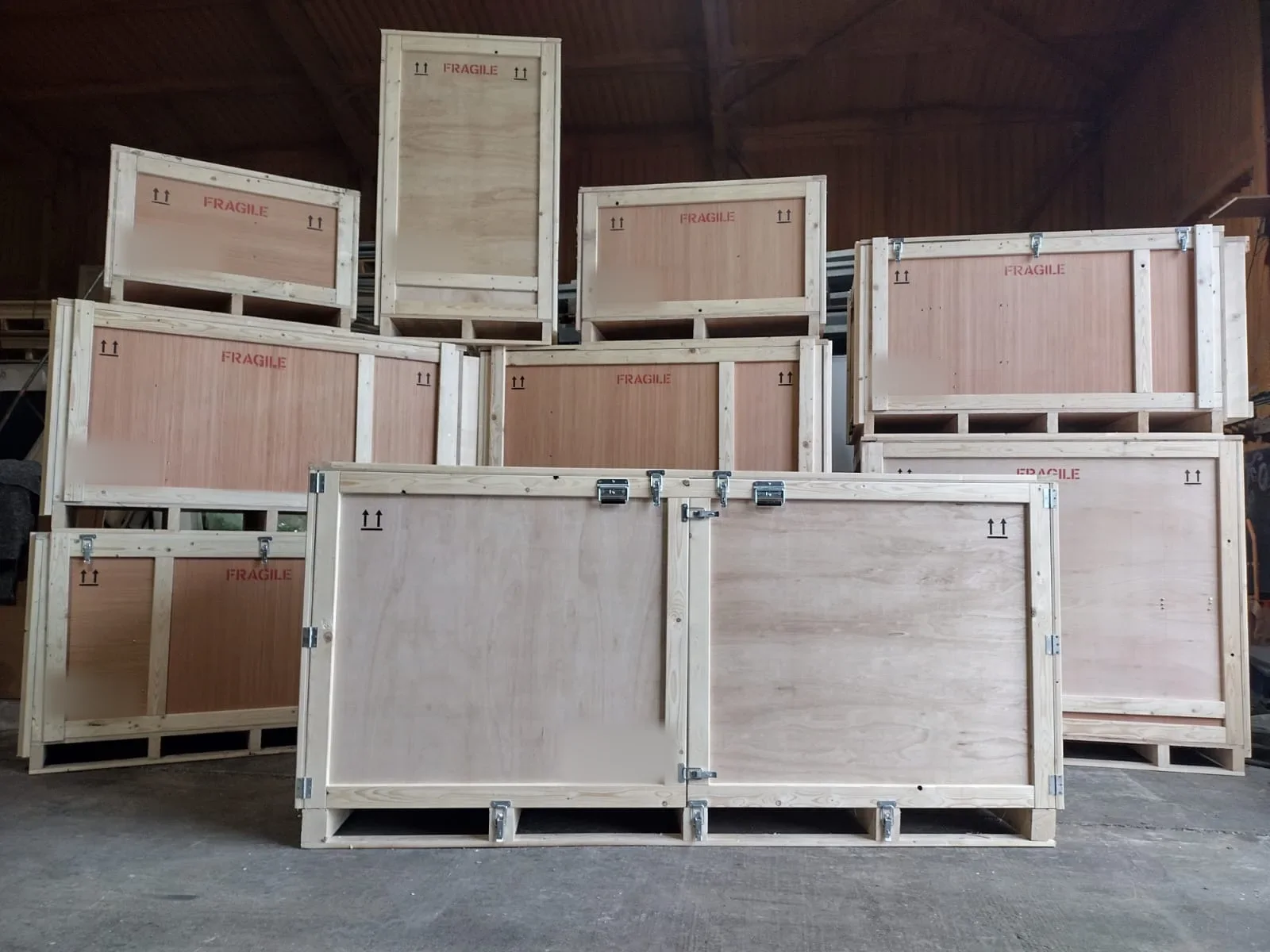
Send us a photo and the measurements.
We’ll recommend the crate, the lining and the supports, and come back with a bespoke quote.
The crate: skids for forklifts
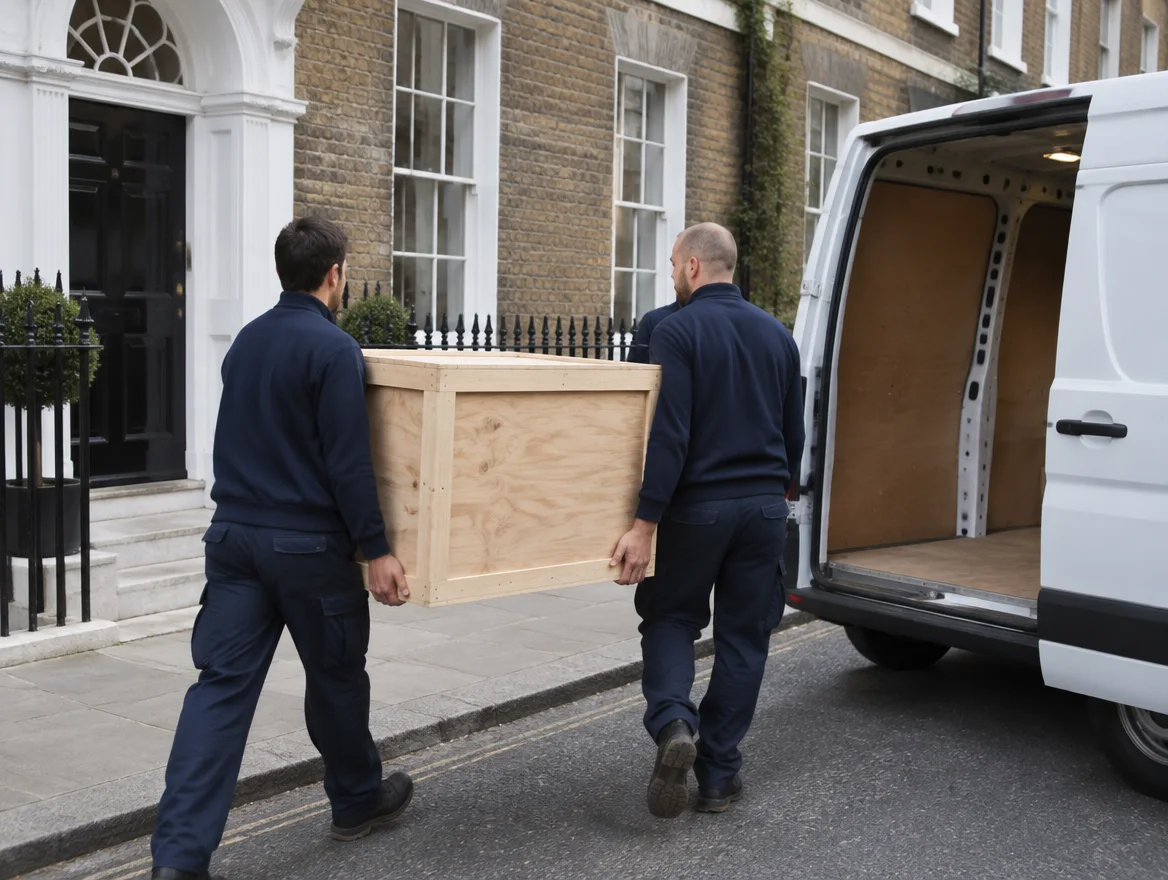
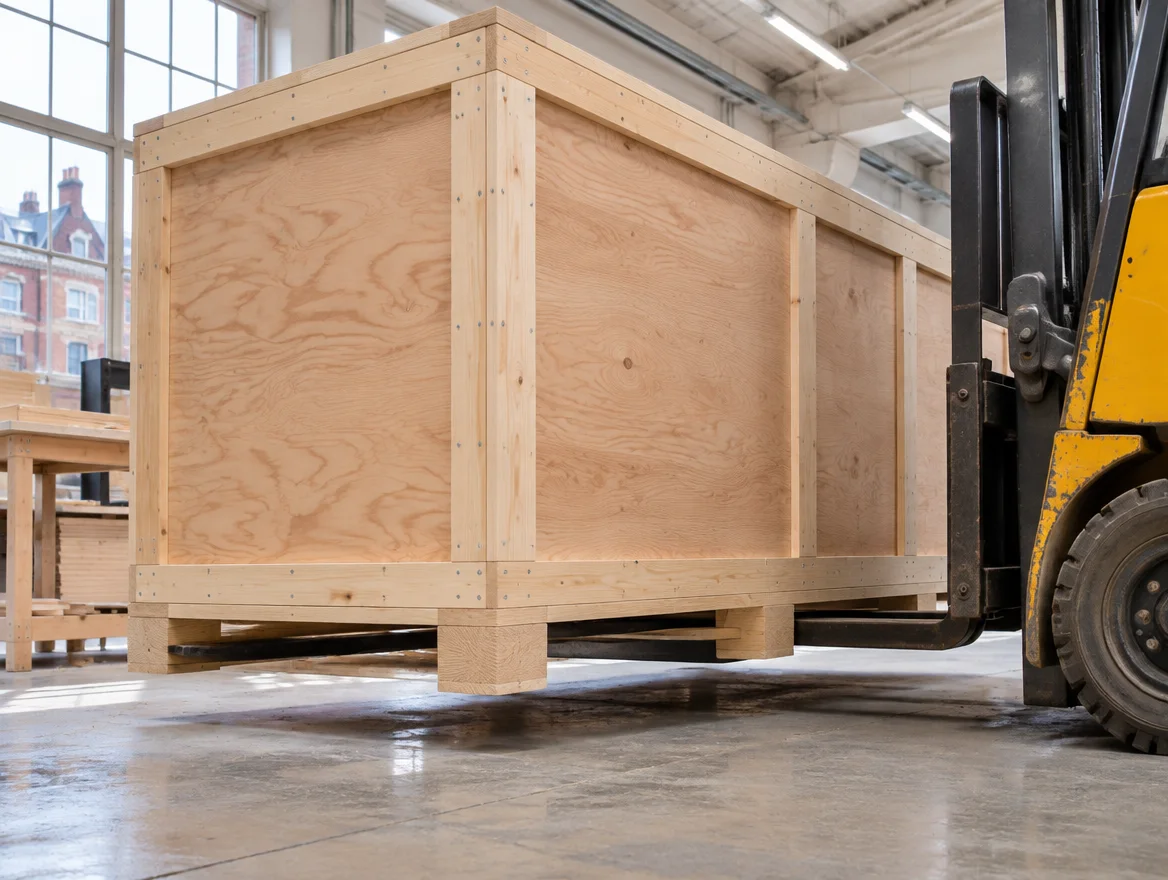
Every piano crate is built on timber skids, runners underneath that lift it off the ground so a forklift or pallet truck can get under it safely. That's how a crate this heavy is loaded, moved and lifted into a container. Skids also keep it off wet ground.
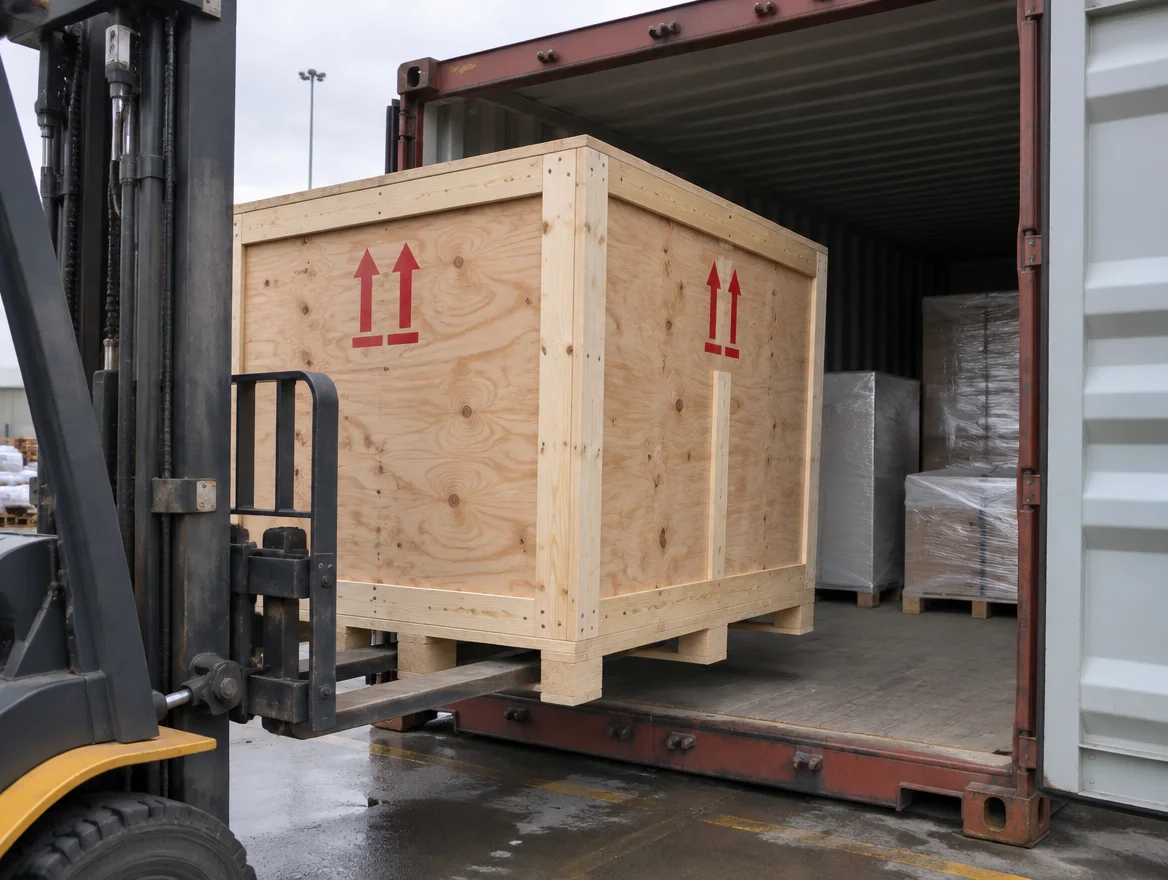
The crate is marked Fragile and This way up, and if your shipper needs the exact weight, we weigh it once it's built. Crates going abroad usually need to meet ISPM 15, the rule for wood packaging in international trade; our crates are heat treated and carry our own registered ISPM 15 stamp, and our ISPM 15 guide explains it.
Humidity and temperature on long journeys
A piano's soundboard is a thin sheet of wood with a slight arch. As the air gets damper or drier the wood swells or shrinks, the arch changes, and so does the tension on the strings. Steinway's own care advice is to avoid sudden changes of temperature, because they upset the tuning and regulation. Long spells of very dry or very damp air can crack a soundboard and warp keys.
A sea journey is a run of changes: a heated house, a cold lorry, a container in the sun. A closed, lined crate slows those changes down. On arrival, let the crate stand indoors for a day or so before opening, then keep the piano away from radiators, vents and sunny windows.
Going somewhere much hotter, drier or more humid than London? Tell us when you ask for a quote, and ask us about extra protection against damp for long or sea journeys.
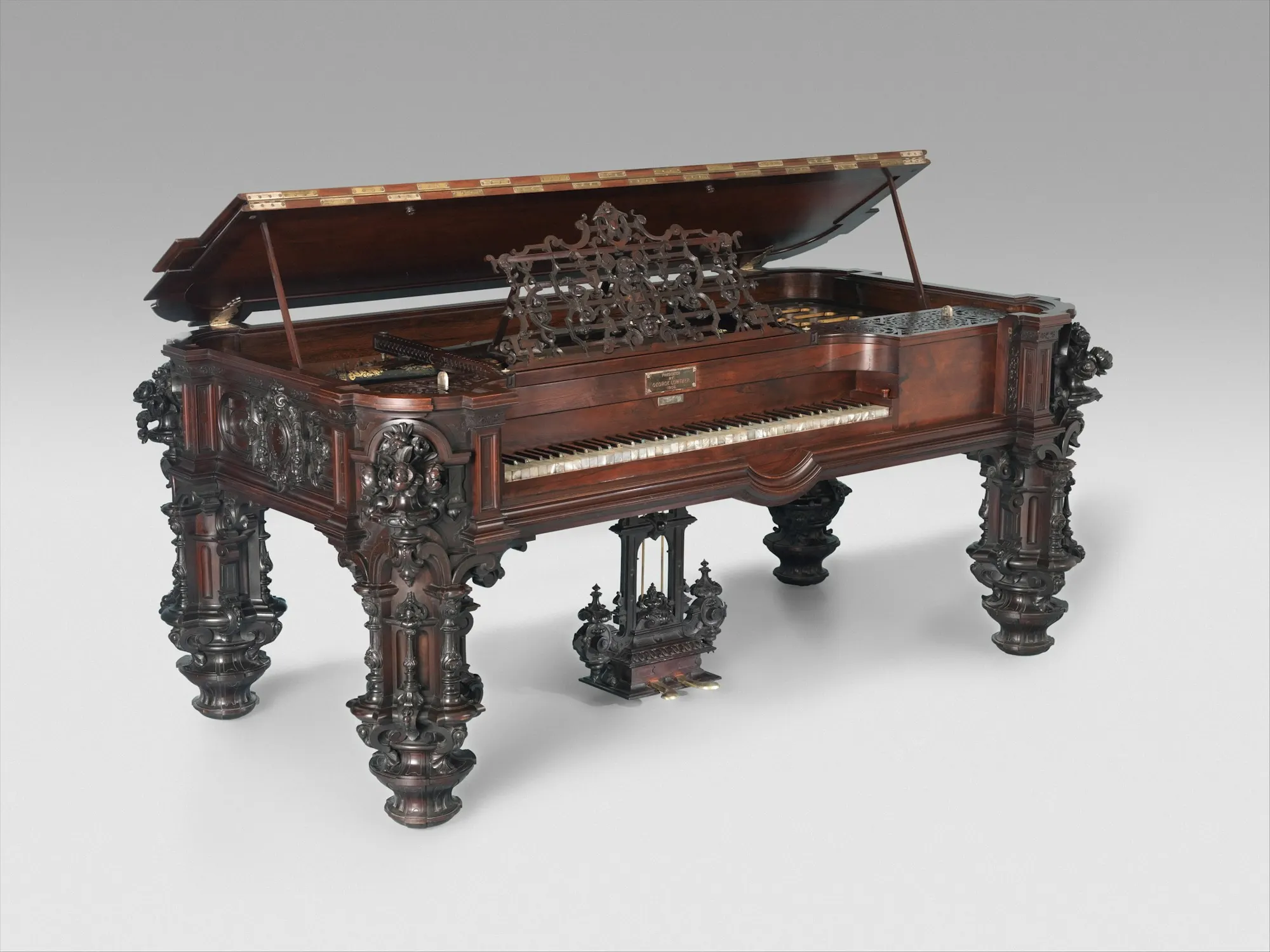
Antique pianos: ivory keys, rosewood and export licences
Old pianos often carry materials that now need paperwork.
- Ivory keytops. Many pianos made before the 1970s have ivory on the keys. Under the Ivory Act, a musical instrument made before 1975 with less than 20% ivory by volume can be registered for an exemption before it's sold, hired or exported for sale.
- CITES. Ivory and Brazilian rosewood come from protected species. GOV.UK lists pianos with ivory keys or inlay, or rosewood marquetry, among the items usually treated as worked specimens if made before 3 March 1947, and says a CITES permit is still needed to export them. Permits come from the Animal and Plant Health Agency (APHA), and the US has strict ivory rules of its own.
- Export licences. Antiques more than 50 years old above set values need an individual export licence from Arts Council England to leave Great Britain. For most objects the limit has been £65,000. Check the current figures.
We don't handle CITES permits, export licences or customs paperwork; you, your shipper or a customs agent will arrange them. If your piano may have ivory keys or a rosewood case, tell us when you ask for a quote. More on antique shipping.
When should a piano be tuned after a move?
After it has settled, and by a piano tuner. Tuning is a tuner's job, not ours. A piano that has travelled will drift as its wood adjusts to its new room. Piano technicians usually suggest giving it a few weeks before the first tuning, so the work holds, and a long move may need more than one tuning before it's stable. Ask your tuner, who may also check the regulation of the action after a long journey.
Two ways to work with us
Choose whichever suits the piano and where it is.
Measuring a grand: length from keyboard to tail, width at the widest point, and the height of the case itself, without its legs. An upright: height, width and depth at the widest points, including mouldings, pedals and castors. Tell us the maker and model too.
We can also arrange the onward shipping, if you'd like the whole journey handled together. Moving a whole house? See crating for removal companies. Then request a quote, and arrange transit insurance for the piano's value (see insurance).
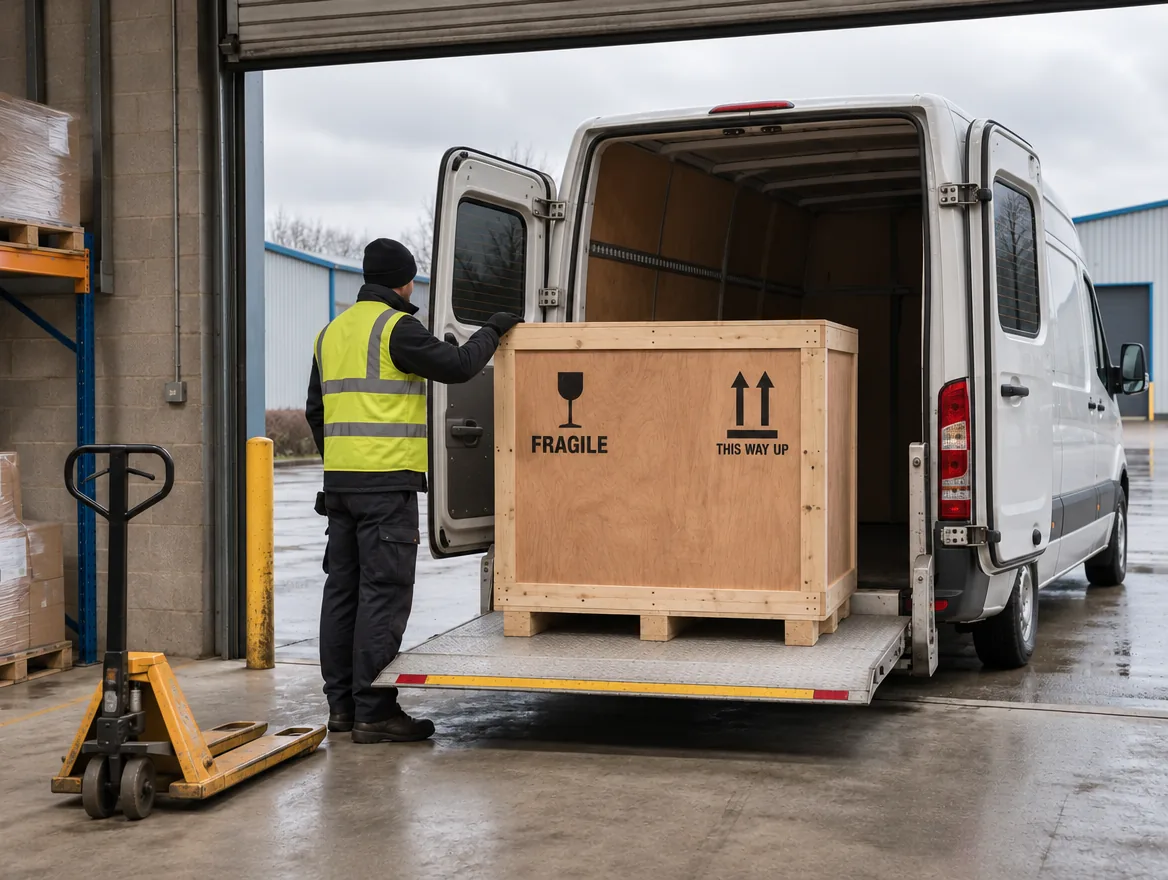
We collect the piano from your home, a showroom, an auction room or storage and build the crate around it at our warehouse. You don't measure anything. Your own courier or shipper then collects the finished crate from us. How collect and crate works
You send us the measurements, what the piano is and roughly what it weighs. We confirm the sizes with you before we build, then deliver the crate to the address you give us. Crates built to your measurements
Common questions
Can a grand piano travel with its legs on? +
Not safely in a crate. The legs and lyre would take every bump and could break, or break the case where they join it. Grands travel on their straight side with the legs, lyre and pedals off and packed beside them.
Do you tune the piano after delivery? +
No. Tuning and regulating are jobs for a piano tuner or technician. Let the piano settle in its new room for a few weeks first, then book a tuner.
Can you ship a piano to the USA or Europe? +
Yes. A lot of our crates go to the United States and Europe, and we can give you options for anywhere in the world. Customs paperwork, and any CITES permit or export licence, is arranged by you, your shipper or a customs agent. See shipping furniture to the USA.
Does a piano go by sea or by air? +
Most go by sea, because of their weight and size. Air is possible for some. Ask us and we'll give you the options for your piano and where it's going.
Can the piano stool and sheet music go in the same crate? +
Usually, yes, each in its own space and nothing resting on the piano. Empty the stool first, and tell us what else you'd like to send.
Do you crate digital pianos and organs? +
Yes. We crate any object, item and weight. Tell us the make and model and send a photo, and we'll quote for the right crate.
How much does piano shipping cost? +
Every quote is bespoke, based on the piano itself: its size, weight, the access at each end, where it's going and how quickly. Send us the details and we'll come back with a price.
Is the piano insured in transit? +
Transit insurance is available for every export. It's bought by you, job by job, so the cover matches the piano being shipped. We also have public and product liability insurance.
Related
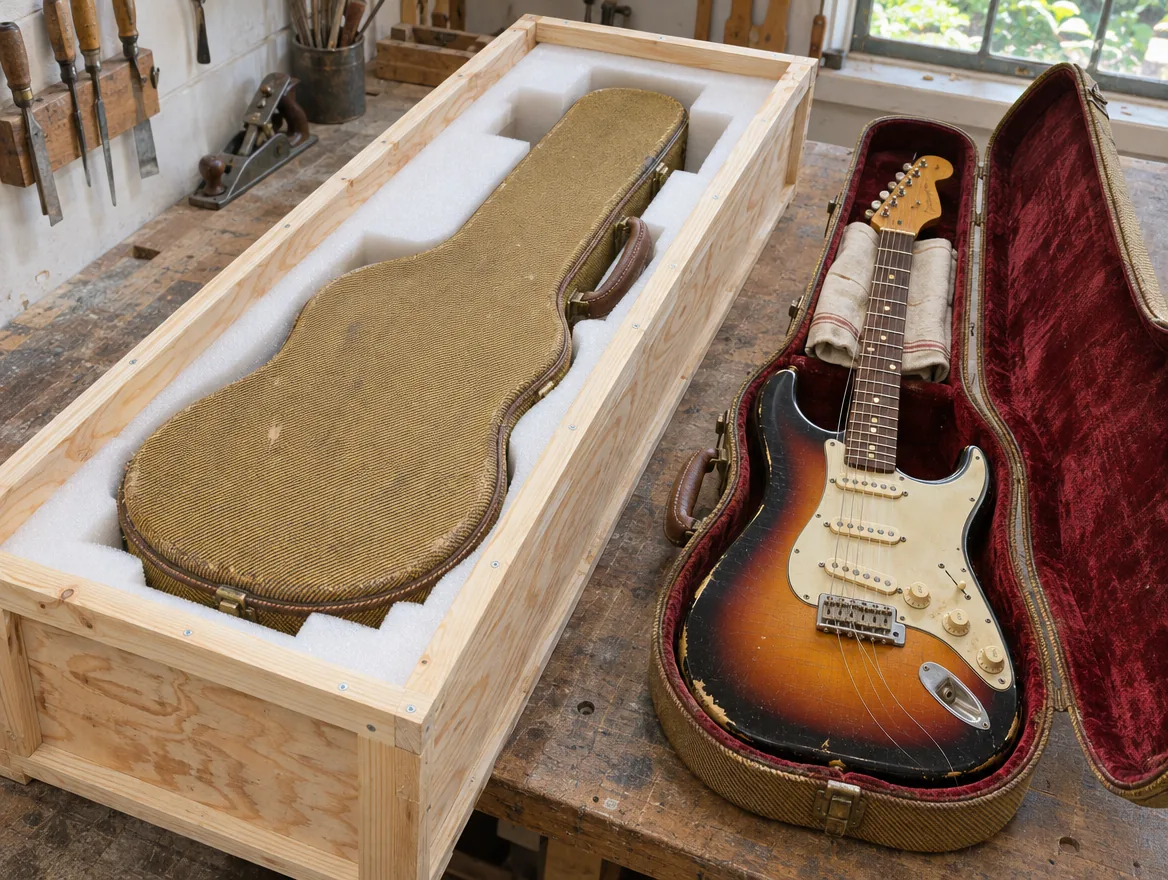
Hard case inside a crate, held in cut foam.
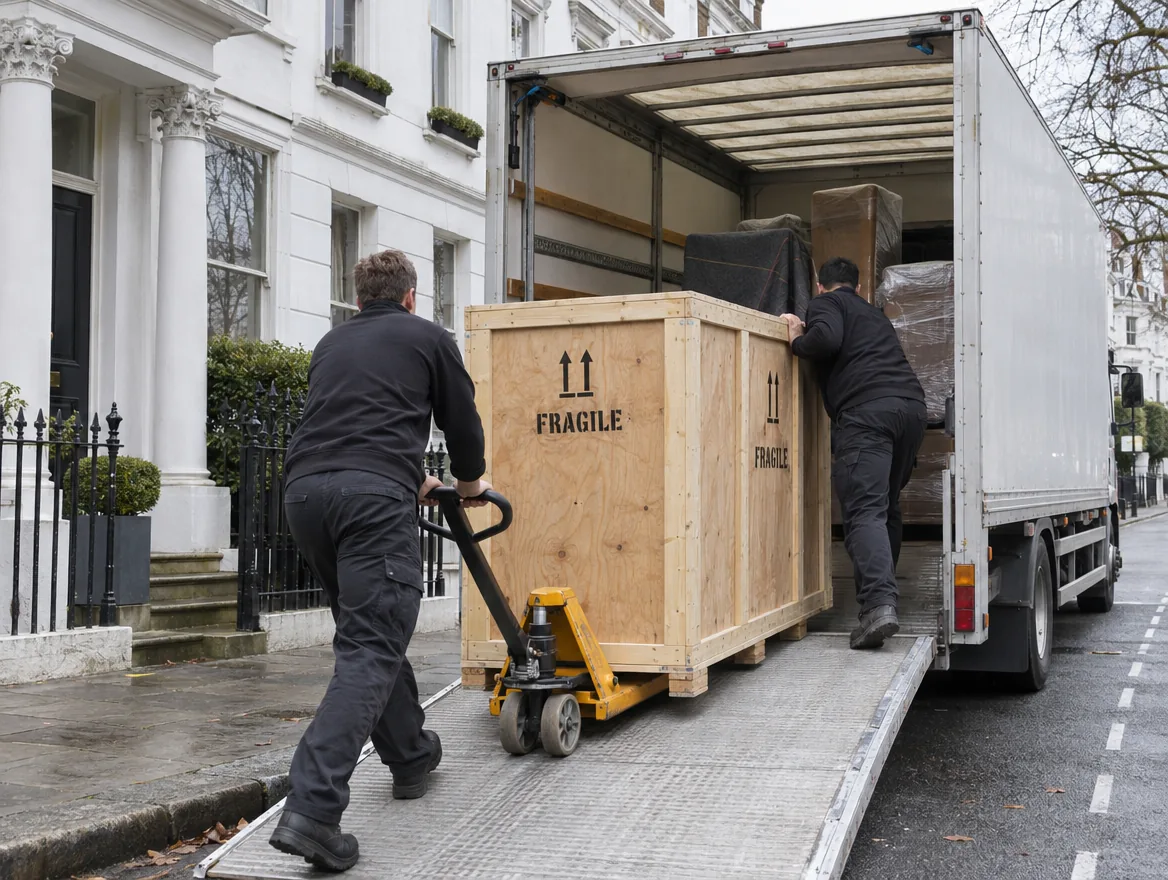
We crate the fragile pieces; your crew moves the house.
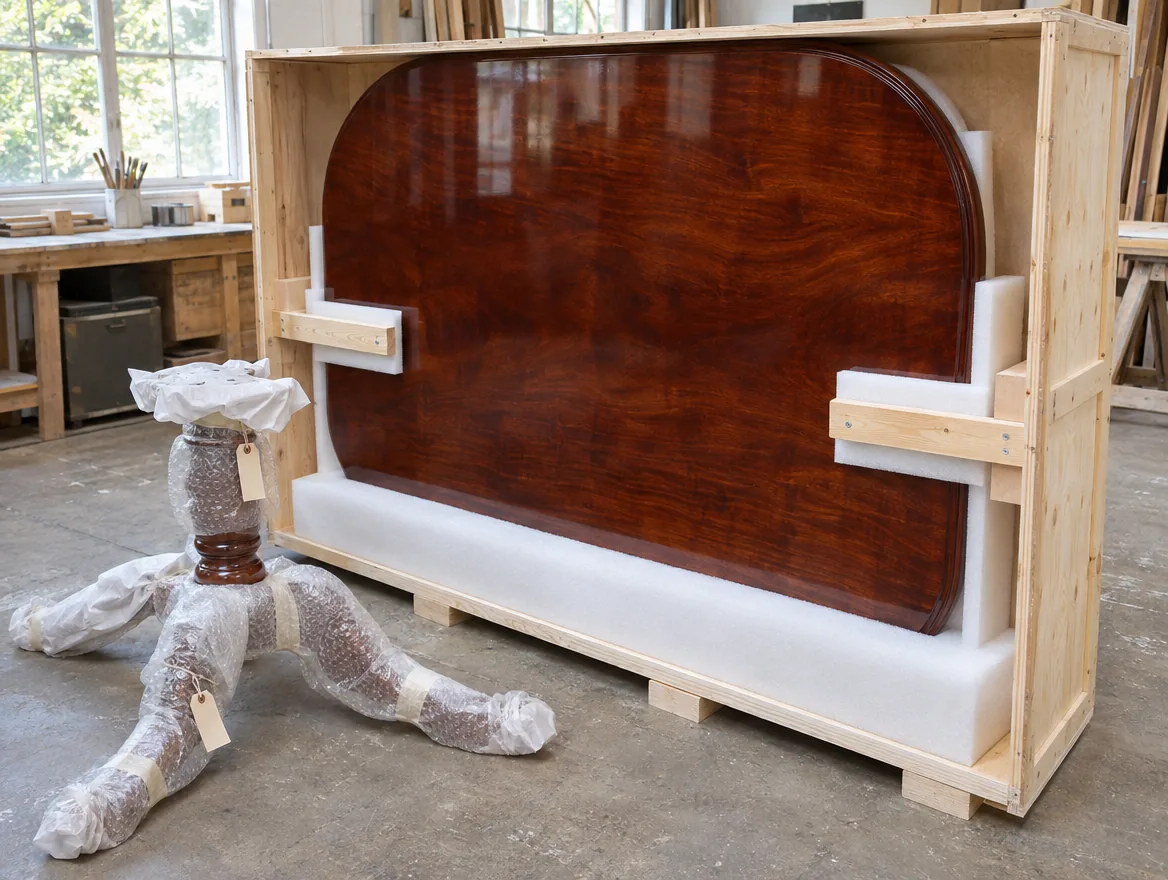
Antique and modern furniture, crated in London for the Atlantic.

Nothing to measure. We build the crate around the piece.
Swipe for more →
Tell us what needs to travel.
Every quote is bespoke, based on the piece itself. Send us the details and we'll come back to you.