

ISPM 15 explained: what the stamp on a wooden crate means
ISPM 15 is the international rule for wooden packaging that crosses borders. Solid wood crates, pallets, skids and battens must be debarked, treated against pests (usually by heating the wood to 56°C at its core for at least 30 minutes) and carry a legible mark. Processed wood such as plywood and OSB is exempt. Packaging without a proper mark can be held, rejected or destroyed at the border.
What is ISPM 15?
ISPM 15 is short for International Standard for Phytosanitary Measures No. 15, *Regulation of wood packaging material in international trade*. It's set by the International Plant Protection Convention (IPPC), part of the UN Food and Agriculture Organization.
Its job is simple: to stop insects and plant diseases travelling around the world inside wooden packaging. Raw timber can carry beetles and other pests that cause serious damage to forests in a new country. So the rule says wooden packaging must be treated in an approved way, and marked to show it has been.
Most countries apply it, including the United States, Canada, Australia and the EU. Since Brexit, it also applies to wooden packaging moving between Great Britain and the EU or Switzerland, and from Great Britain to Northern Ireland.
Updated November 2026. Rules can change and some countries add their own requirements, so check the current position for your destination before anything ships.
What has to be treated?
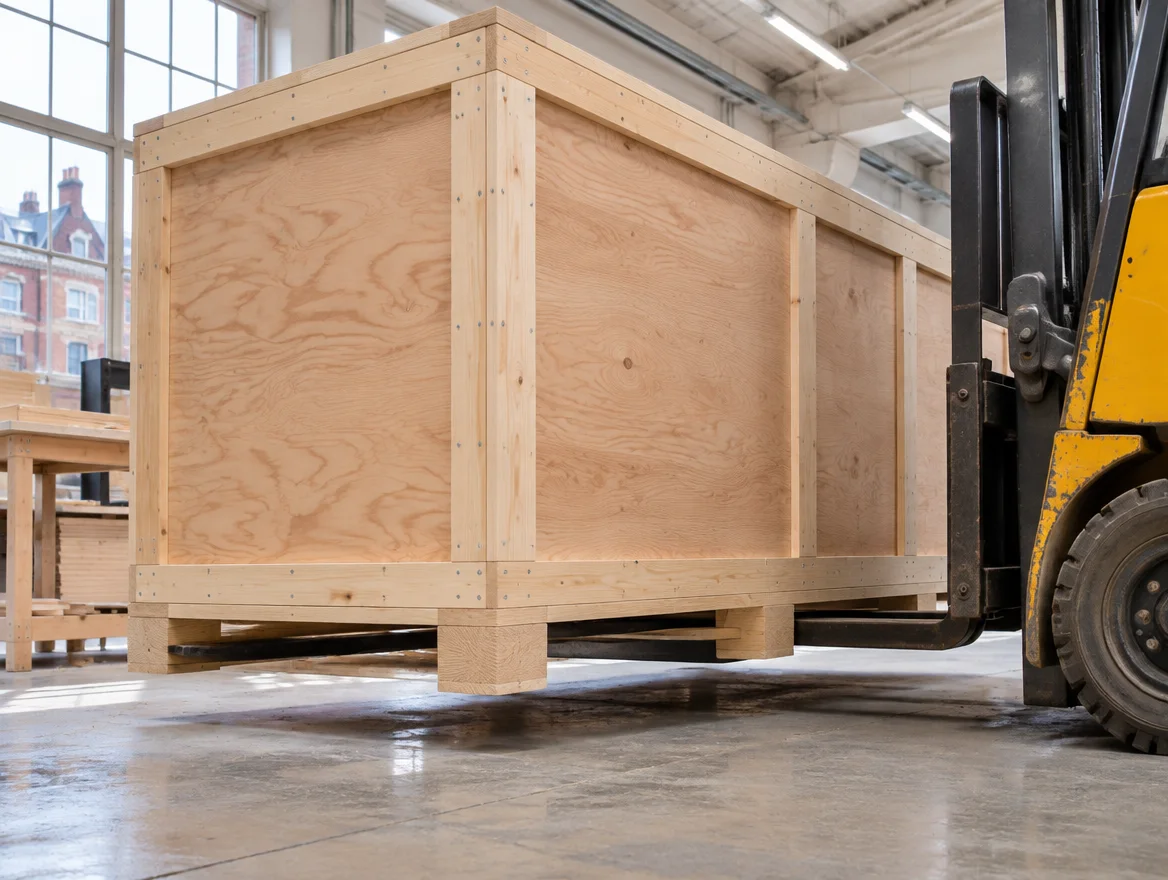
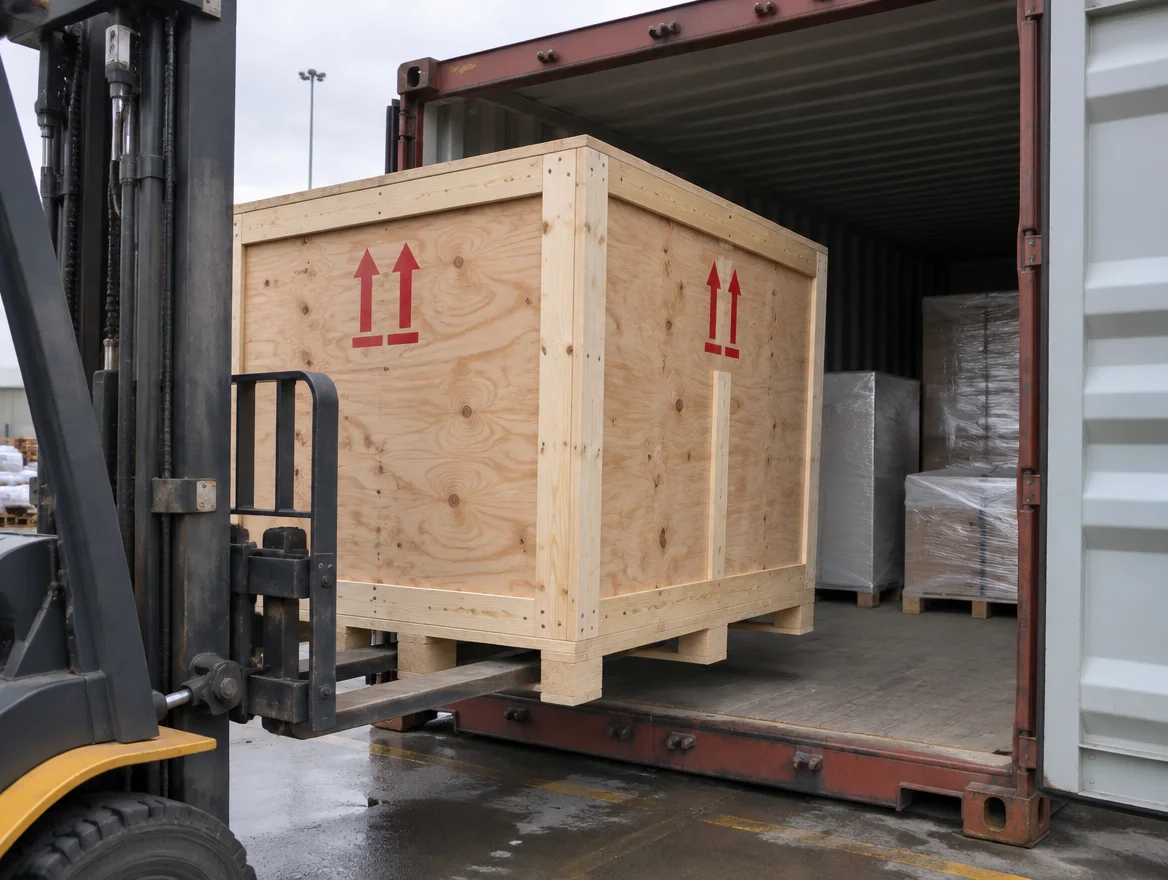
ISPM 15 covers wood packaging material: the wood used to carry, protect or support goods, rather than the goods themselves. That includes:
- Crates, cases and boxes made with solid timber, including crate frames.
- Pallets, skids and pallet collars, the bases crates sit on.
- Dunnage: loose timber used to brace, wedge or support goods in transit, including battens.
The wood must also be debarked. Under the UK guidance, small pieces of bark may remain only if each is under 3 cm wide (any length), or wider than 3 cm with a total surface area under 50 cm².
What is exempt from ISPM 15?
The rules don't apply to wood that has already been processed with heat, glue or pressure, or that's too thin to carry pests. According to GOV.UK and the IPPC, exemptions include:
- Processed wood such as plywood, OSB (oriented strand board), MDF, particle board and veneer sheets.
- Raw wood 6 mm thick or less.
- Barrels for wine and spirits, which are heated during manufacture.
- Gift boxes made from processed wood.
- Sawdust, wood shavings and wood wool used as packing.
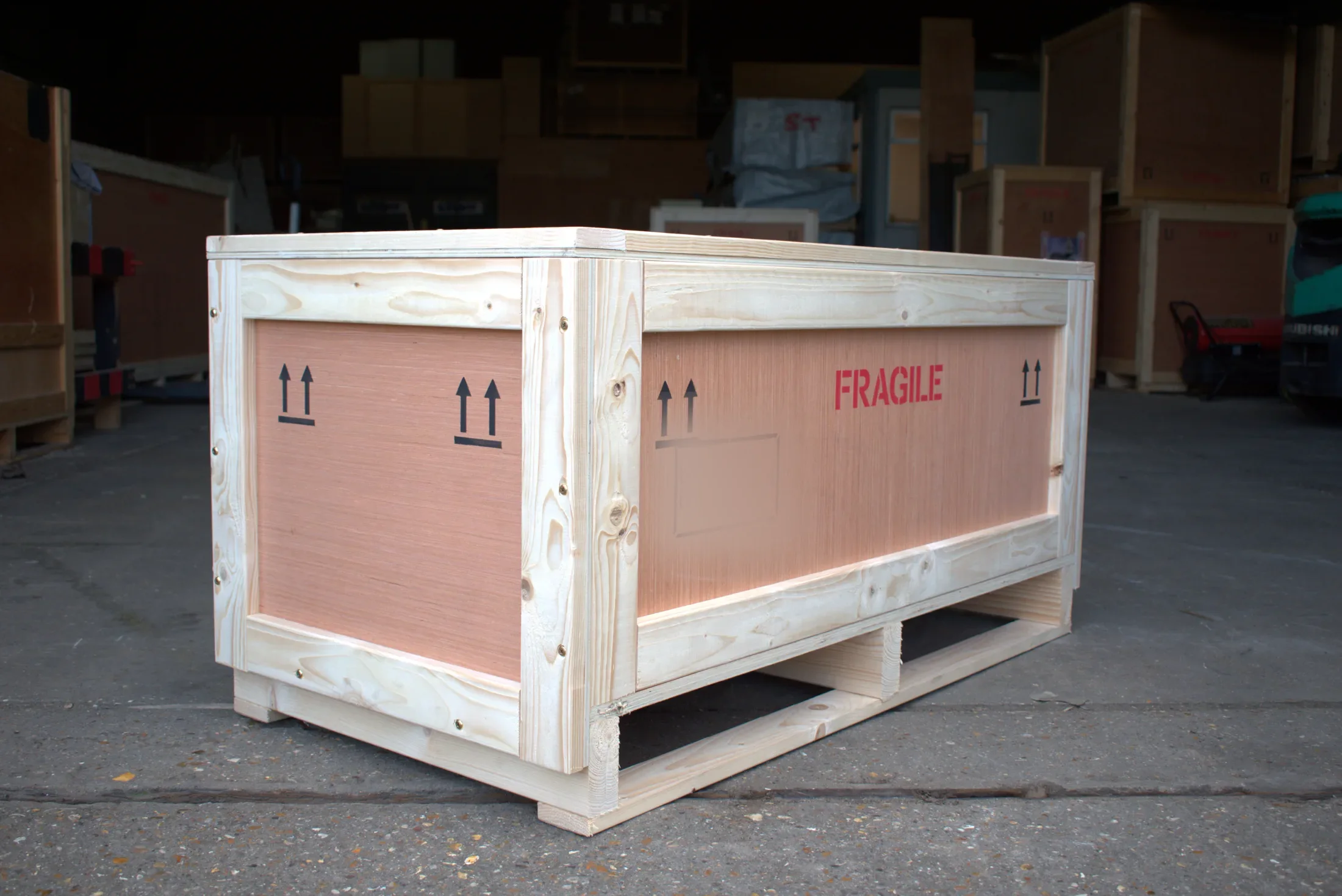
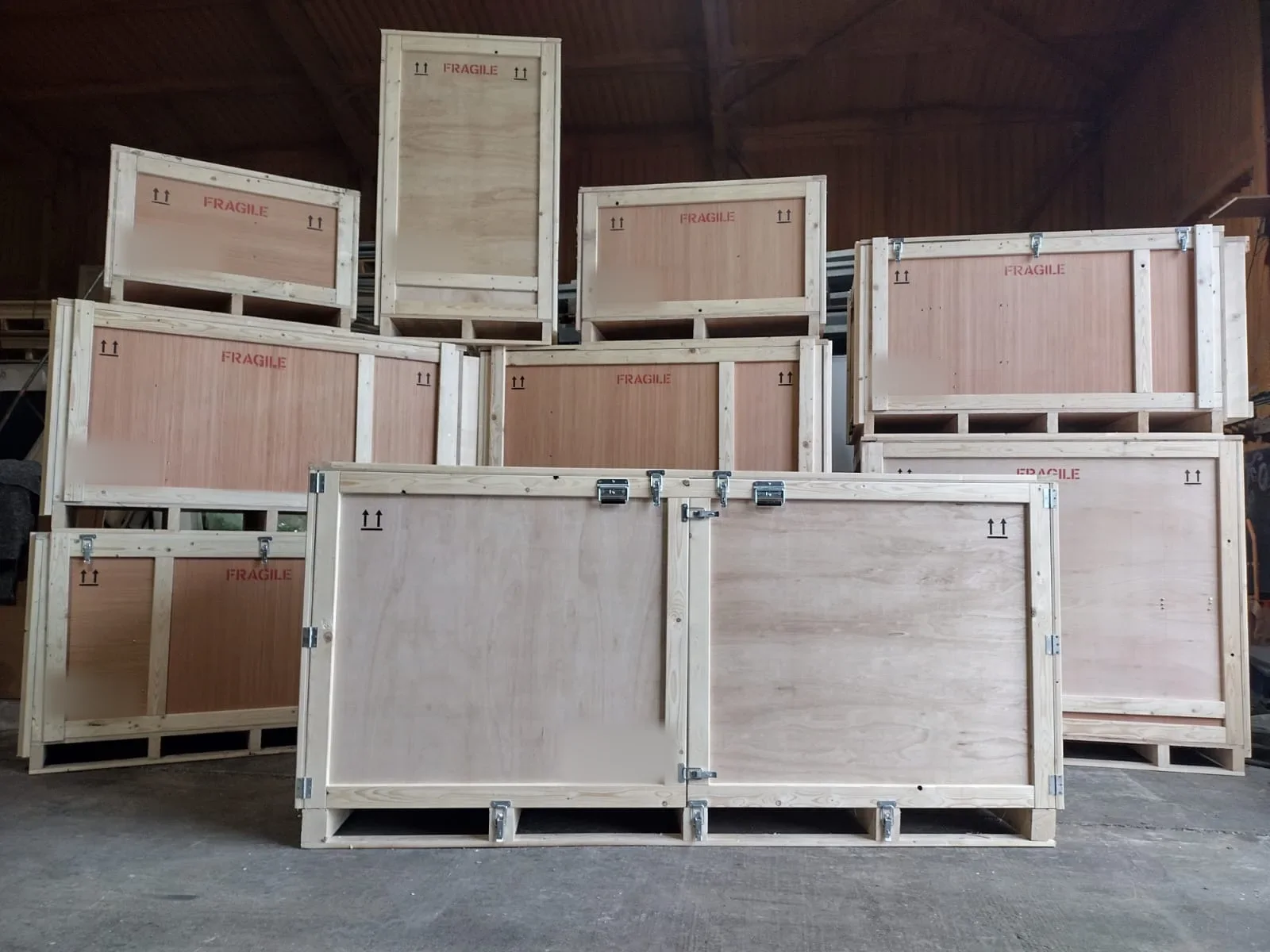
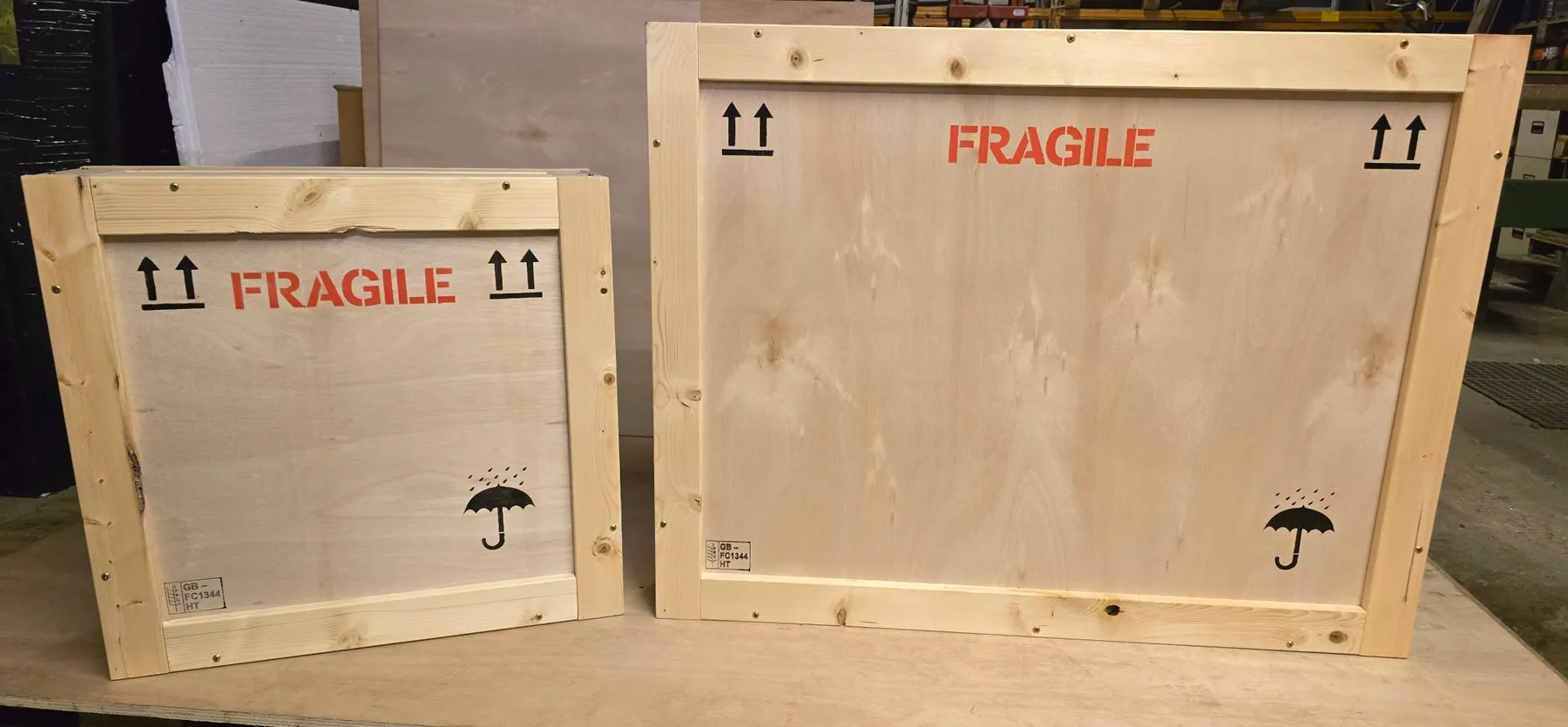
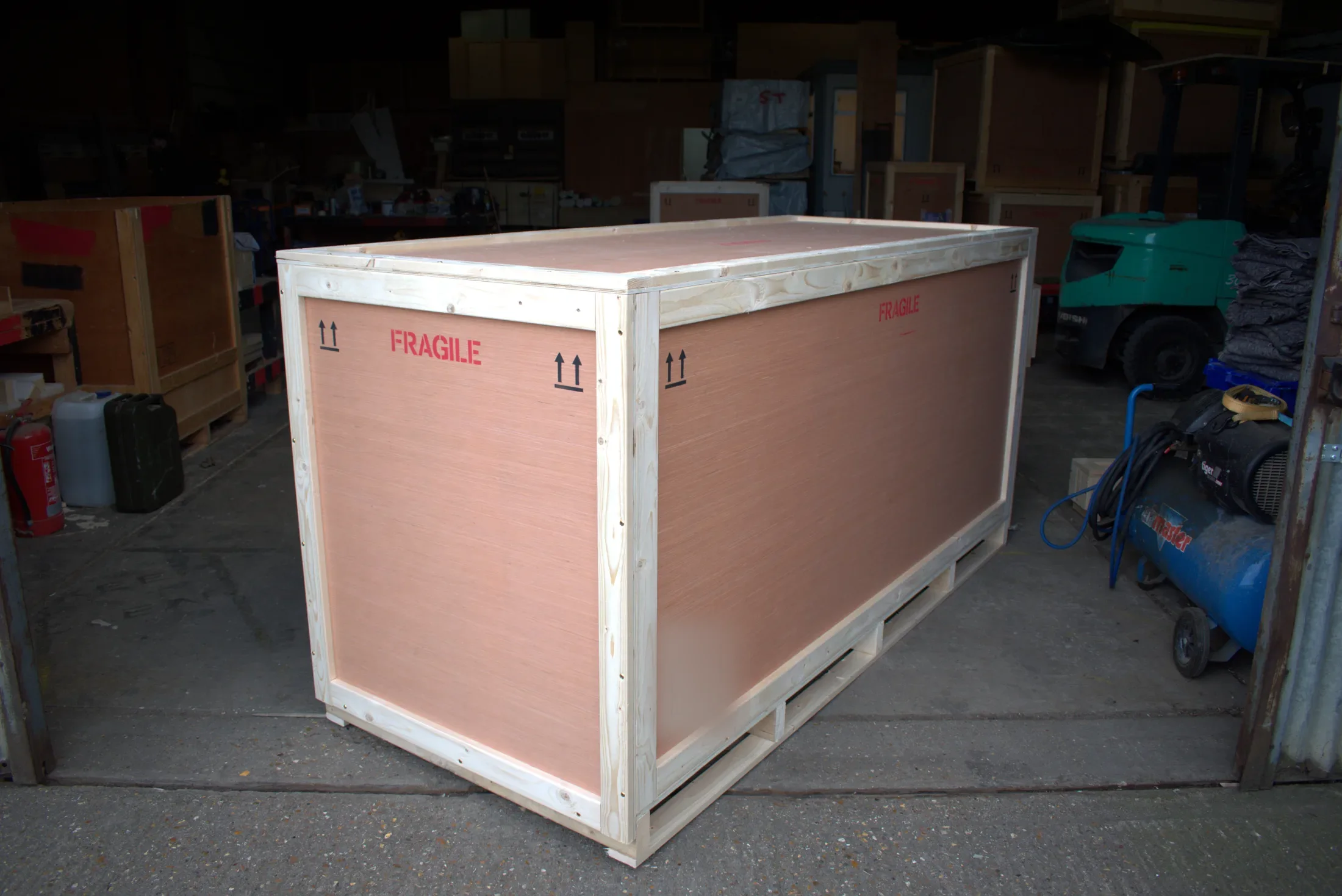
The catch with crates. Most export crates mix both: plywood panels on a solid timber frame, often on solid timber skids. The plywood is exempt, but the solid timber is not. So a plywood crate with a timber frame still needs its solid wood parts treated and marked.
A crate made wholly of processed wood, with no solid timber at all, falls outside the rule. Some importing countries have their own extra conditions, so it's always worth checking.
How is the wood treated?
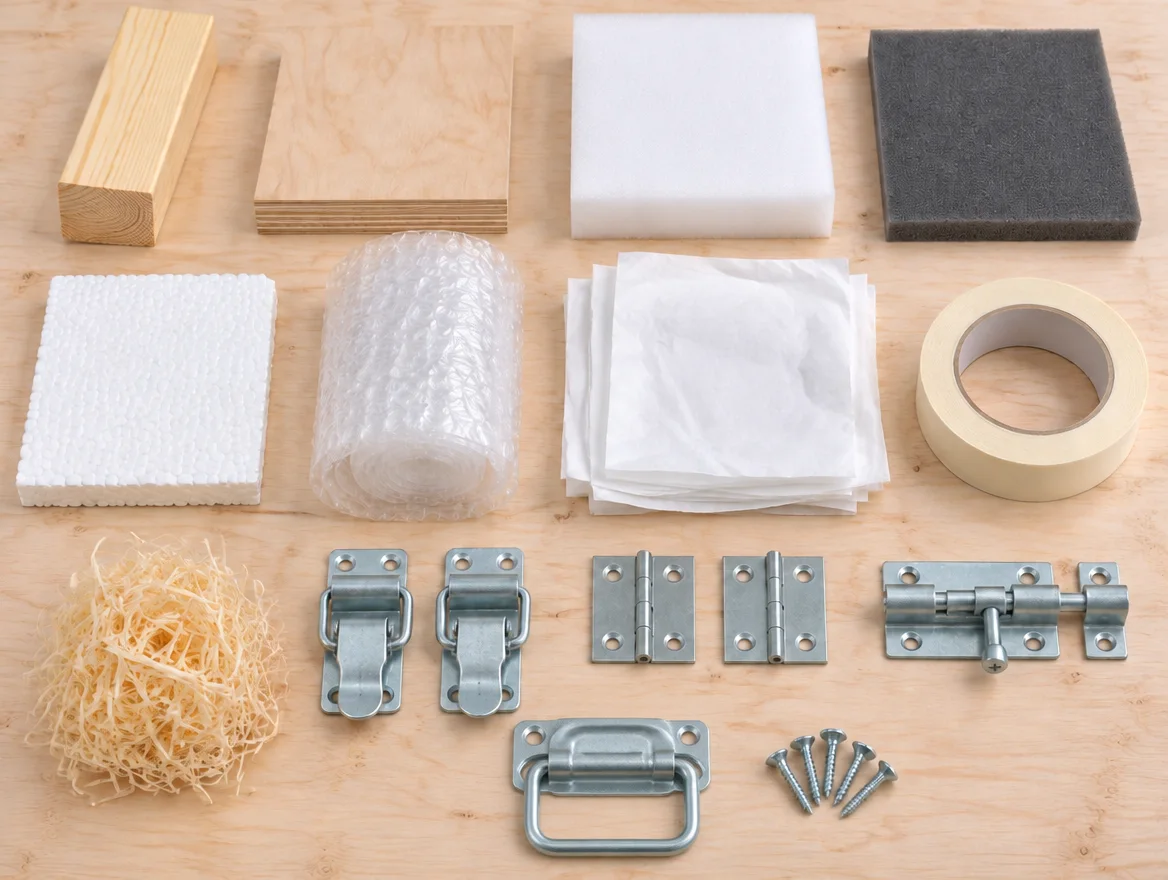
ISPM 15 approves a small number of treatments. Heat treatment is by far the most common for crates.
Bark must be removed before treatment, because it can stop fumigation working properly. Heat treatment kills pests without chemicals, which is one reason it's the usual choice for crates.
You may still see DB (debarked) on older marks. It was dropped from the standard mark in the 2009 revision because all ISPM 15 wood must be debarked anyway, but some national schemes still show it.
| Code on the mark | Treatment | What it means |
|---|---|---|
| HT | Heat treatment | The wood is heated so its whole profile, including the core, reaches at least 56°C for at least 30 continuous minutes. |
| DH | Dielectric heating | Heating by microwave or similar. For wood under 20 cm across, the UK guidance gives 60°C for one continuous minute through the whole profile. |
| MB | Methyl bromide | Fumigation with methyl bromide gas. Its use is restricted in many places because it damages the ozone layer. |
| SF | Sulphuryl fluoride | Fumigation with sulphuryl fluoride gas. |
Send us a photo and the measurements.
We’ll recommend the crate, the lining and the supports, and come back with a bespoke quote.
What does the ISPM 15 stamp show?
The mark replaces any need for a separate phytosanitary or treatment certificate for the packaging. It's a stamp or brand on the wood, usually inside a box, with these parts:
So a heat-treated crate from Great Britain would carry something like the IPPC symbol, GB, a registration number and HT.
The guidance also says the mark should be legible and permanent, preferably on at least two opposite sides of the item, and that red and orange should be avoided because those colours are used for dangerous goods labels. Some customs officers treat the two-sides advice as a firm rule, so it's sensible to follow it.
- 01The IPPC symbol
A small wheat-ear logo. It's a registered mark, used only under an approved scheme.
- 02The country code
The two-letter ISO code of the country where the wood was treated or marked, for example GB.
- 03The producer code
A unique number given by that country's plant health authority to the business that treated or marked the wood.
- 04The treatment code
HT, DH, MB or SF, showing how the wood was treated.
Who can apply the mark in the UK?
Not just anyone. In the UK, businesses that produce ISPM 15 packaging must be members of the UK Wood Packaging Material Marking Programme, with facility assessments every six months, and must register with the Forestry Commission as a professional operator before they apply the mark.
That's why you can't simply stamp your own crate. The mark is a promise, checked by inspectors, that the wood has really been treated. We have our own registration, so our crates carry our own ISPM 15 stamp.
What happens if a crate is not ISPM 15 compliant?
Wooden packaging can be checked at the border or at inland premises. If it doesn't comply, GOV.UK says it could be rejected or destroyed, and you'll need other arrangements for the goods. Elsewhere, non-compliant packaging may also be treated at the owner's cost or sent back.
For a valuable painting or antique, that means delays, extra charges and the worry of your piece being repacked by someone you didn't choose. A legible, correct mark avoids all of it.
ISPM 15 checklist before your crate ships
- Is any part of the crate, base or bracing solid timber? If so, it needs to be treated and marked.
- Is the mark legible, with the IPPC symbol, country code, producer code and treatment code?
- Is it on the outside where an inspector can see it, ideally on two opposite sides?
- Has the destination country added any rules of its own? Check its plant health authority.
- If the crate has been repaired or reused, has the new timber been treated and marked too?
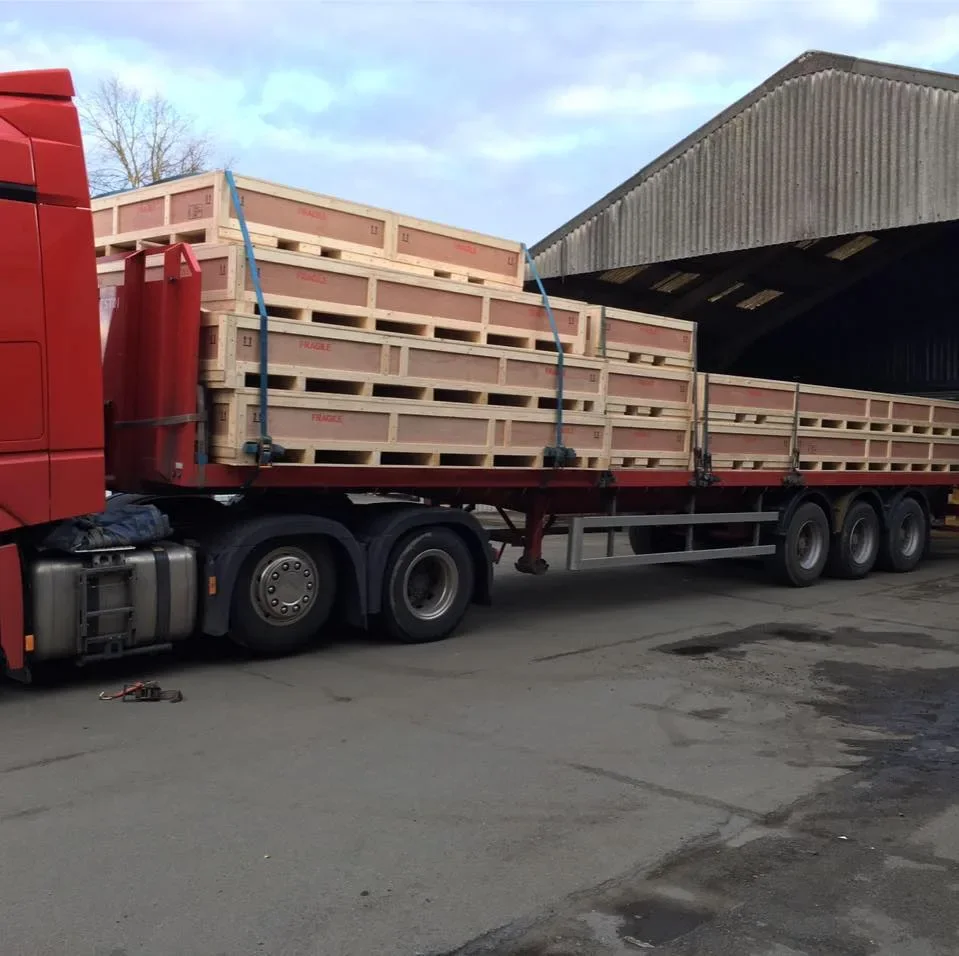
Our crates are heat treated and carry our own registered ISPM 15 stamp, so they are ready to cross a border. Tell us where yours is going when you request your quote. See how we build bespoke crates, or read shipping art to the USA and shipping art to Europe.
Common questions
What is ISPM 15? +
An international standard, set by the IPPC, that requires solid wood packaging crossing borders to be debarked, treated against pests and marked.
Does ISPM 15 apply to plywood? +
No. Plywood, OSB, MDF and other processed wood are exempt. Solid timber parts of the same crate, such as the frame and skids, still need treating and marking.
What does HT mean on a crate? +
HT means heat treated: the wood was heated so its core reached at least 56°C for at least 30 continuous minutes.
What does the ISPM 15 stamp show? +
The IPPC symbol, a two-letter country code such as GB, the producer's registration number and a treatment code such as HT.
Does ISPM 15 apply between the UK and the EU? +
Yes. Since Brexit, wooden packaging moving between Great Britain and the EU or Switzerland must meet ISPM 15.
Is wood thinner than 6 mm exempt? +
Yes. Raw wood 6 mm thick or less is exempt under GOV.UK guidance.
Can I stamp my own crate? +
No. In the UK the mark can only be applied by registered members of the UK Wood Packaging Material Marking Programme.
Are your crates ISPM 15 stamped? +
Yes. Our crates are heat treated and carry our own registered ISPM 15 stamp, so they are ready to cross a border.
What happens if my crate has no stamp? +
It can be held, treated, rejected or destroyed at the border, which means delays and extra charges for your shipment.
Related
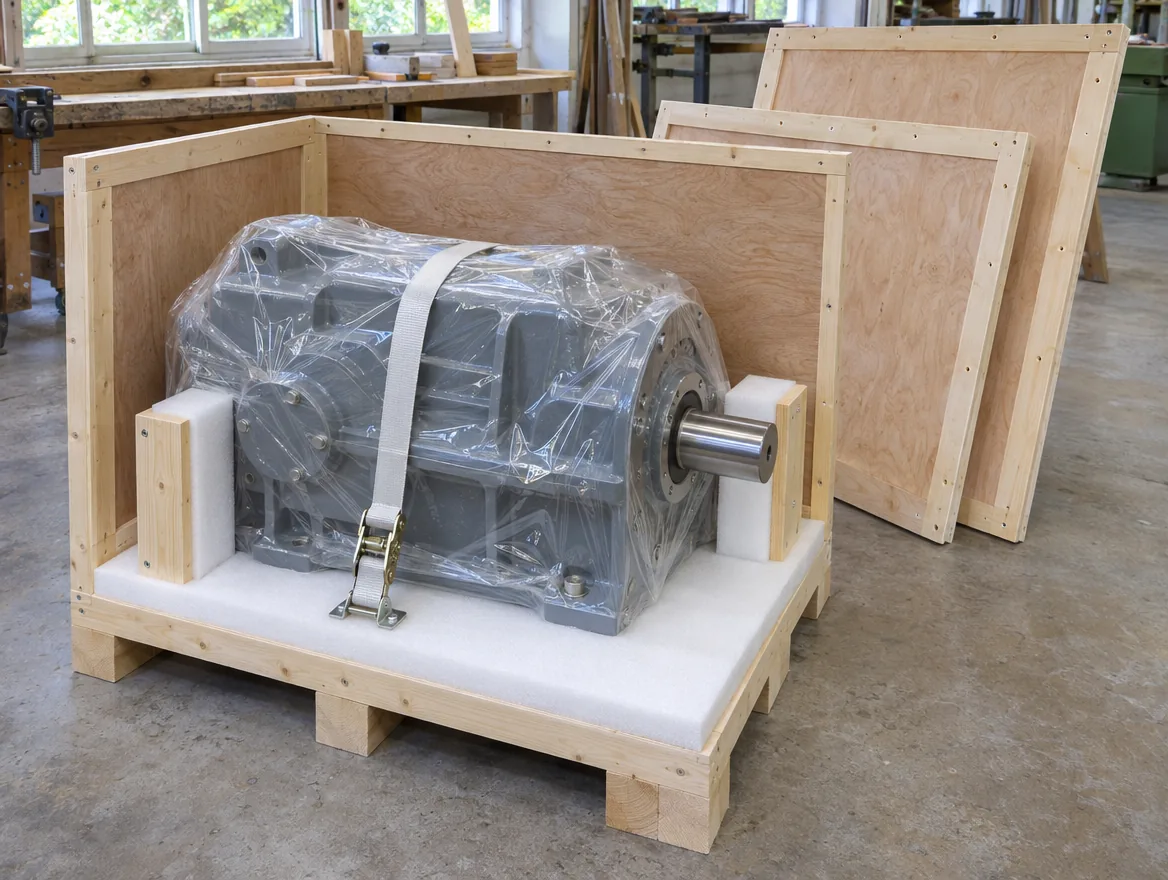
Crates built for sea and air freight, from machinery to art.
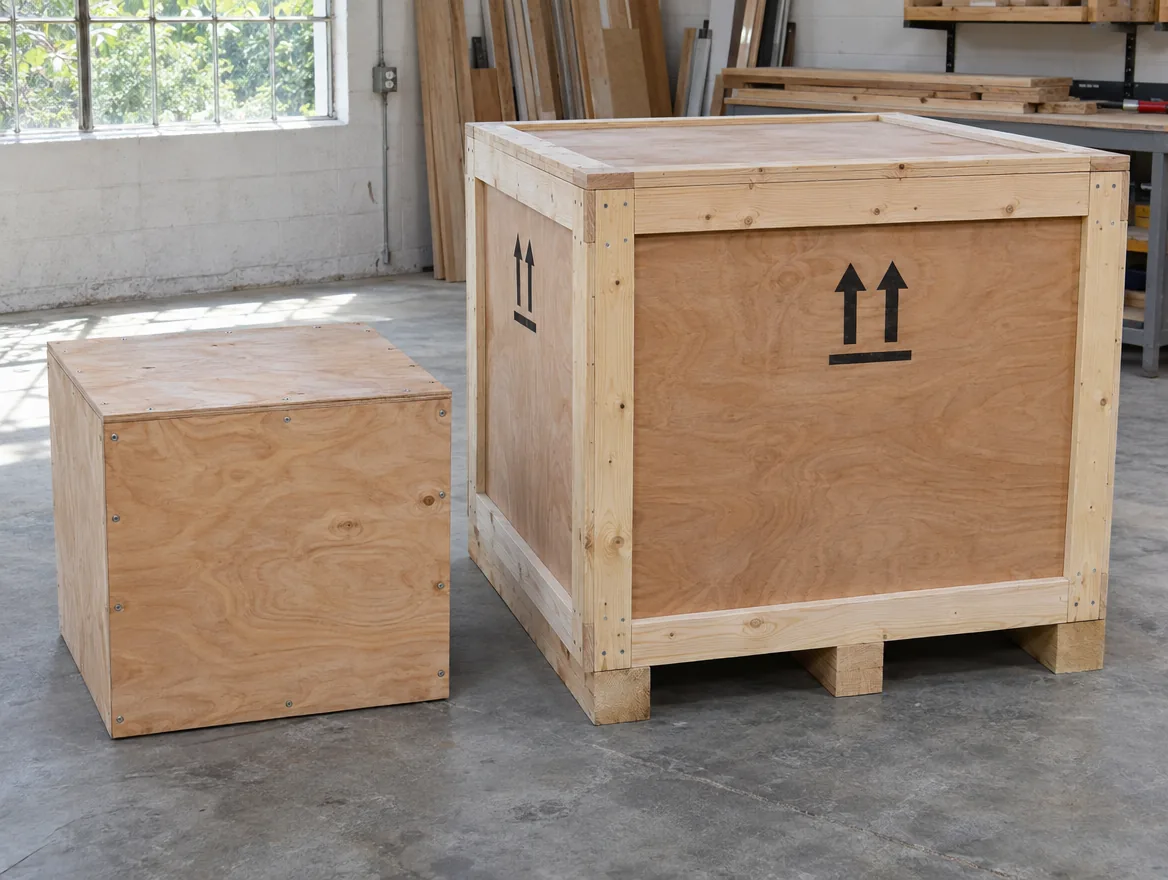
Plain plywood box or timber-framed crate: which one you need.
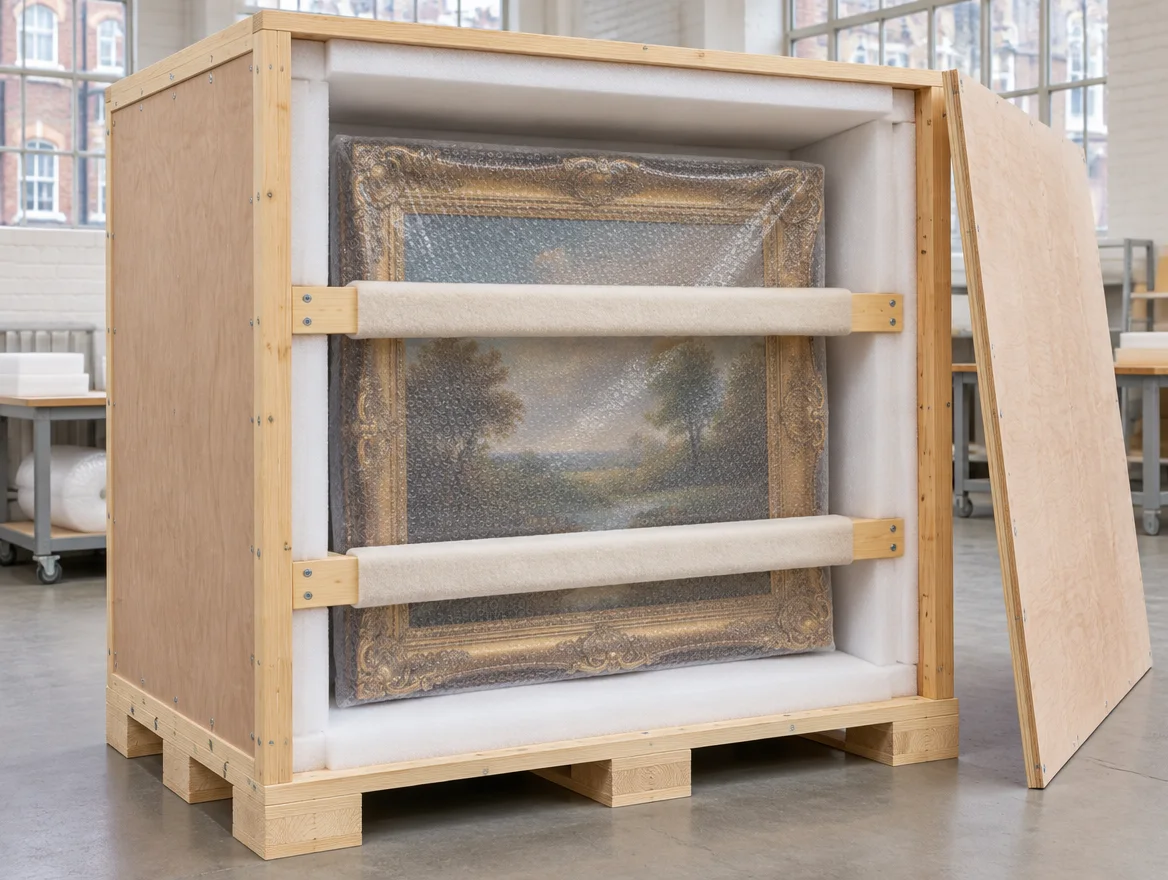
Built to measure around your item.
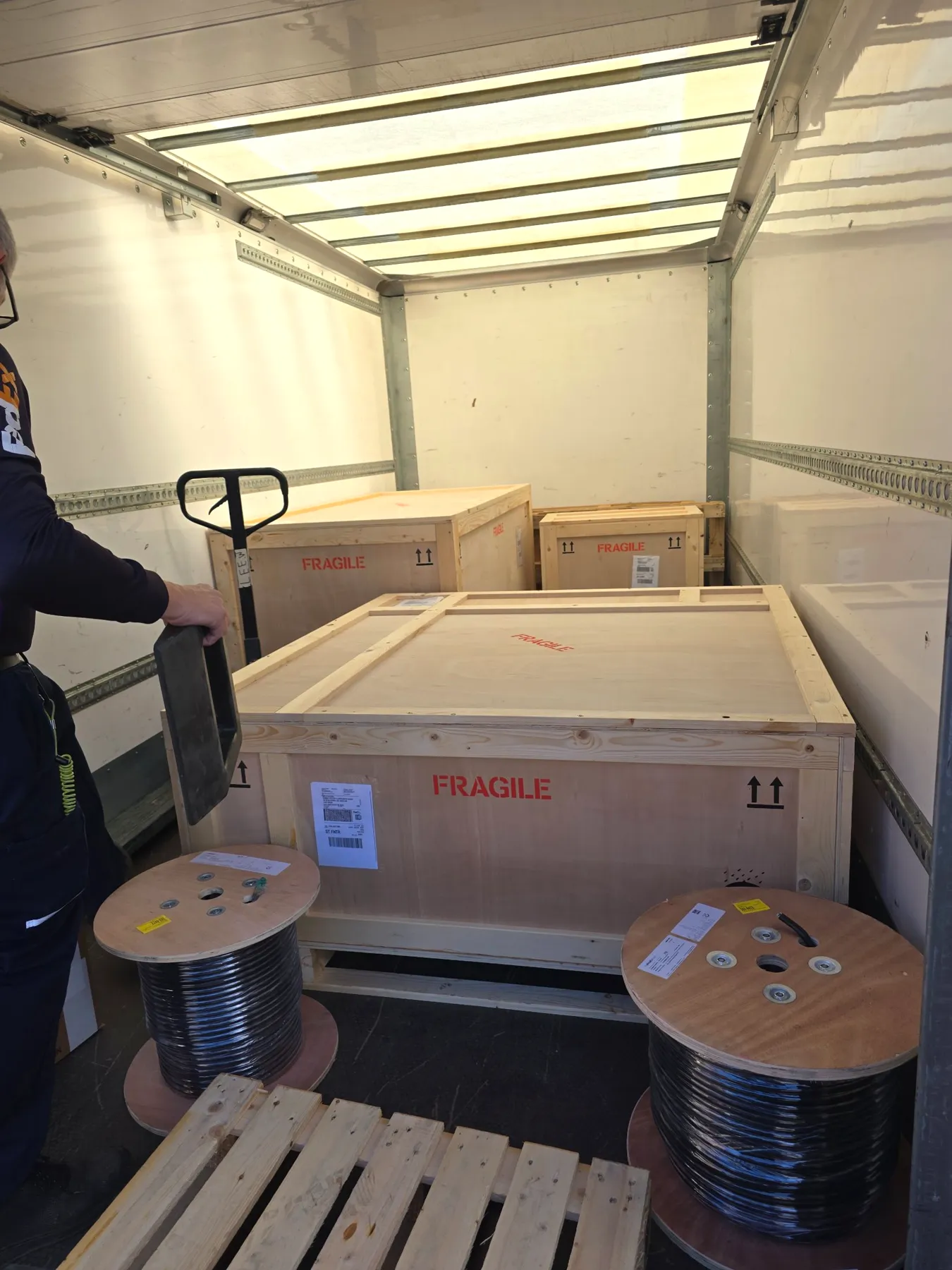
From London to anywhere in the States.
Swipe for more →
Tell us what needs to travel.
Every quote is bespoke, based on the piece itself. Send us the details and we'll come back to you.