

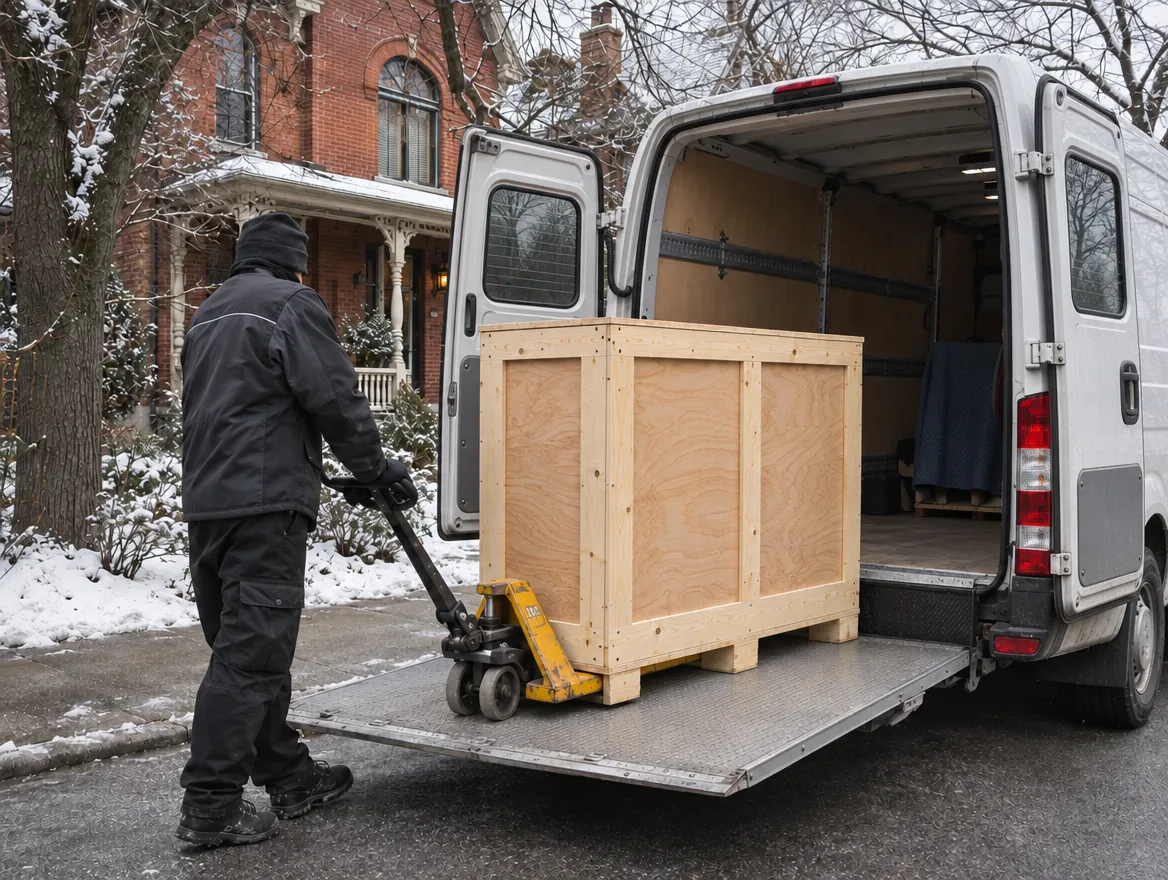
Shipping to Canada from the UK
Shipping to Canada from the UK means a long crossing, a customs entry on arrival and sometimes a long journey overland once the crate has landed. We collect paintings, antiques and furniture in and out of London, wrap them by hand and build a crate around each piece, whether it is going to Toronto, Vancouver, Montreal or anywhere else in Canada. We can arrange the shipping too. The customs paperwork is for you, your shipper or a customs broker, and this page explains what to check.
- Route
- UK to anywhere in Canada
- We crate
- Art, antiques and furniture
- Paperwork
- Arranged by you or your broker
- Insurance
- Transit cover, bought per job
Shipping to Canada from the UK: how does it work?
Crate each piece for a long journey, choose sea or air, get the UK export and Canadian import paperwork in place, and insure everything for its real value. Once your quote is confirmed, we handle the collection, packing, crating and shipping. We just need the item details and both addresses.
We can give you options for anywhere in Canada. For paintings and sculpture, see art shipping.
- 01Quote
What the pieces are, their sizes if you know them and the Canadian address. Photos help.
- 02Collection
We collect in or out of London, 9am to 4pm, 7 days a week.
- 03Crates
Each piece is wrapped by hand and crated to measure in our warehouse.
- 04UK export
You, your shipper or a customs agent declare it for export, with any licence an older piece needs.
- 05Canadian entry
The importer, usually through a customs broker, declares it to the Canada Border Services Agency (CBSA) and pays any duty and tax.
- 06Delivery
Delivered on to your address. Ask us whether your quote runs to the door.
Shipping furniture to Canada: what needs a crate?
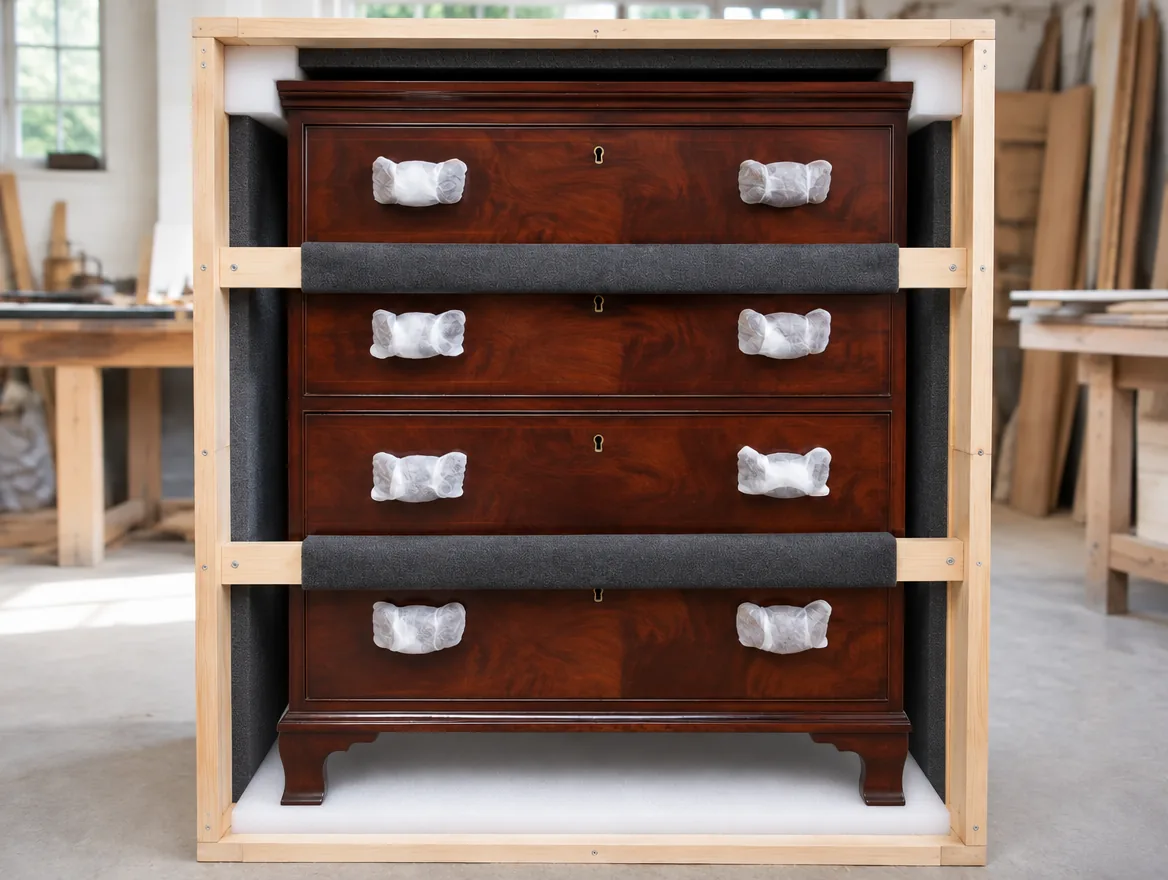
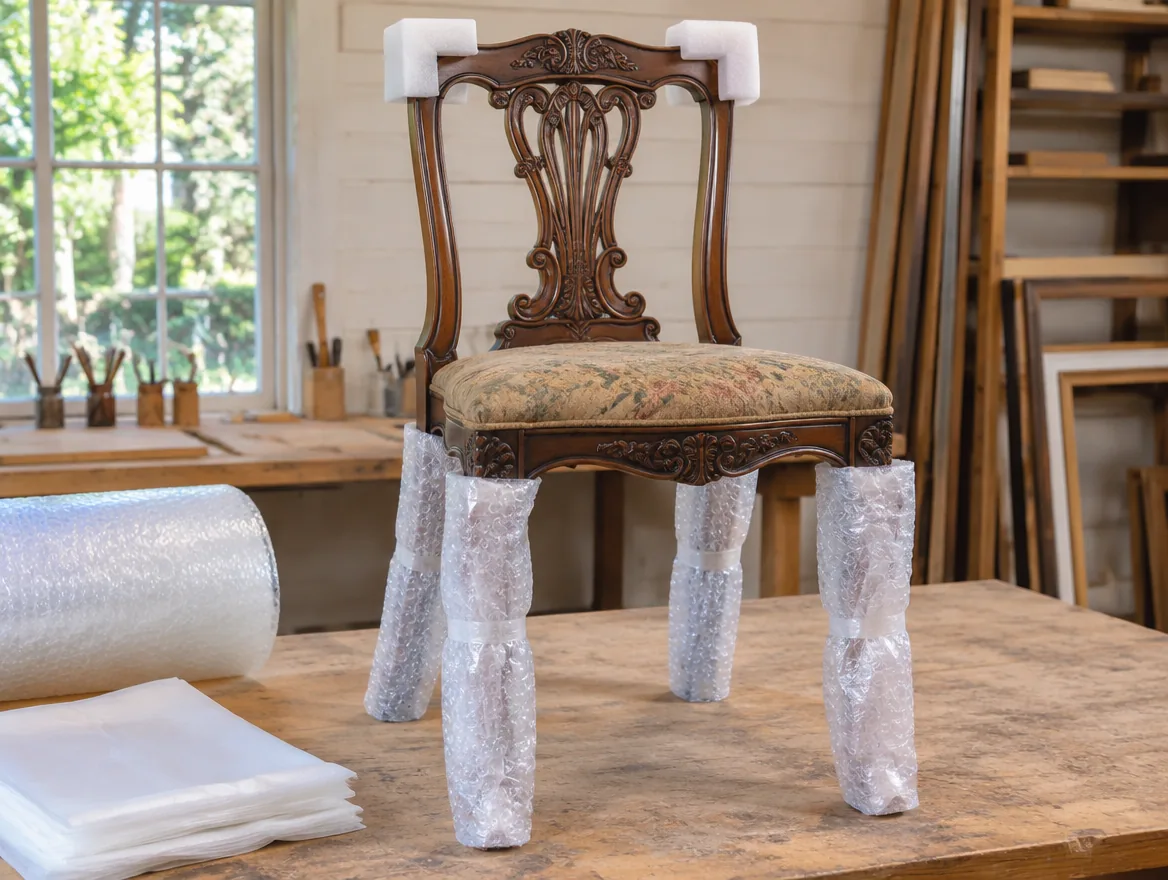
Anything you can't replace, anything with a delicate finish and anything heavy. An antique bureau or a glazed cabinet gets a crate of its own. Sturdy dining chairs can often share one, each in its own section.
- Tissue first on polish, veneer and gilding, then bubble wrap, so plastic never touches the finish.
- Firm white high density foam under the weight, running the full length with no gaps, never just at the corners.
- Soft charcoal HLB22 foam on the walls, wherever a carved or polished face could rest.
- Nothing loose. Drawers, shelves, glass and marble tops travel in their own padded spaces.
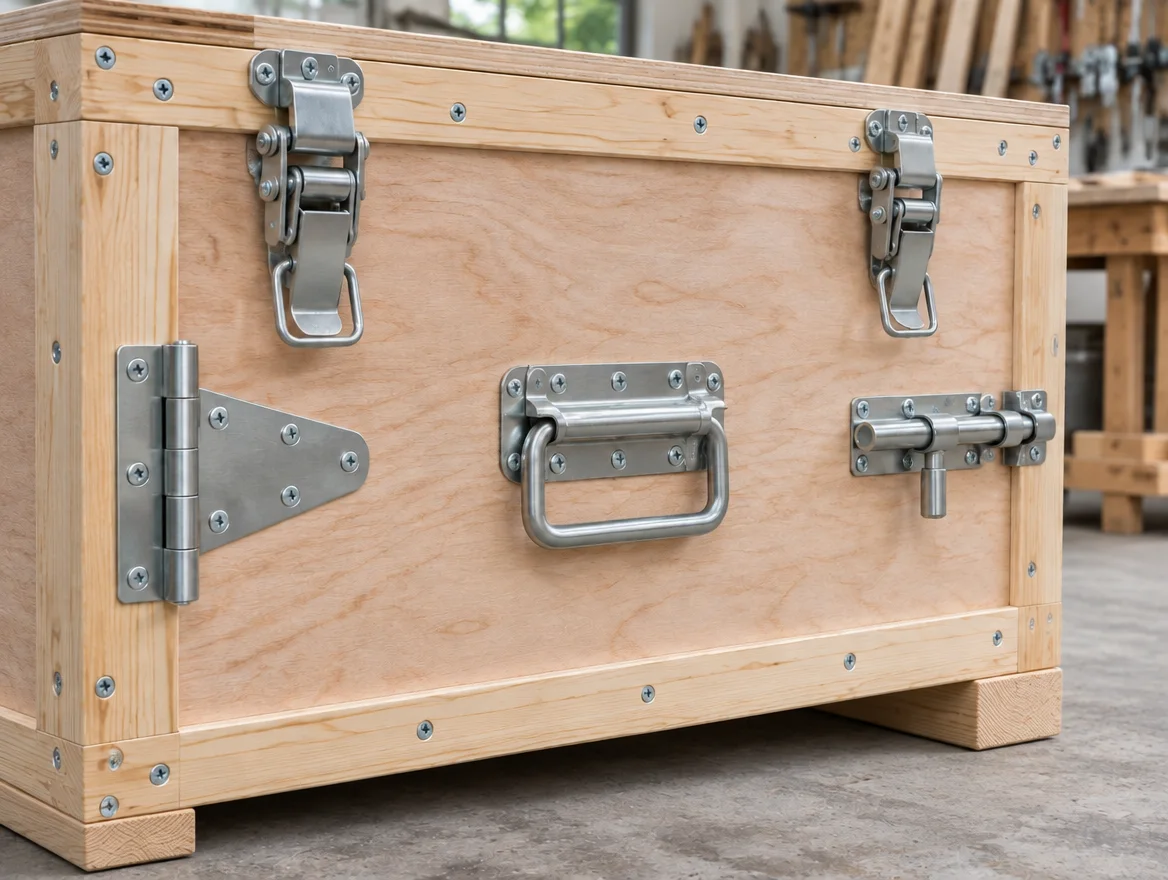
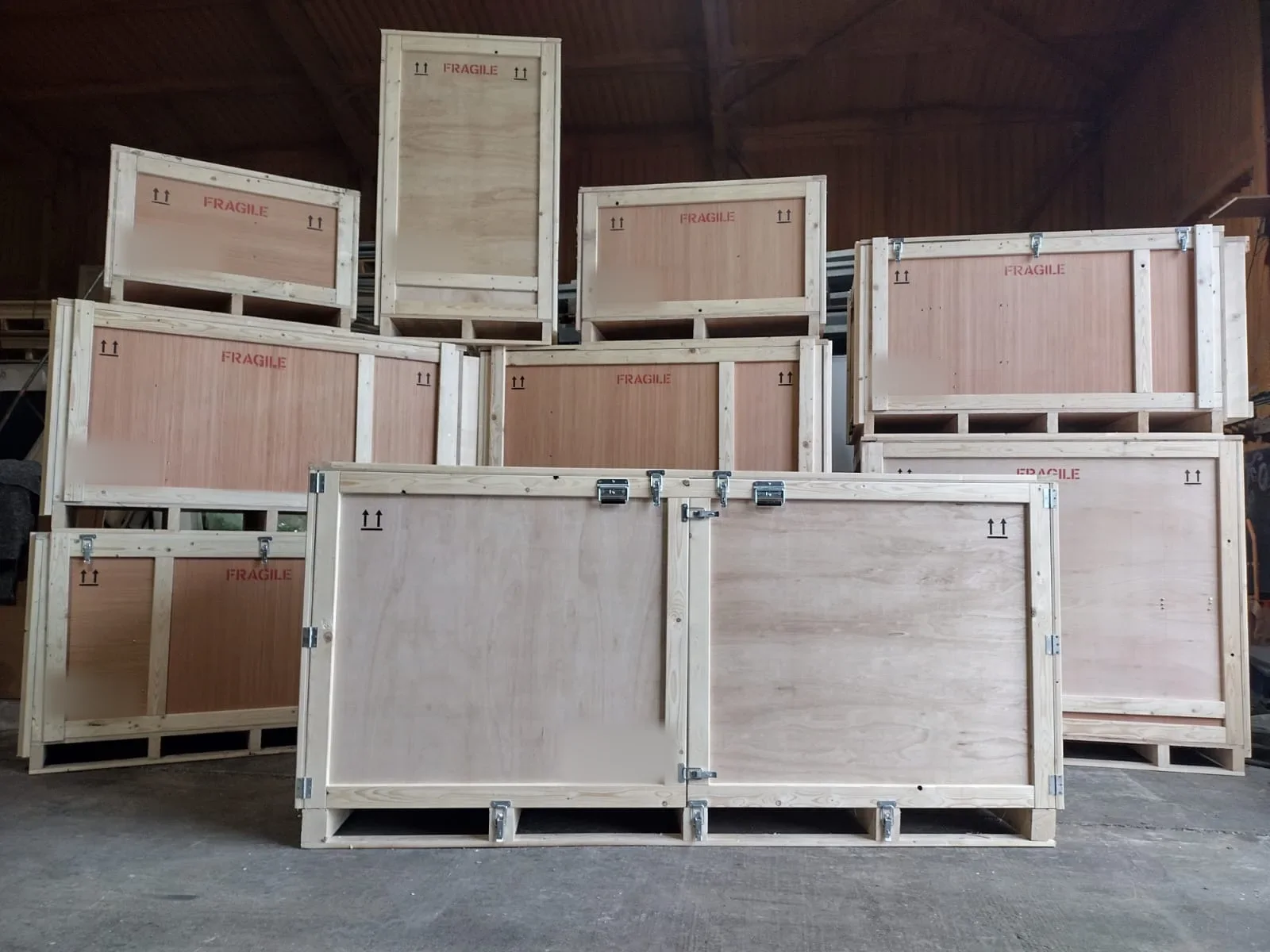
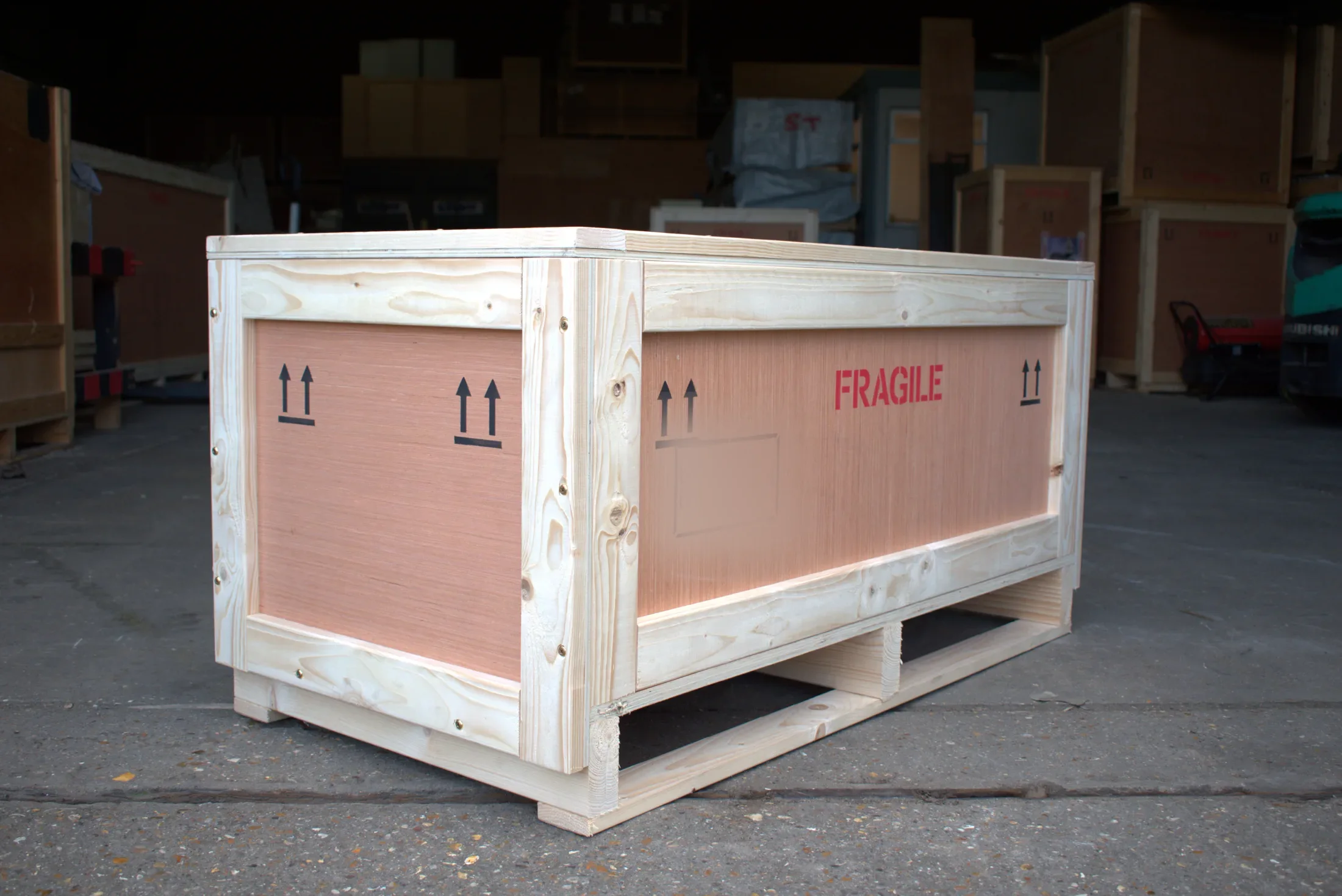
- Skids underneath for forklifts, and the crate marked Fragile and This way up.
We only take apart what was made to come apart: table leaves, bed frames, legs that unscrew. Old glued joints stay as they are.
More on antique furniture and export packing.
Art and antiques bound for Canada
Each piece is packed for what it is: firm foam where the weight sits, soft foam where a delicate surface is touched.
Weight is no obstacle: we have crated over 500 kg of concrete street art for a gallery sending it to the US. See that crate.
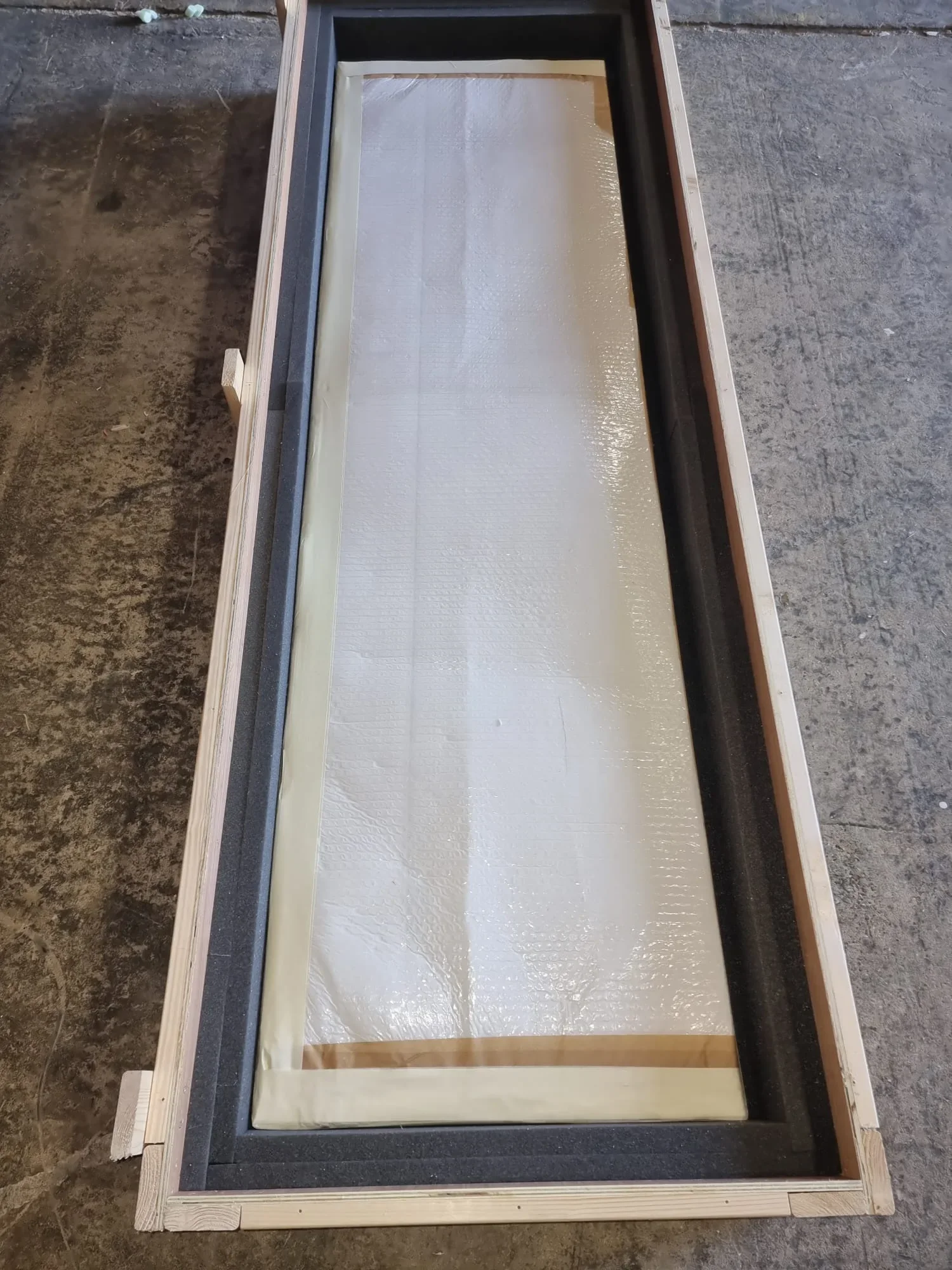
Soft charcoal foam against the frame, firm white foam along the bottom edge. Glazed works have their glass taped. See paintings.
Held by blocks of firm white foam so the weight can't shift. See sculpture.
Upright in a slim crate on firm foam, held by padded battens. See mirrors and glass.
Each piece in its own cavity cut into firm foam. See ceramics.
Sea or air to Canada?
Most crated furniture goes by sea, because it is big, heavy and rarely urgent. Air suits a painting or a single piece with a date to meet.
Canada is wide, and where a crate lands can be a long way from where it is going. Tell us the final address and any date that matters, and we'll give you the options. We don't quote transit times.
| Sea freight | Air freight | |
|---|---|---|
| Suits | Furniture, several crates, a house move | One or two pieces with a deadline |
| The journey | A long spell in a container, lifted at warehouses and ports | Less time on the move, handled at airports |
| Size | Large crates fit, within container doors | Limited by aircraft holds and doors |
| Cost | Usually better value for large or heavy crates | Usually higher, priced on weight and size |
Canadian customs: who pays duty and GST or HST?
The owner or importer of record pays any duty and GST or HST on arrival, usually through a licensed customs broker. We don't handle customs paperwork, so check the current position with your broker.
- The tax. GST is 5% of the value including duty. Ontario and the Atlantic provinces charge HST instead, at 13% to 15%. On goods for your own use, the CBSA usually collects Quebec's QST or the provincial sales tax in British Columbia, Manitoba and Saskatchewan too.
- Businesses. A gallery or dealer importing commercially needs a business number and an account on the CBSA's CARM portal.
- Evidence. An invoice describing the piece and its date helps prove its age.
This is a summary, not tax or legal advice. Agree before shipping who pays Canadian duty and tax, and ask a Canadian customs broker to confirm both for each piece.
| What it is | Canadian duty (usual position, check) | Tax on arrival |
|---|---|---|
| Original paintings, drawings and pastels | Free, heading 9701 | GST or HST usually due |
| Original prints and sculpture | Free, headings 9702 and 9703 | GST or HST usually due |
| Antiques over 100 years old | Free, heading 9706, if the age is accepted | GST or HST usually due |
| Wooden household furniture | 9.5% standard rate; free if UK origin | GST or HST usually due |
| Your own belongings, moving to Canada | Usually free, with conditions | Usually free, with conditions |
Send us a photo and the measurements.
We’ll recommend the crate, the lining and the supports, and come back with a bespoke quote.
Does the UK-Canada trade agreement make furniture duty free?
Only furniture made in the UK. Under the UK-Canada Trade Continuity Agreement, wooden household furniture that meets the rules of origin usually enters free of duty instead of at 9.5%. Origin means where a piece was made, not where it was bought.
Shipping furniture to America too? See shipping furniture to the USA.
Usually duty free. The exporter puts an origin declaration, with their EORI number, on the invoice.
A London sale doesn't make a piece British. A sofa made in Italy is assessed on where it was made.
Origin matters less, as they are duty free anyway if the age is accepted.
Does ISPM 15 apply to crates going to Canada?
Yes. Canada requires wood packaging from every country except the continental United States to be debarked, treated and marked under ISPM 15. That covers a crate's solid timber frame, skids and battens. Packaging made wholly of plywood is exempt, but plywood combined with solid timber is still regulated.
The Canadian Food Inspection Agency (CFIA) says shipments with wood packaging that doesn't comply will be ordered out of Canada, at the importer's cost.
Our crates are heat treated and carry our own registered ISPM 15 stamp, so they meet Canada's rule. See our ISPM 15 guide and plywood crates.
Export licences, CITES and ivory
Check these before anything is crated, as some pieces need permits on both sides of the Atlantic.
Old furniture can hide ivory escutcheons or tortoiseshell veneer. Tell us when you ask for a quote; permits are arranged by you or your agent, not by us. More on antique shipping.
Objects of cultural interest over 50 years old can need an Arts Council England export licence, depending on value. Ivory, tortoiseshell or protected rosewood usually needs a CITES permit from APHA. The Ivory Act 2018 bans exporting most ivory for sale or hire unless registered or certified exempt.
Since 8 January 2024, Canada has required a permit for every item of worked elephant ivory, antiques and household effects included. Other protected species can need permits too.
Moving to Canada with your furniture and art
If you are moving to Canada to live for the first time, your own furniture, antiques and art can usually enter free of duty and tax as settlers' effects. The CBSA's conditions include:
- Owned and used. You owned, possessed and used the goods before arriving in Canada.
- One list. What you bring, and separately the goods to follow, recorded on form BSF186.
- Goods to follow. Crates arriving later only qualify if they were on that list.
- A year. Sell or give them away within a year and the duty and taxes become payable.
Check the current rules with the CBSA before you travel. Removal firms often bring us in for the fragile pieces: see crating for removal companies.
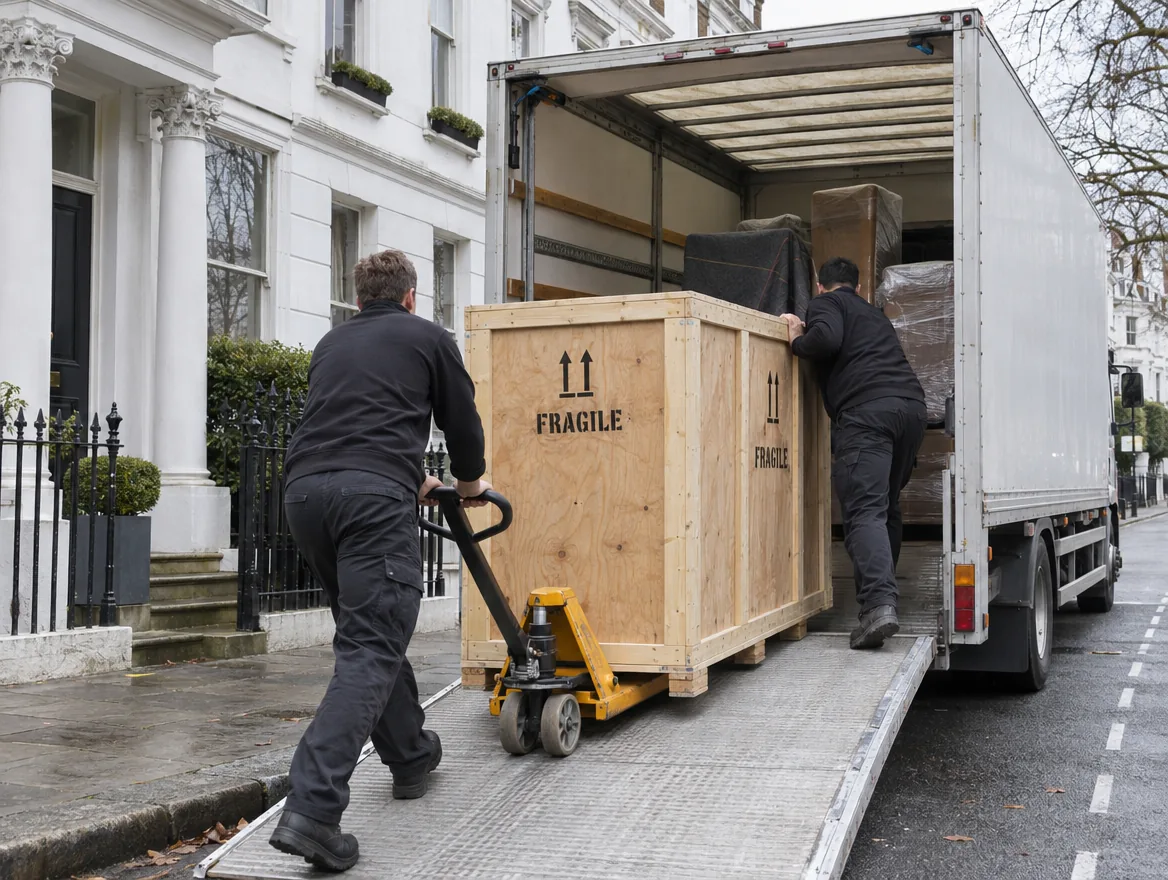
When the crate arrives in Canada
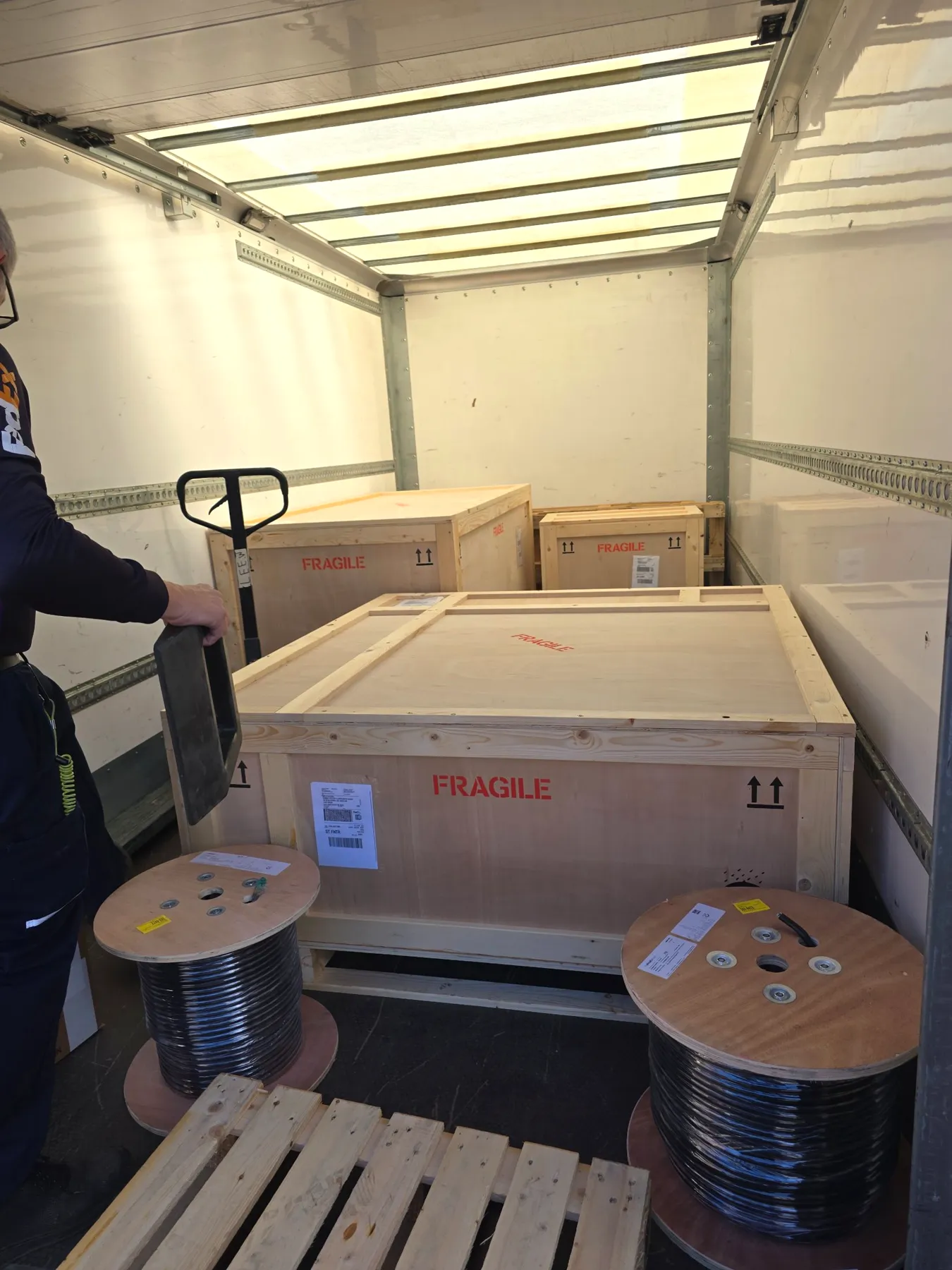
Plan the last few metres before the crate is built. In winter that can mean snow and ice outside, and a cold crate coming into a warm, dry house.
- Access. Steps, drives and the narrowest door on the way in. Photos help.
- Let it settle. Leave the crate closed indoors, often overnight, until it reaches room temperature.
- Unpack slowly. Check each piece against your photos and keep the packing.
Two ways to work with us
Measuring yourself? Take the widest, deepest and tallest points, including cornices, handles, frames and feet, and tell us roughly what each piece weighs. Transit insurance is bought by you, job by job: see our insurance page.
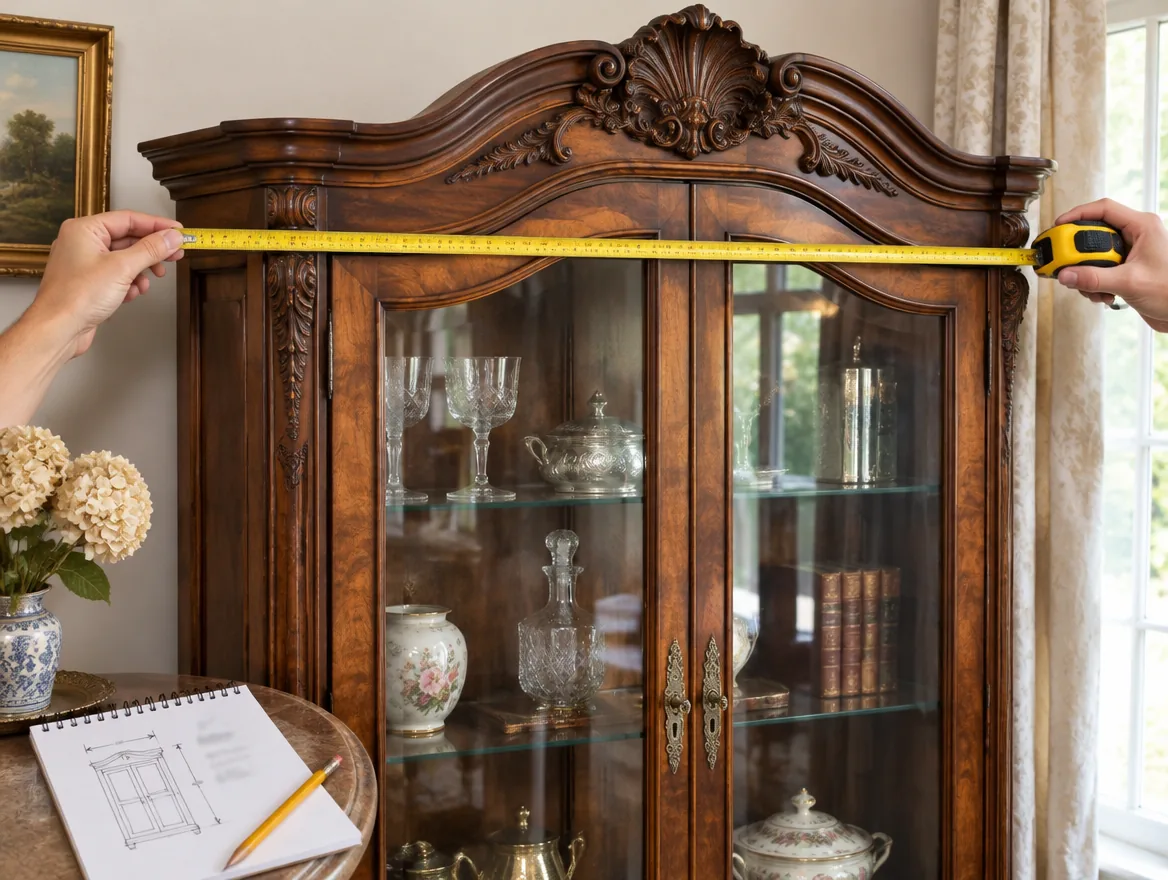
We collect the piece and crate it in our warehouse. Your shipper collects the crate from us. Nothing to measure. How it works.
You send the sizes, we confirm them, then build the crate and deliver it to you. How it works.
We can arrange the onward shipping too. The customs paperwork stays with you or your broker.
Common questions
How much does it cost to ship furniture to Canada from the UK? +
It depends on the pieces, how many crates they need, sea or air, where in Canada they are going and whether delivery runs to the door. Every quote is bespoke. Send us a list and photos and we'll come back with a price.
Can you deliver to Toronto, Vancouver or Montreal? +
We can give you options for anywhere in Canada, in a city or not. Tell us the full address and ask us whether the quote runs to the door or to a warehouse for collection.
Is UK VAT due as well as GST in Canada? +
Usually not both. A VAT-registered UK seller can normally zero-rate a sale that leaves the UK, if the conditions are met and they hold proof of export in time. The rules are stricter when the buyer arranges the export. GST or HST is then due on arrival in Canada. Ask the seller how they handle it, as this isn't tax advice.
Can you crate a piano or a musical instrument for Canada? +
Yes. We crate pianos and valuable instruments, each resting on firm foam where its weight sits. Check first for ivory keys or Brazilian rosewood, as Canada needs a permit for worked ivory. See pianos and musical instruments.
Can you ship just one chair or a small painting? +
Yes. We crate any object, any item and any weight. A small, light piece may suit a plywood box rather than a framed crate; plywood crates explains the difference.
My shipper is already booked. Can you just do the crates? +
Yes. We can collect and crate the pieces for your shipper to collect from our warehouse, or build crates to your measurements and deliver them to you.
Do you handle the customs paperwork? +
No. The UK export declaration, any licences or permits and the Canadian import entry are arranged by you, your shipper or a customs broker. What we do is make sure each crate is ready for the journey, clearly marked and easy to open and close again if customs want to look inside.
Is it insured on the way to Canada? +
Transit insurance is available, bought by you job by job, so the cover matches what is being shipped and its real value. We have public and product liability insurance. See our insurance page for what to ask.
Related
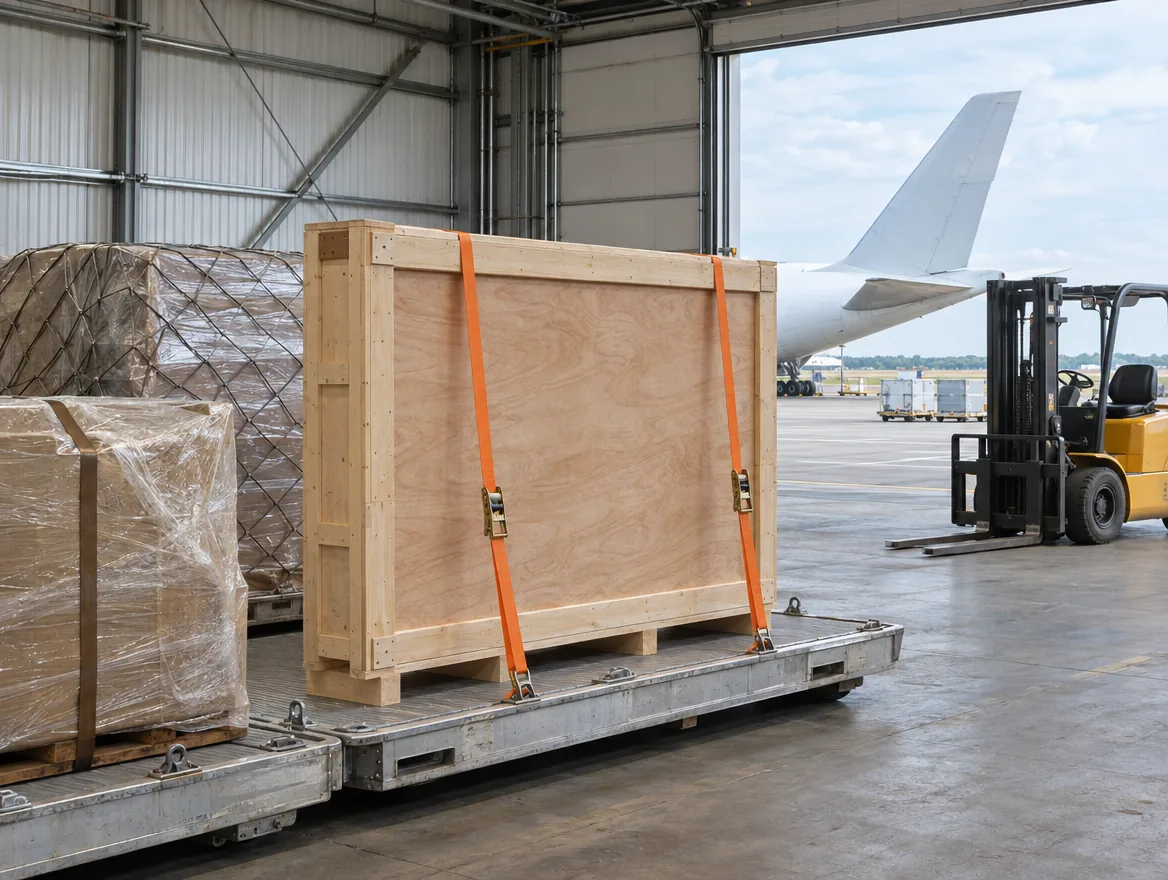
How art shipping works, end to end, and where we ship.
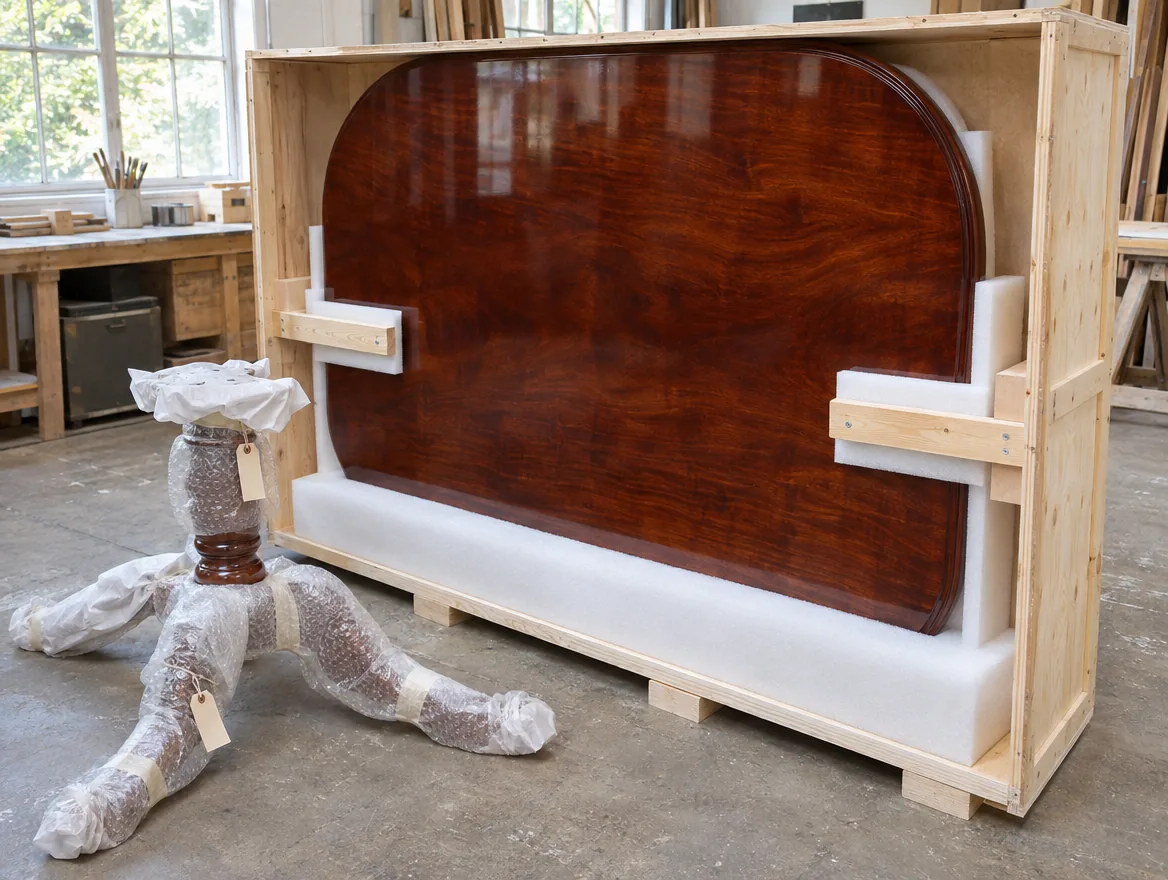
Antique and modern furniture, crated in London for the Atlantic.
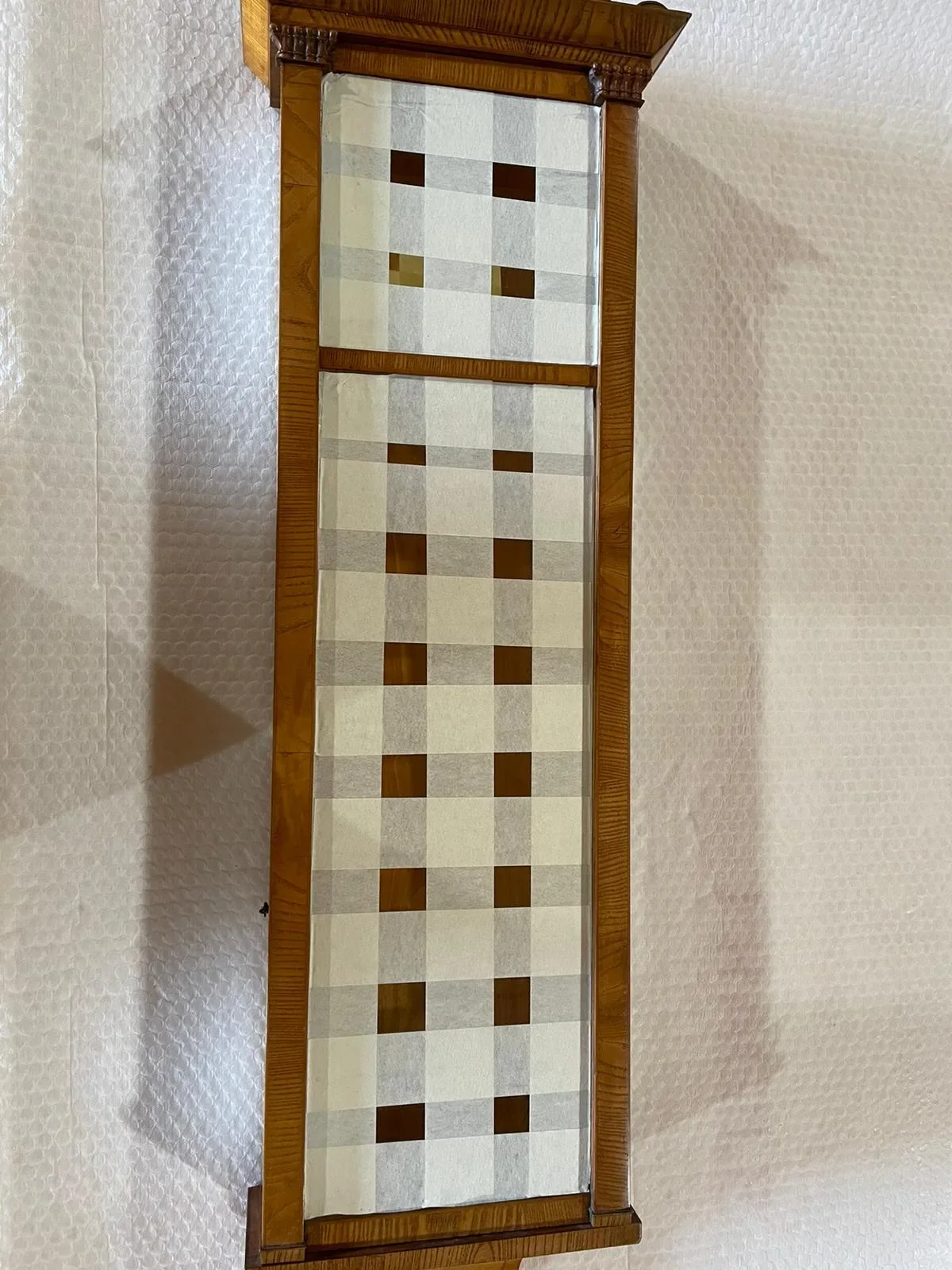
Clocks, mirrors, glass and collections.
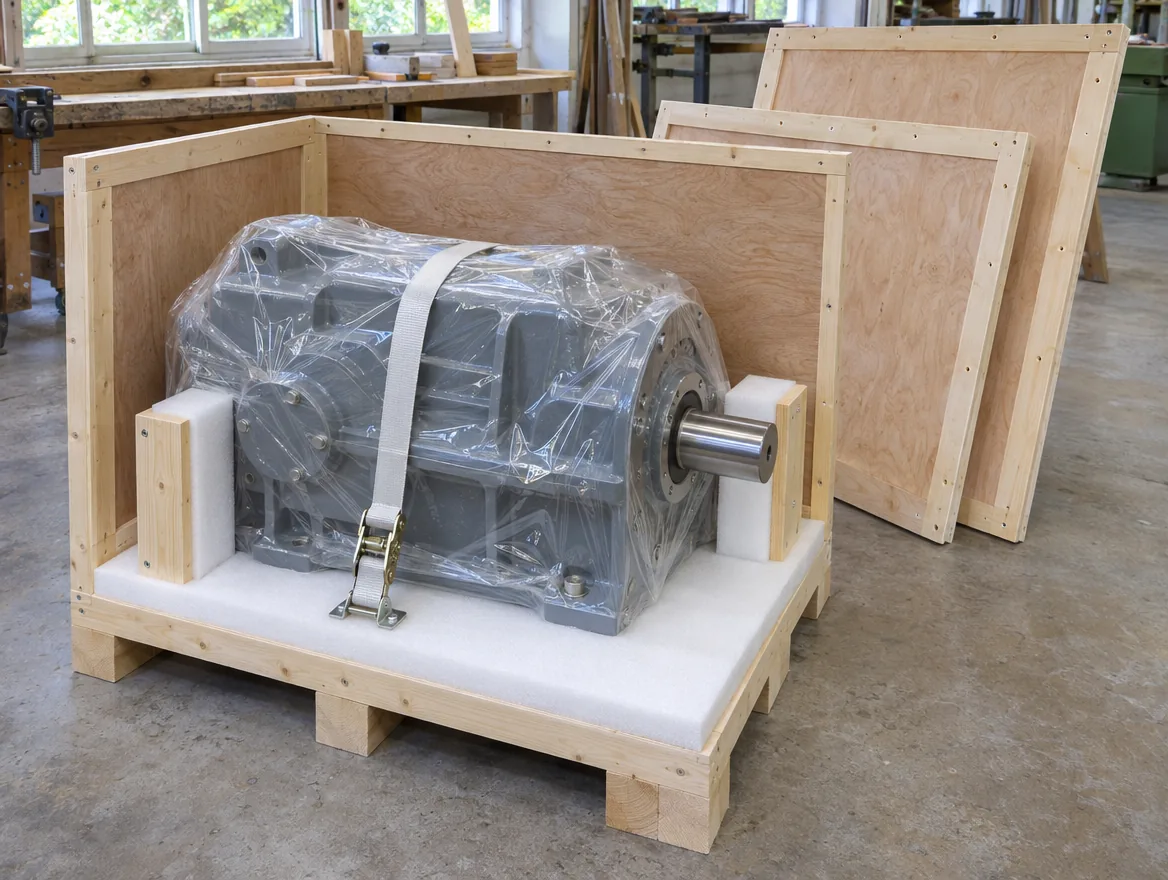
Crates built for sea and air freight, from machinery to art.
Swipe for more →
Tell us what needs to travel.
Every quote is bespoke, based on the piece itself. Send us the details and we'll come back to you.