

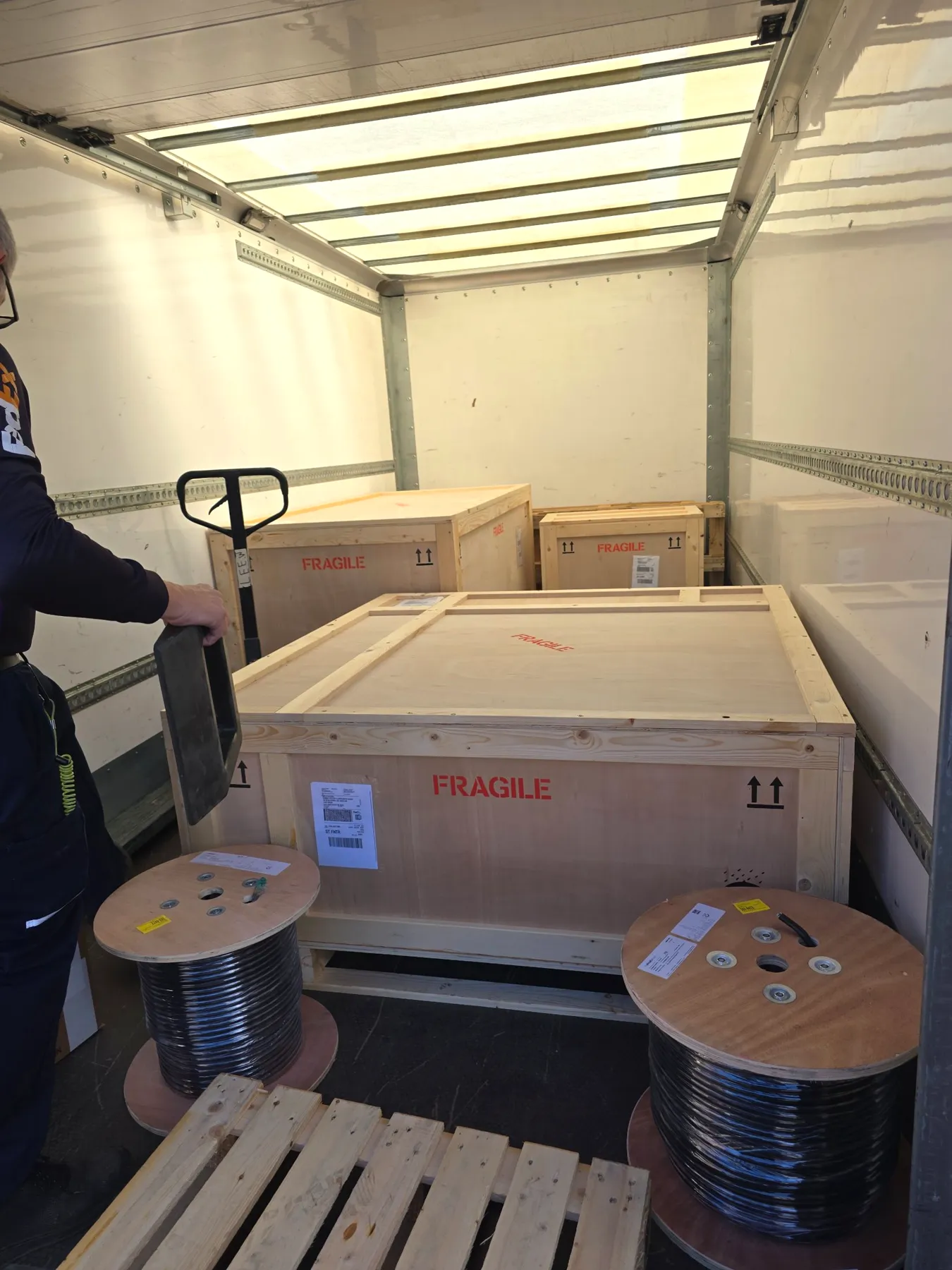
From your wall to theirs, in six steps
Once your quote is confirmed, we handle everything from collection to shipping. All we need from you are the item details and the collection and delivery addresses. Here is what happens from your first message to the day your piece arrives.
- You send
- Item details and both addresses
- We handle
- Everything after that
- Hours
- 9am to 4pm, 7 days a week
How does shipping with us work?
In short: you tell us what you're sending, we send you a bespoke quote, and once you confirm it we collect the piece, pack it by hand, build a crate around it and arrange the shipping to its new address. The same specialist looks after it from collection to dispatch, so you have one person to talk to the whole way through.
- 01Tell us what you're sending
Use the quote form to tell us what the piece is, roughly how big and heavy it is, where it is now and where it's going. Photos help a lot.
- 02Get a bespoke quote
We price your piece, not a category. The quote is based on its size, weight, how fragile it is, the route and how quickly it needs to get there.
- 03Confirm, and we take it from there
Once you confirm, you don't need to chase anyone. We arrange the collection, packing, crating and shipping.
- 04Collection
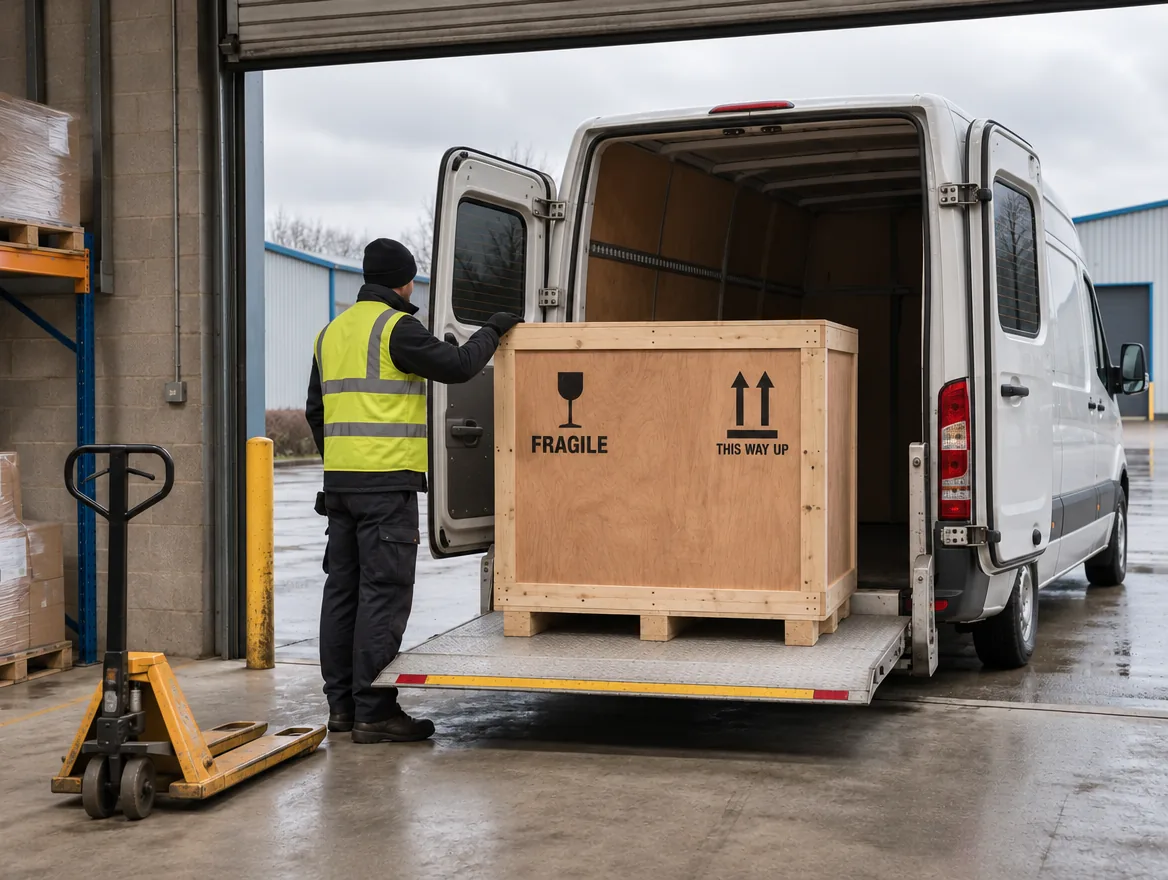
We collect it ourselves. We're in and out of London regularly making collections, 9am to 4pm, 7 days a week.
- 05Packing and the crate
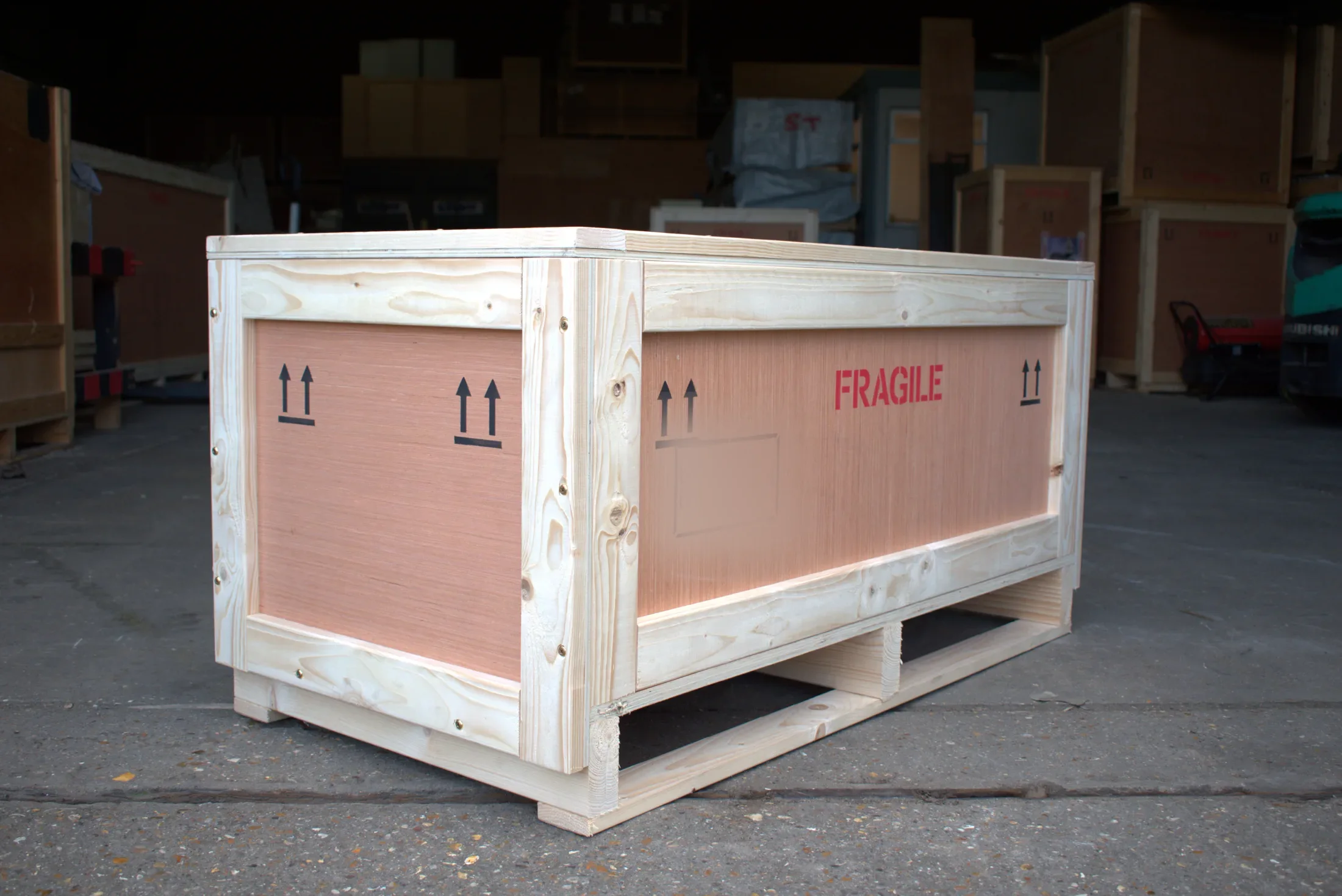
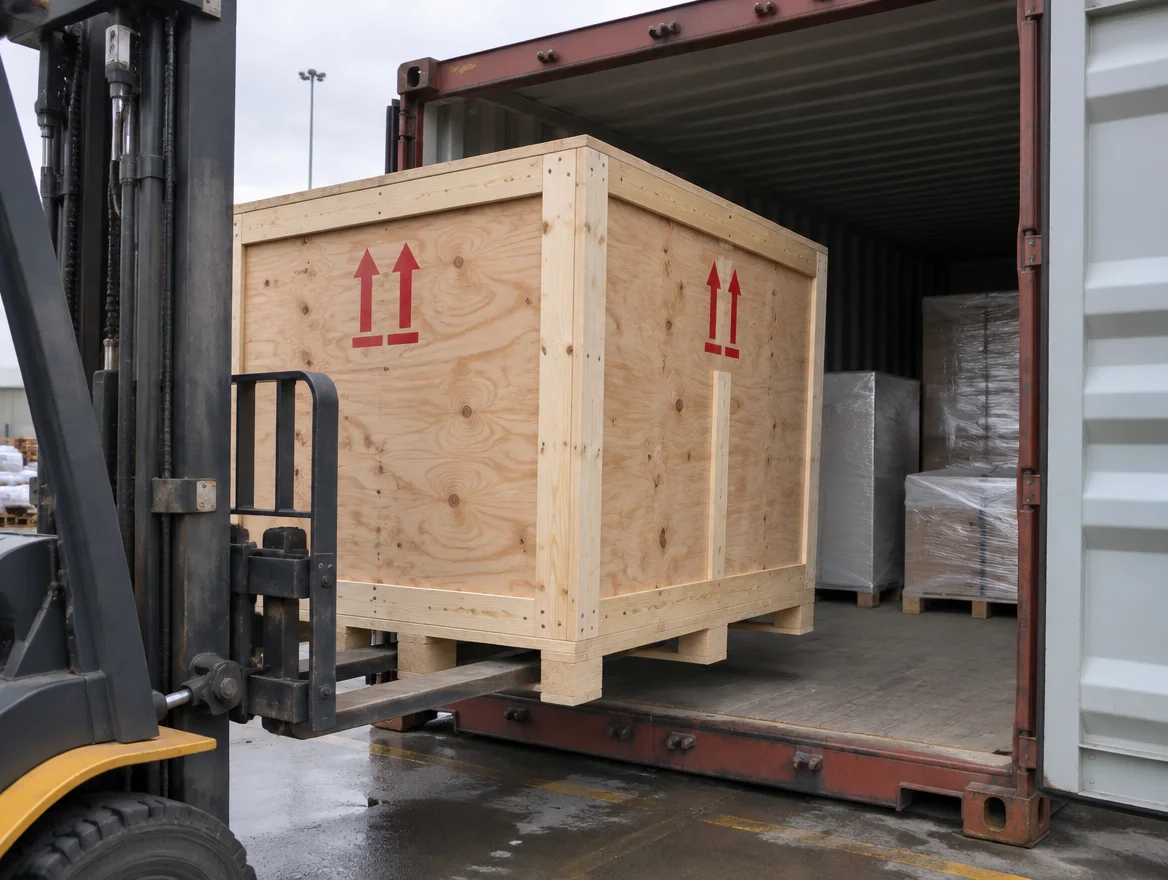
The piece is wrapped by hand for what it is, then held still inside a crate built to measure in timber and plywood, marked Fragile and This way up.
- 06Onward shipping and delivery
The crate is shipped on to the address you gave us. We ship to the US and Europe often, and can give you options for anywhere in the world.
Two ways to start: we collect it, or you send the sizes
There are two ways to work with us, and you choose whichever suits you and your piece.
If you'd like us to arrange the shipping too, we can. Customs paperwork stays with you, your shipper or a customs agent. More on each: we collect and crate and crates built to your measurements.
| We collect it | You send the sizes | |
|---|---|---|
| Who measures | Nobody: we build around the piece itself | You, and we confirm every measurement with you |
| Where the crate is built | At our warehouse, with the piece there | At our warehouse, to your confirmed dimensions |
| What happens next | Your courier or shipper collects the crated piece from us | We deliver the finished crate to your address |
| Best for | Auction buyers, people abroad, anything hard to measure | Dealers, galleries, your own packers, pieces that can't leave the building |
Step 1: what we need from you
A good quote starts with good information. You don't need exact measurements to get in touch, but the more of this you can tell us, the more accurate the price will be and the fewer questions we'll need to ask.
- What it is: a painting, a mirror, a clock, a sculpture, a set of parts, a motorbike.
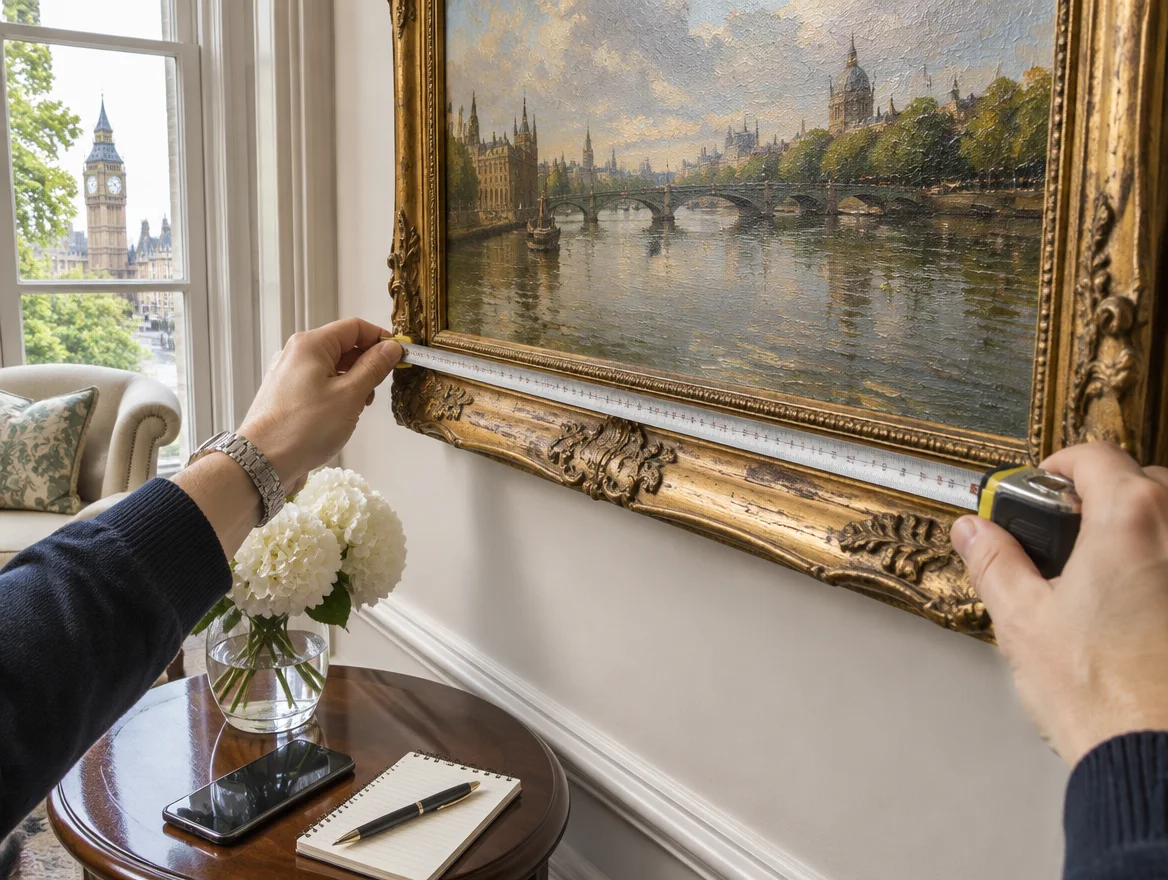
- Its size: height, width and depth, even roughly. For a framed work, the size with the frame.
- Its weight, if you know it, or a best guess. Anything heavy enough to need two people is worth mentioning.
- What it's made of and what's fragile about it: glass, gilding, a carved frame, loose parts, a painted surface.
- The collection address, and anything about access: stairs, a lift, parking, a narrow door.
- The delivery address, including the country and city.
- When it needs to leave, and when it needs to arrive, if there's a date that matters.
- Photos from the front, the back and the side, if you can take them.
Not sure about any of these? Send what you have. We'd rather have a rough description and a photo than wait for perfect measurements.
Step 2: how your quote is worked out
We don't use a rate card. Two paintings of the same size can need very different packing if one is behind glass and the other has a fragile gilded frame. So every quote is fully bespoke, based on the item itself.
If you'd like the crate only, without the shipping, ask us and we'll tell you what we can do. Read crate or box if you're not sure what your piece needs.
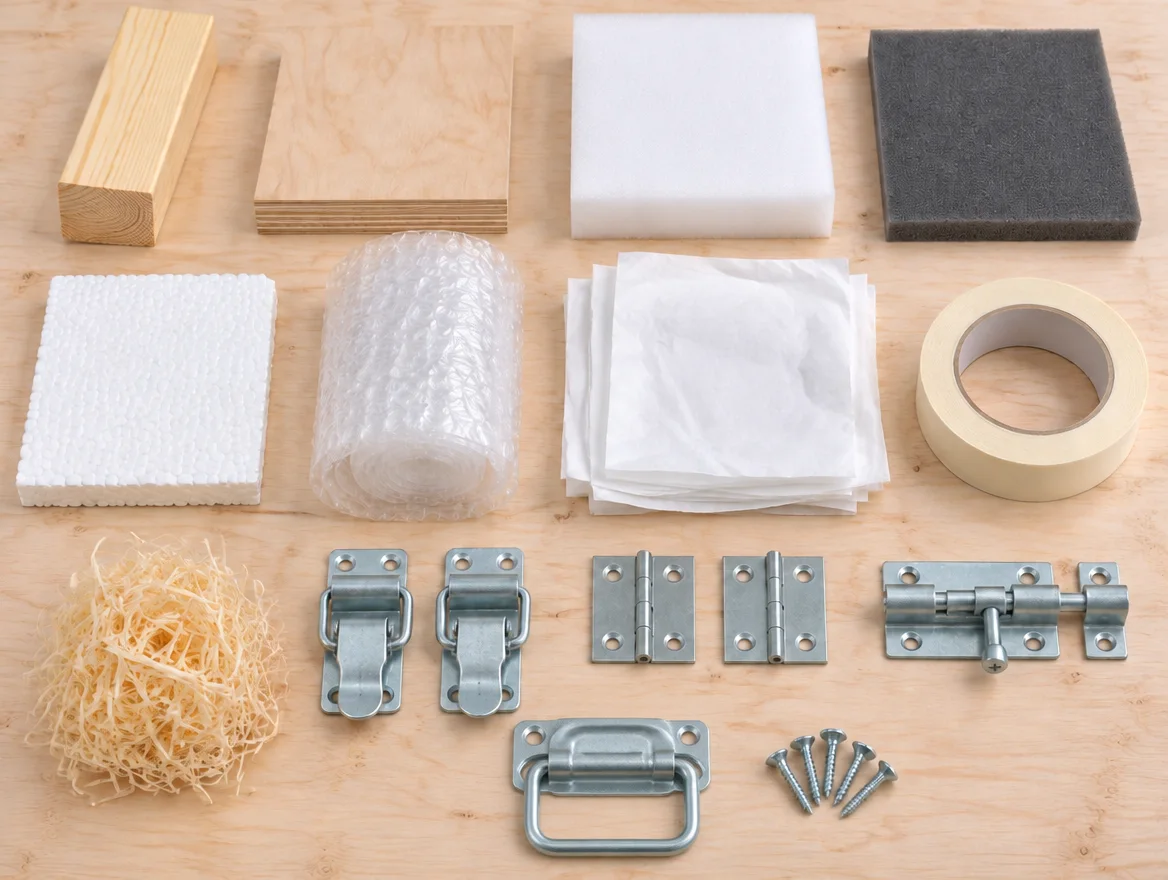
Size, weight, shape and how fragile it is decide how much timber, foam and time the crate takes.
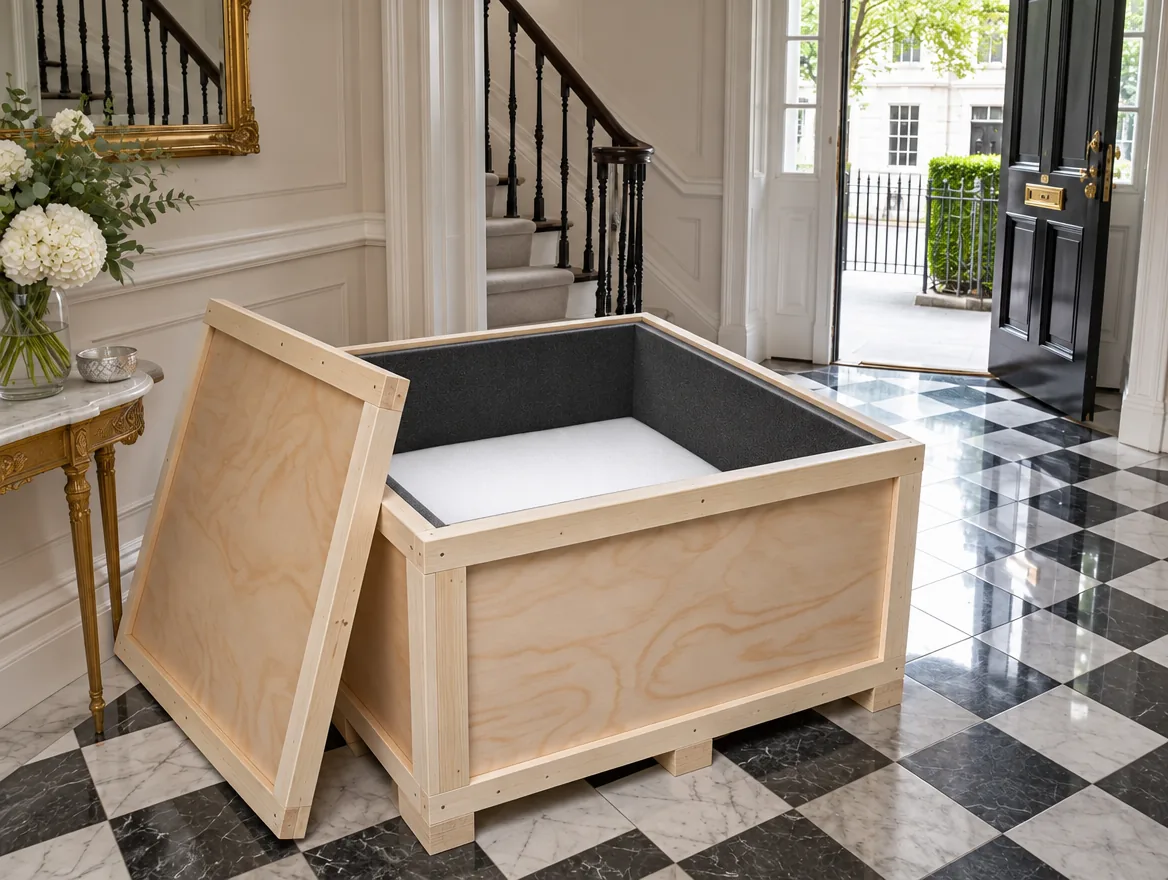
We line crates with high density foam, HLB22 soft foam or polystyrene, from 25 mm thick upwards. Polystyrene is the most affordable. Your quote says which we recommend and why.
Where it's collected from, where it's going and how quickly it needs to get there.
Transit insurance is available for every export and is bought by you, job by job, for the value of the piece.
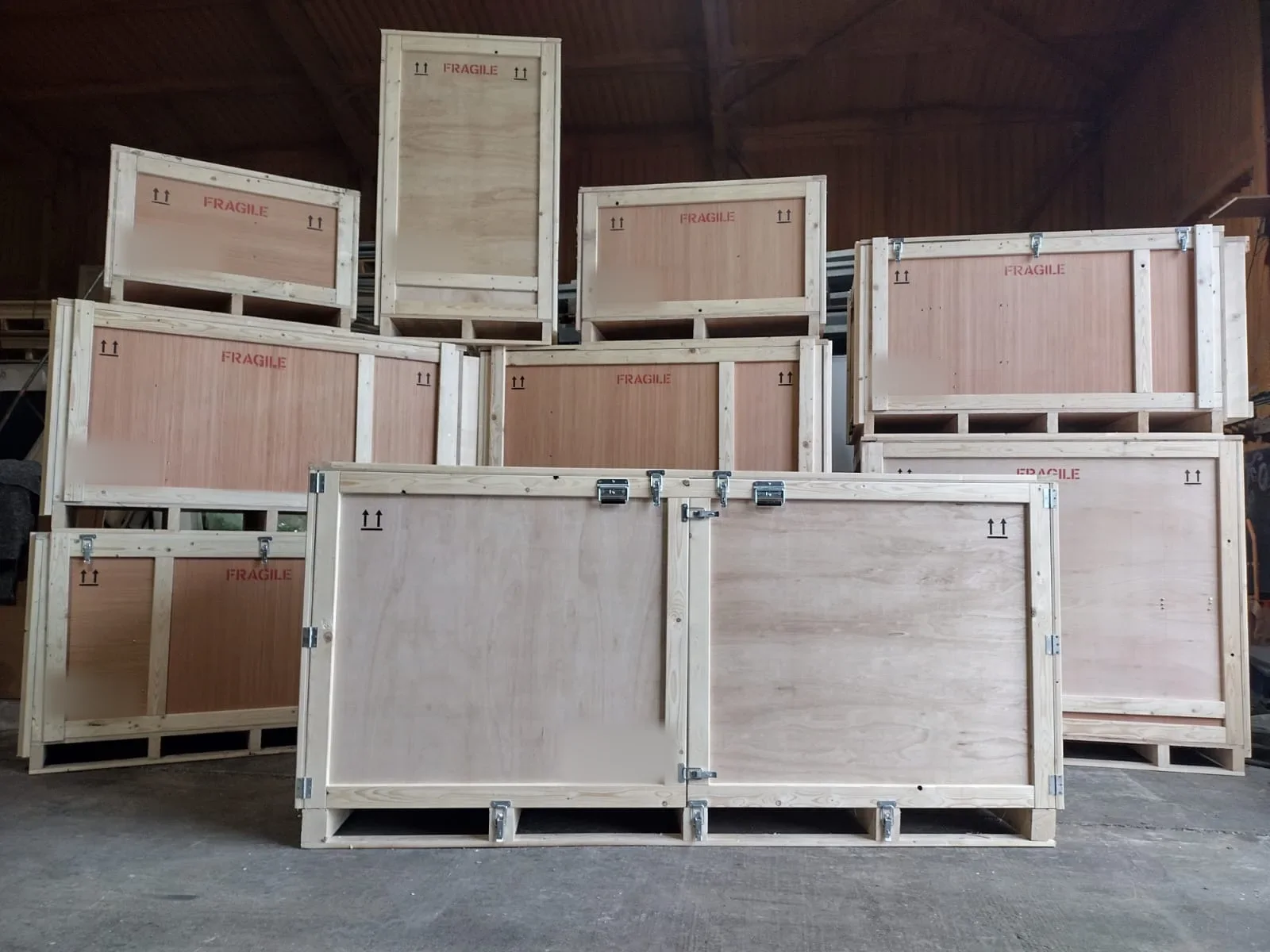
Send us a photo and the measurements.
We’ll recommend the crate, the lining and the supports, and come back with a bespoke quote.
Step 3: what happens on collection day
Collection day is usually simple. Here's how to make it go smoothly, and what to expect.
- Have someone there who can let us in and point out the piece.
- Clear a path from the piece to the door, and tell us beforehand about stairs, lifts or tight corners.
- Let us know about parking or loading restrictions outside, so we can plan for them.
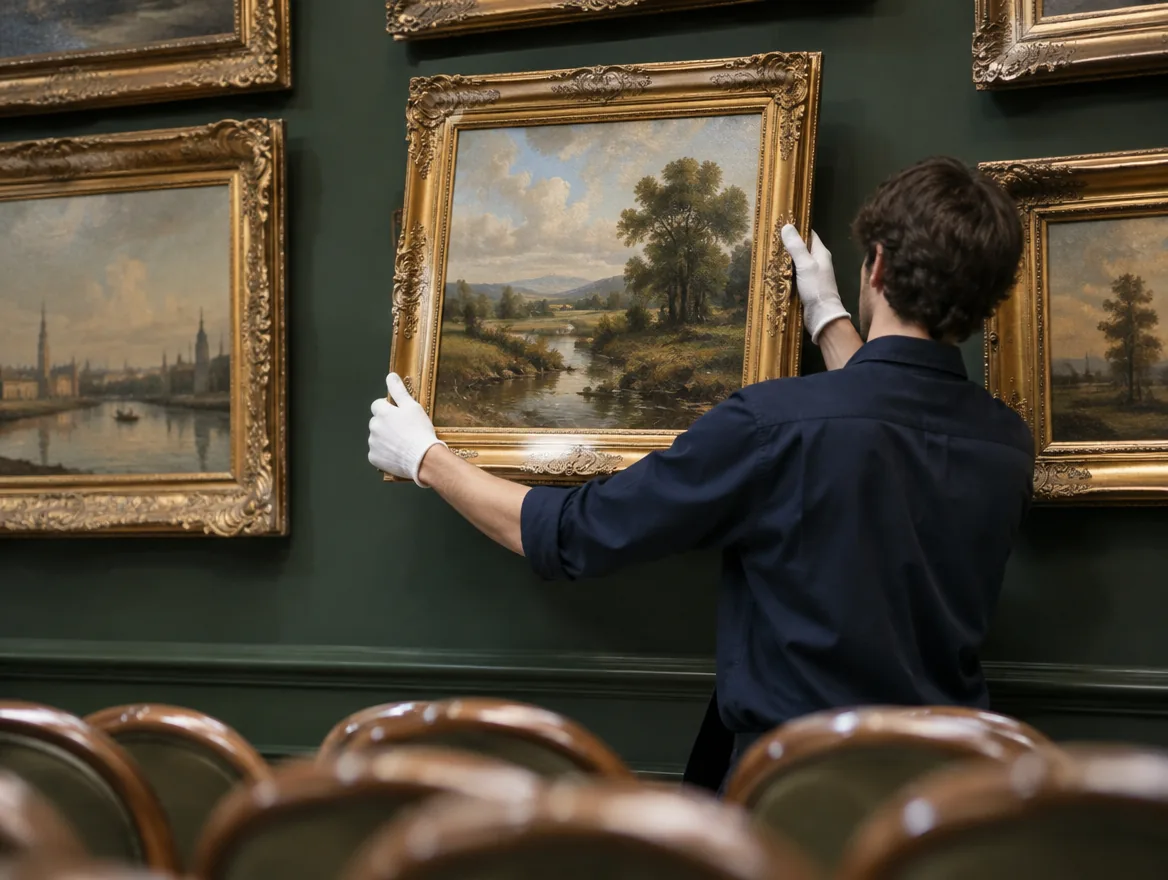
- If a painting or mirror is still on the wall, tell us when you book, so we know before we arrive.
- Mention anything you're worried about, such as a loose frame corner or old damage. It's better we know before we handle it.
We'll check the piece against what you told us. If it turns out larger, heavier or more fragile than described, we'll talk it through with you before going ahead, rather than surprising you later.
Whether a piece is packed on site or taken to the workshop to be packed and crated depends on the piece and the job. Ask us when you book and we'll tell you what to expect for yours.
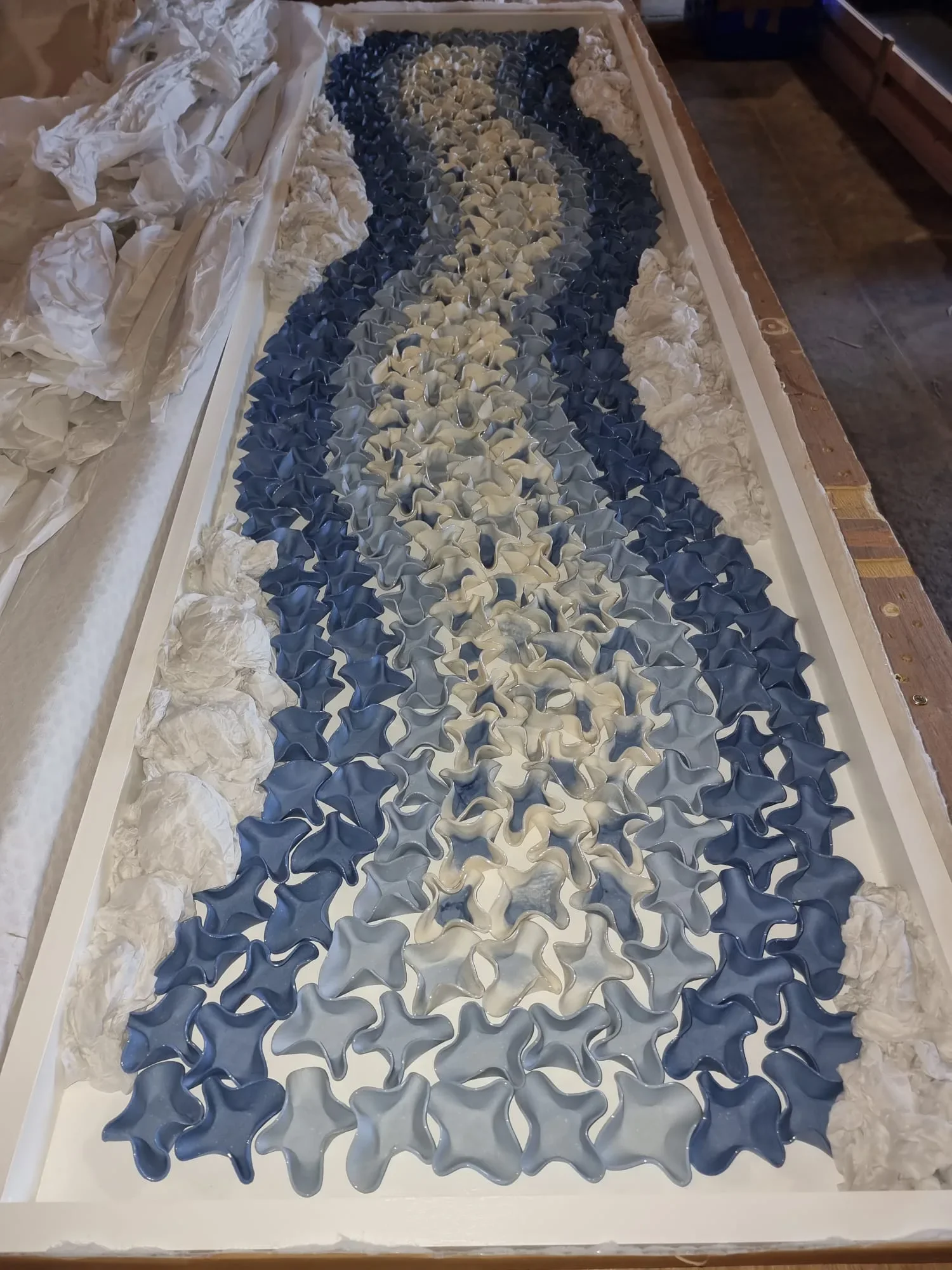
Step 4: packing and the crate
This is the part we've spent 13 years getting right. Each piece is packed for its weak points, then held so it can't move inside the crate.
- Tissue paper first. Painted surfaces are wrapped in tissue paper first, so nothing rough touches them. Bubble wrap goes on over that, never straight onto paint.
- Glass taped. On mirrors and glass-fronted pictures, the glass is taped in a lattice so that if it cracks, the pieces stay in place. See mirrors and glass.
- Held still. Foam linings, foam blocks and padded battens hold the piece. Battens are for mirrors and flat works. Busts and sculpture are held with high density foam blocks.
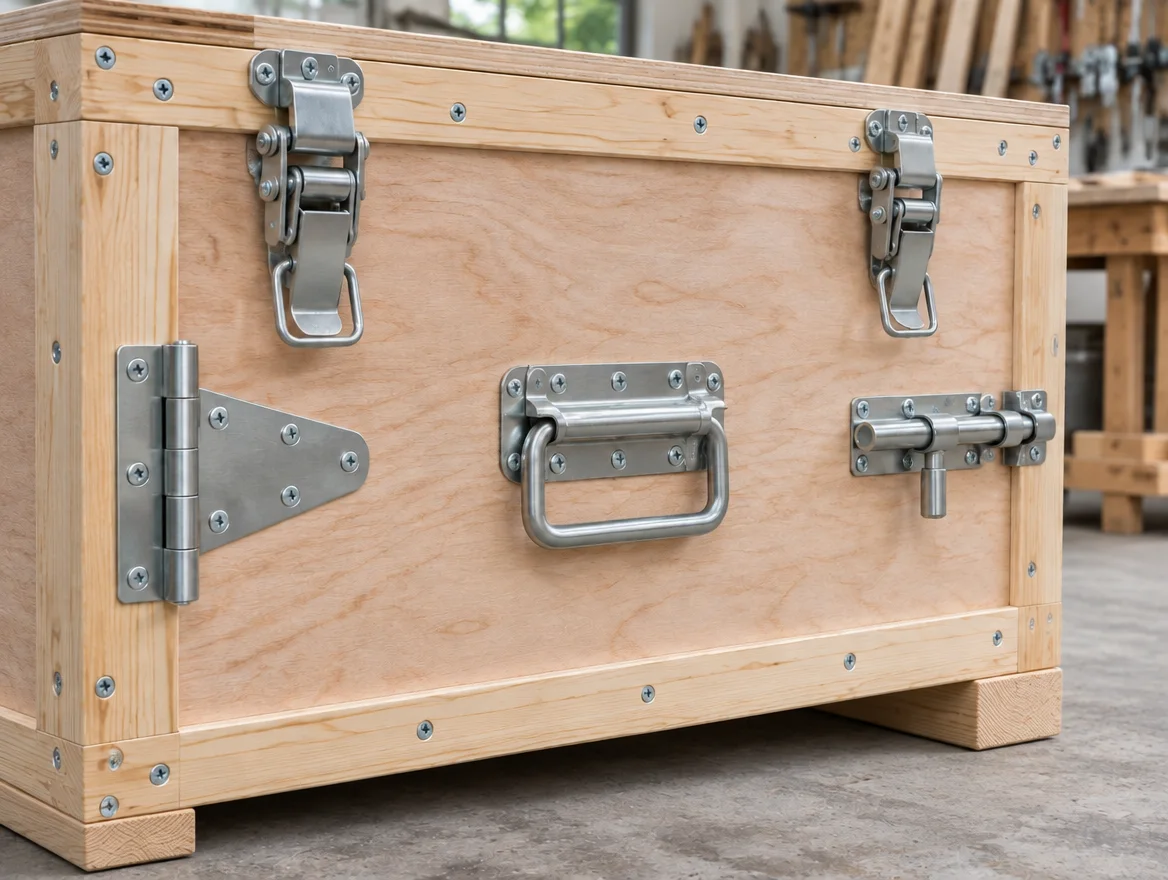
- Built to measure. The crate is a timber frame with plywood panels, sized to the piece, with every latch, hinge and bolt lock fitted by hand, in-house.
- Marked. Fragile and This way up, so everyone who handles it knows how it should travel.
Crossing a border? Most countries require solid wood packaging to be heat treated and marked under ISPM 15. Ours are heat treated and carry our own registered ISPM 15 stamp. Read our ISPM 15 guide.
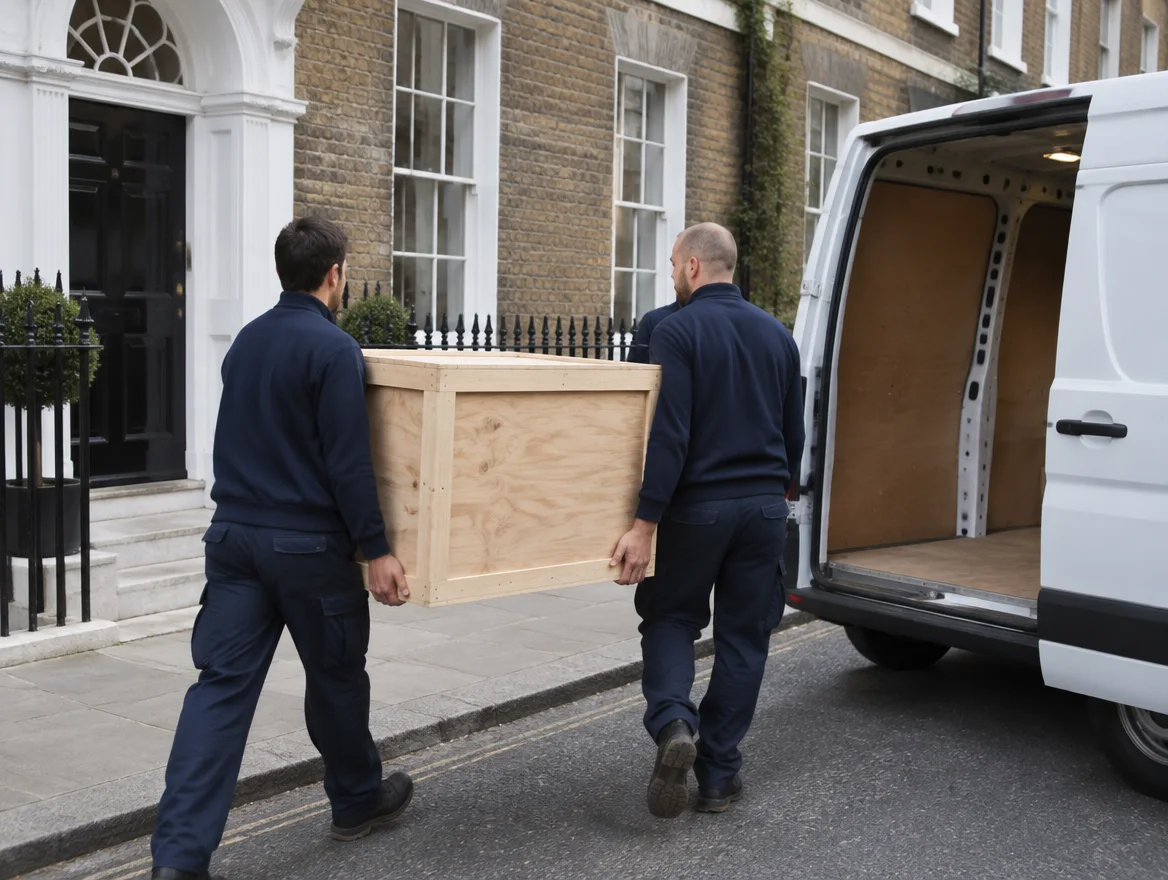
Step 5: onward shipping and delivery
Once it's crated, your piece is shipped on to the address you gave us. The United States and Europe are our most common destinations, and we can give you options for anywhere else in the world.
- To the USA: see shipping art from the UK to the USA.
- To Europe: see shipping art to Europe.
- Antiques: see antique shipping for clocks, mirrors and collections.
Transit times depend on the route and how it travels, so they're part of your quote rather than a fixed promise here. If there's a date the piece has to arrive by, tell us at the start.
We don't handle customs paperwork. Export declarations, licences and import entries are arranged by you, your shipper or a customs agent. What's needed depends on the piece and where it's going. Some older works and antiques need a UK export licence, and import rules differ from country to country, so check the current position for your piece. What we do is make sure the crate is ready for the journey: clearly labelled and easy to open and close again if customs want to look inside.
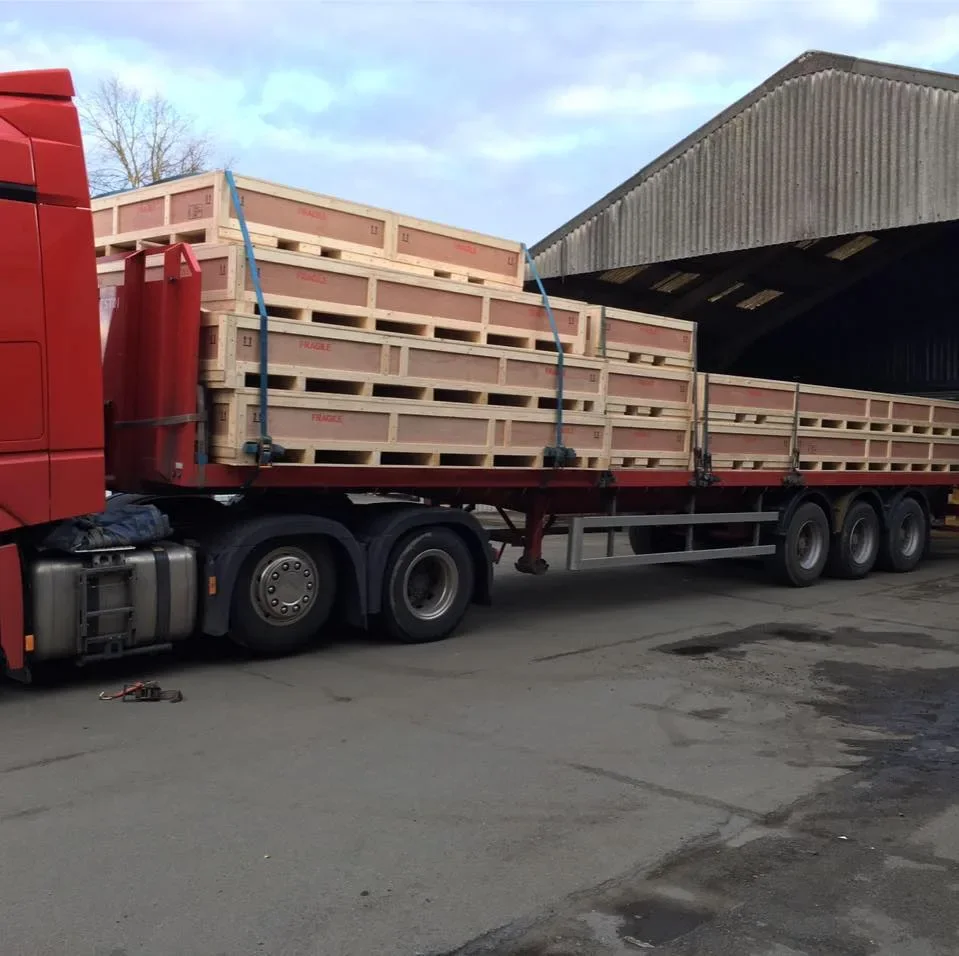
One specialist, start to finish
With a big firm, a piece can pass through many hands: a collection team, a packing team, a warehouse, a carrier. When something goes wrong, nobody owns it. With us, the specialist who collects your piece is the one who packs it and builds its crate, so there's one person who knows it and one person to call.
Want to know more about us? Read about Independent Packing & Export, see recent work, or go straight to request a quote.
Common questions
Do I need to measure my piece? +
No. We can collect your piece, take it to our warehouse and build the crate around the piece itself, then your courier collects the finished crate from us. If you'd rather send us the dimensions, we confirm them with you before we build, then deliver the crate to your address. That crate is built to the measurements you confirmed, so measure carefully: here's how.
Can my own courier collect the crate? +
Yes. Once your piece is crated at our warehouse, your courier or shipper collects it from us. We give you the crate's size for their booking, with its weight estimated from the volume of materials. If you or your shipper need the exact weight, we weigh the crate once it's built.
Do you handle everything? +
Yes, apart from customs paperwork. Once your quote is confirmed, we handle the collection, packing, crating and shipping. All we need are the item details and the collection and delivery addresses. Export declarations, licences and import entries are arranged by you, your shipper or a customs agent.
How much does it cost? +
Every quote is bespoke, based on the item itself: its size, weight, how fragile it is, where it's going and how quickly. Send us the details and we'll come back with a price for your piece, never a standard rate card.
What information do you need for a quote? +
What the piece is, its rough size and weight, what's fragile about it, the collection and delivery addresses, and any dates that matter. Photos help a lot.
Do I need exact measurements? +
No. Rough sizes and a photo are enough to start. We'll ask if we need more before we confirm the price.
When can you collect? +
We work 9am to 4pm, 7 days a week, and we're in London regularly making collections, in and out of the city.
Do I need to be there on collection day? +
Someone needs to be there to let us in and point out the piece. It doesn't have to be you, as long as they know what's going.
How long does it take? +
It depends on the piece, the crate and the route, so timings are part of your quote. If there's a date it has to arrive by, tell us at the start.
Can I just buy a crate? +
Ask us for a crate only quote and tell us what's going in it, its size and weight, and where it's going.
Is our piece insured in transit? +
Transit insurance is available for every export. It's bought by you, job by job, so the cover matches the piece being shipped. We also have public and product liability insurance.
Tell us what needs to travel.
Every quote is bespoke, based on the piece itself. Send us the details and we'll come back to you.