

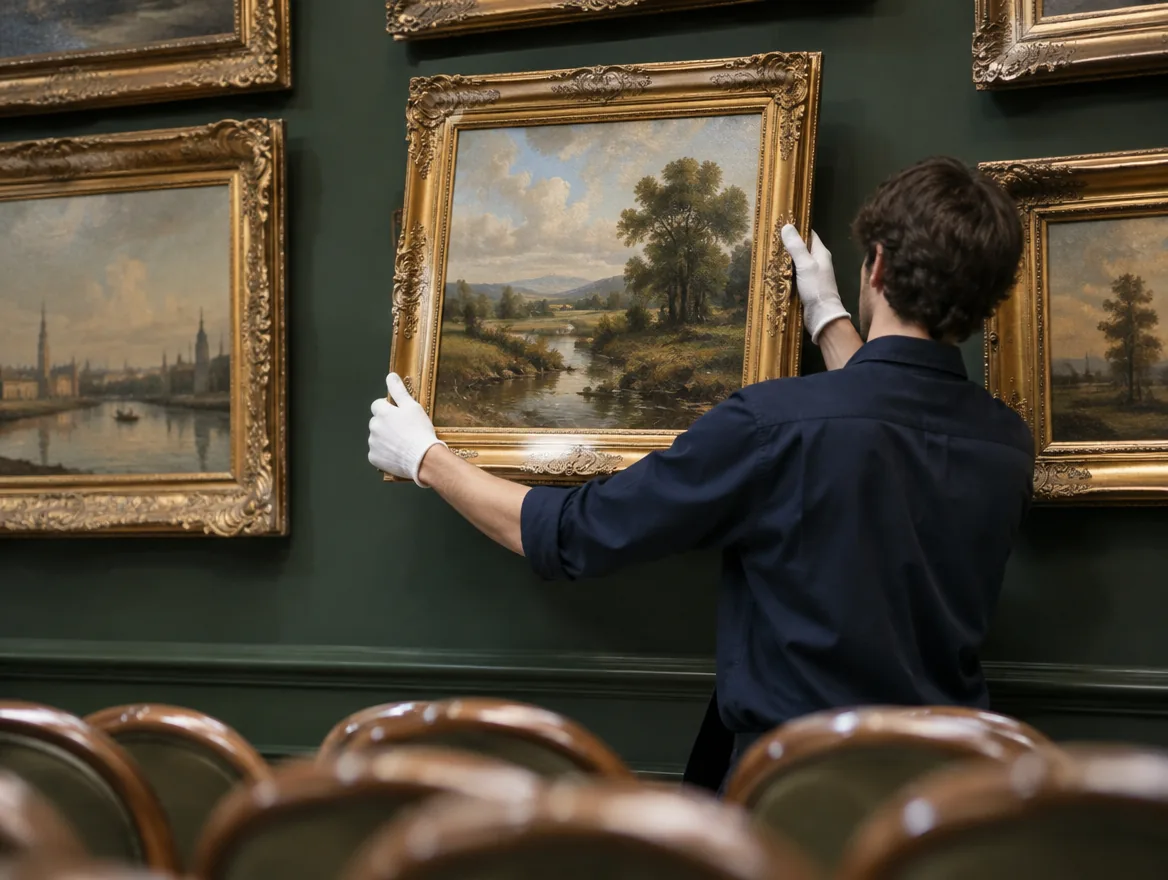
Shipping items bought at auction in London
Shipping items bought at auction starts with one deadline: the saleroom's free storage period. We collect your lot from the saleroom, crate it at our warehouse, and either hand it to your own shipper or arrange the shipping for you. You send us the lot details and the paid invoice; we do the rest, apart from customs paperwork.
- We collect
- From salerooms in and out of London
- You send
- Lot, sale, invoice and authority
- Then
- Your shipper collects, or we ship
- Hours
- 9am to 4pm, 7 days a week
How does shipping items bought at auction work?
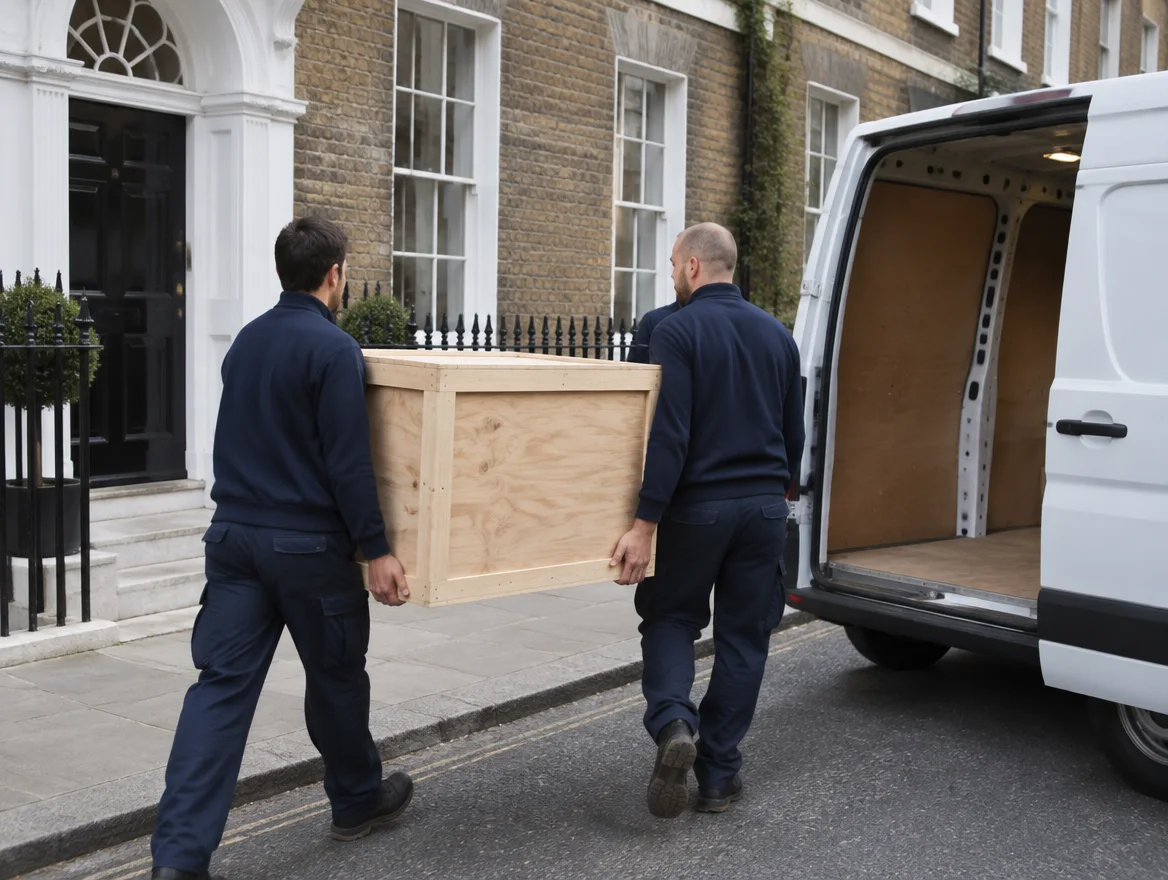
You pay the saleroom, tell us what you bought, and we collect it on your behalf. We bring the lot to our warehouse, build a crate around it, and then either your shipper collects the finished crate from us or we arrange the onward shipping. You never have to measure anything or visit the saleroom.
- 01Pay the saleroom
Salerooms release a lot once the invoice is paid and the payment has cleared.
- 02Send us the details
Lot number, sale, saleroom, a copy of the paid invoice and your written authority for us to collect.
- 03We book the collection
We arrange a collection slot with the saleroom's collections team, quoting your lot and your name.
- 04We collect and look it over
We collect the lot, check it against the saleroom's description and wrap it for the drive.
- 05We crate it
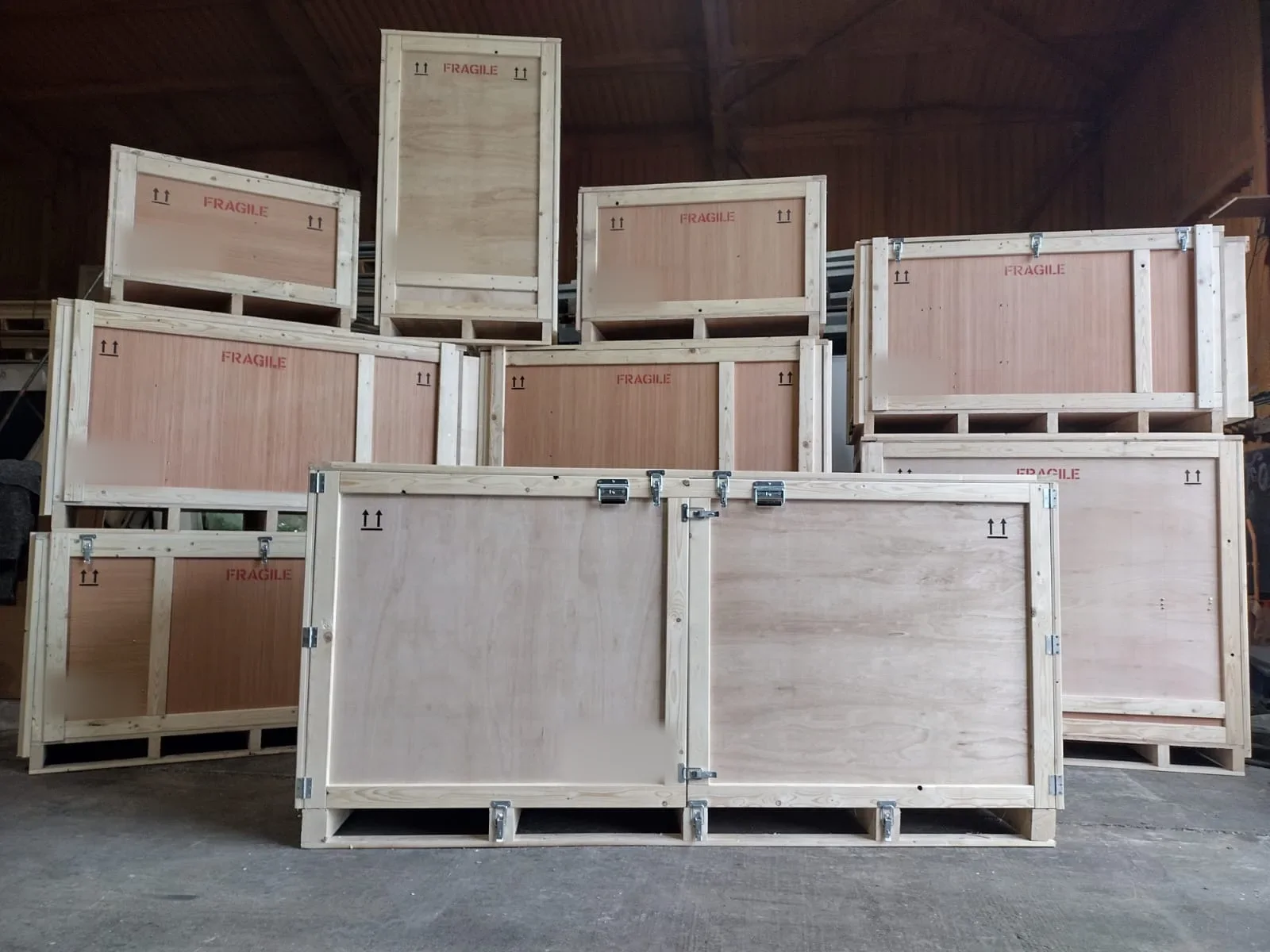
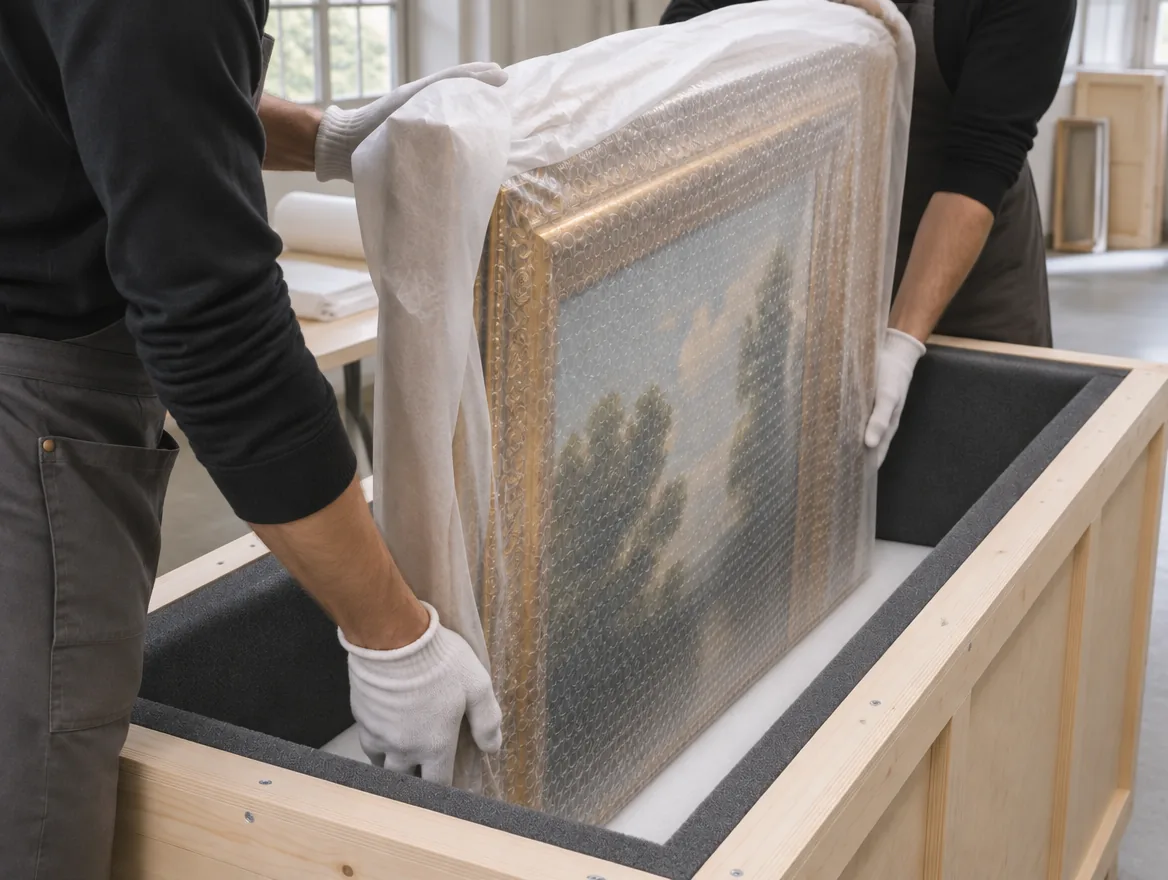
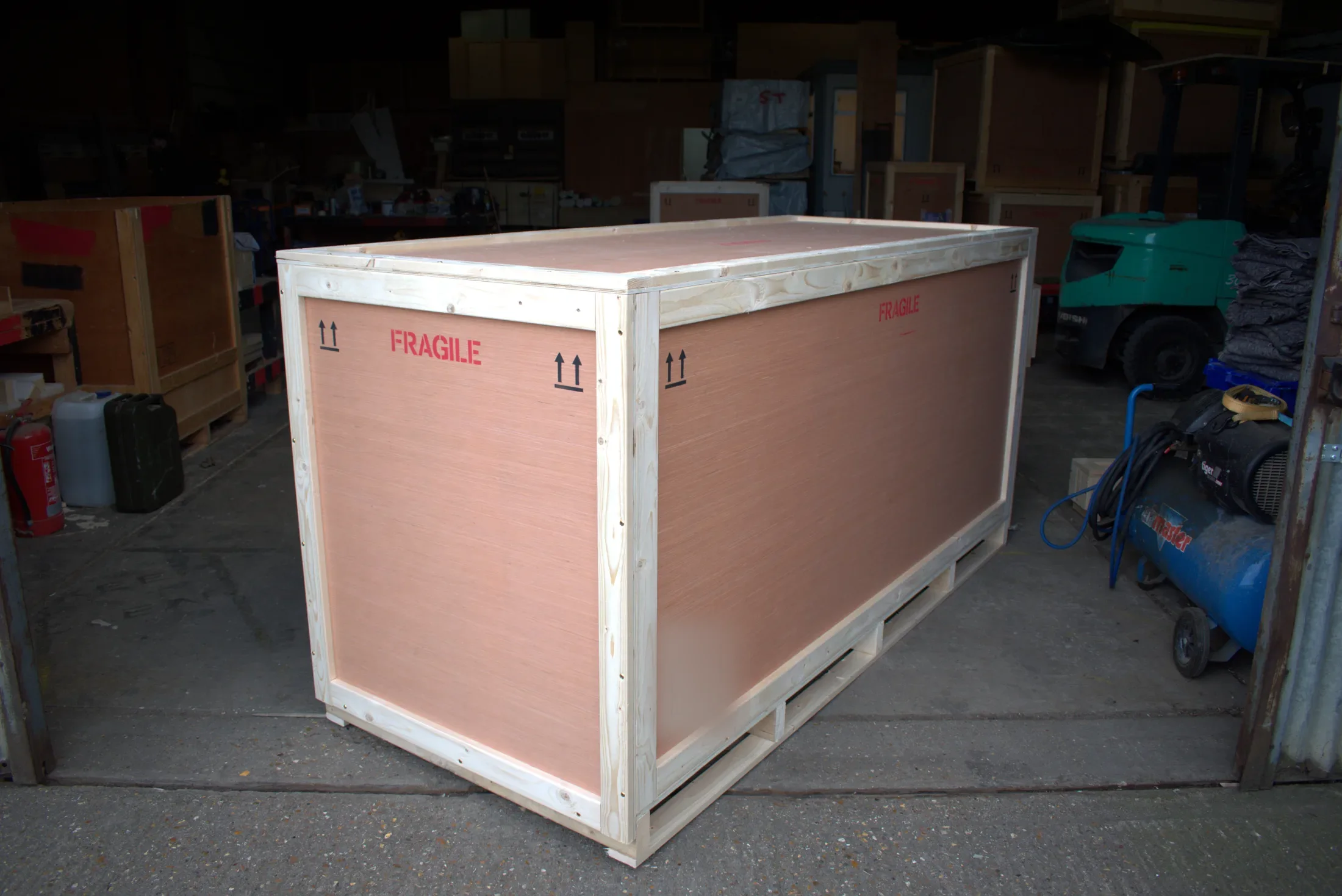
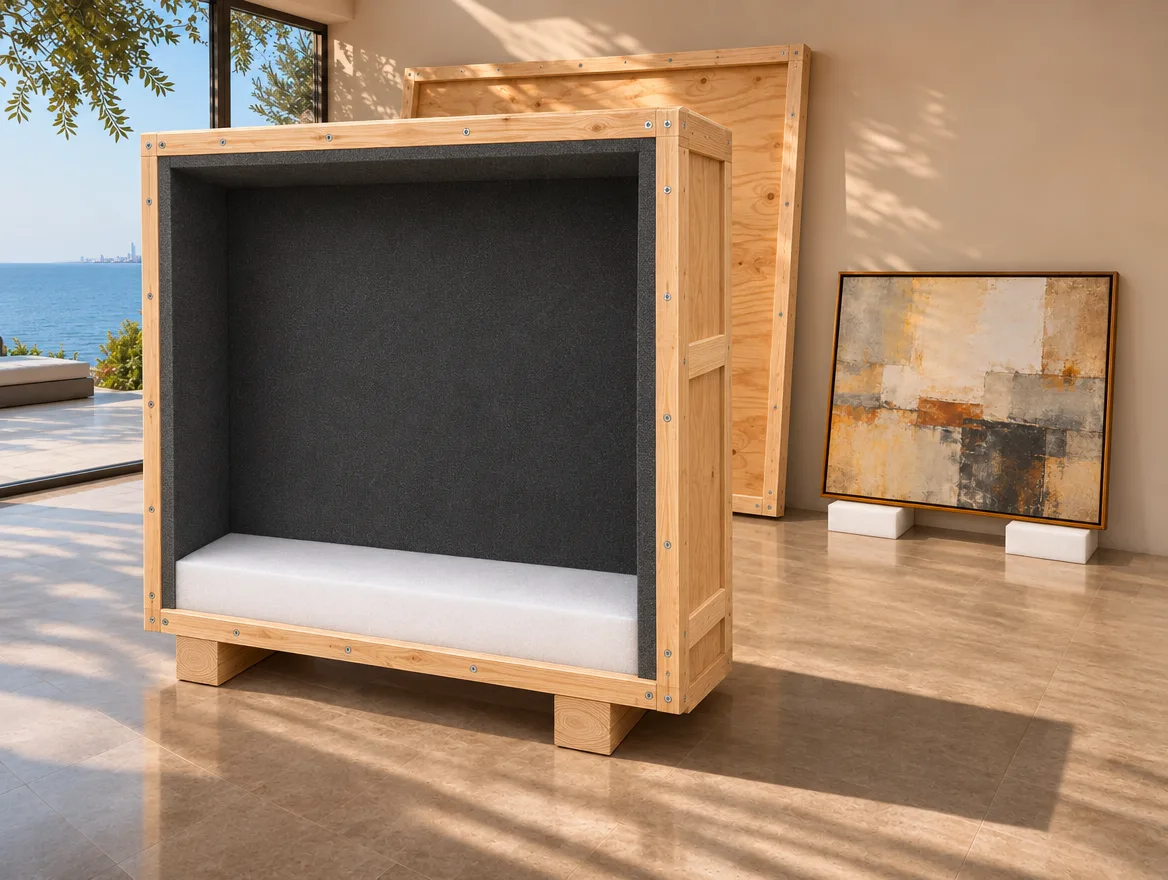
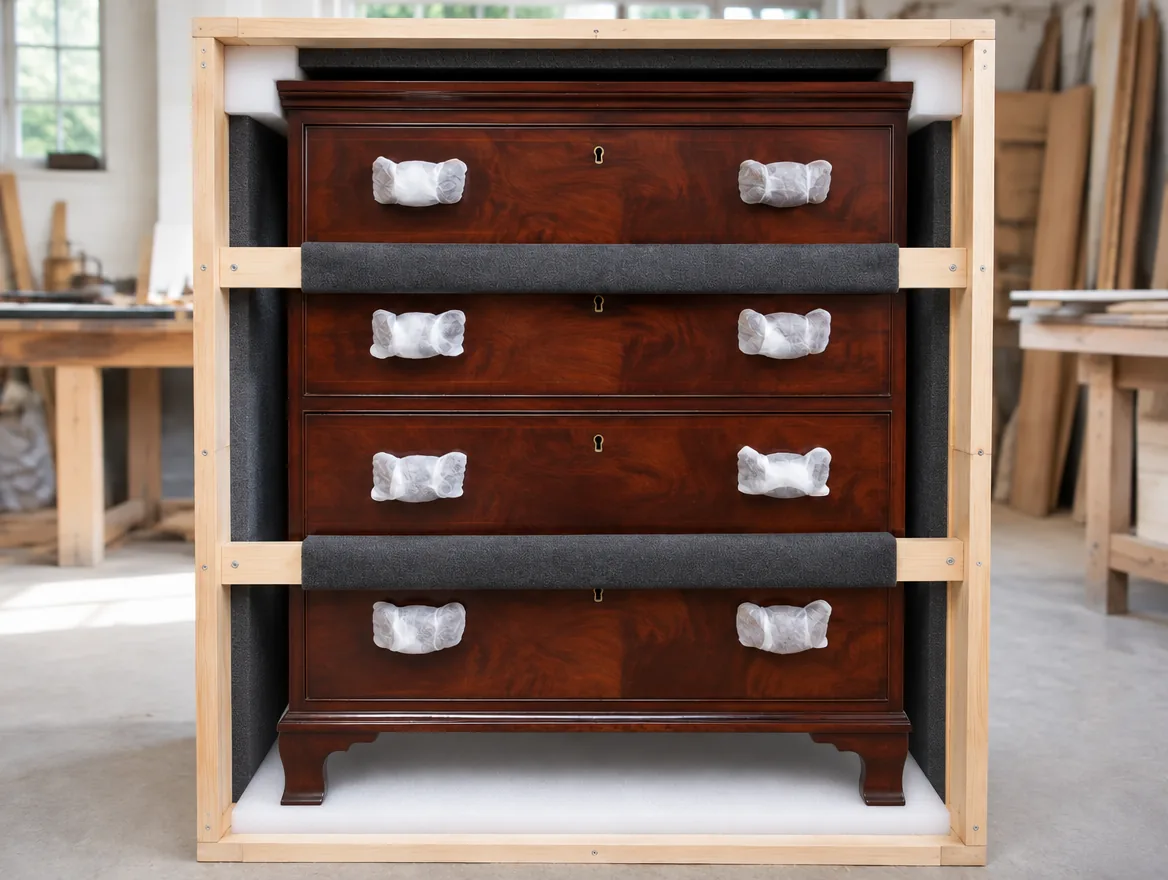
At our warehouse we build a crate around the piece itself, lined and fitted so it cannot move.
- 06Off it goes
Your shipper collects the crate from our warehouse, or we arrange the shipping for you.
What should I send you after the sale?
The sooner we have these, the sooner we can book a slot with the saleroom. A forwarded email with the invoice attached is usually enough to start.
- The lot number and the name and date of the sale
- The saleroom, and which of its sites holds the lot if it has more than one
- A copy of the invoice, marked paid, or proof of payment
- Your written authority for us to collect on your behalf, with your name exactly as it appears on the invoice
- The catalogue entry and photos, including any condition report you were sent
- Where it is going: the delivery address, or your shipper's details if they are collecting from us
- The date the free storage ends, if the saleroom has told you
Catalogue sizes are often of the work itself, not the frame, base or packing. That is one reason we build the crate around the piece once it is in our hands, rather than from the catalogue measurements.
How do saleroom collections usually work?
Every saleroom sets its own rules in its conditions of sale, and they can differ from one sale to the next. In our experience of London rooms, and from what the major houses publish for buyers, the pattern is usually similar.
So the order matters for auction shipping: pay, arrange transit insurance, then book us. If the free storage is about to end, tell us the date when you first get in touch.
We are independent. We don't work for any auction house and we are not on any house's list. We act for you, the buyer, and collect with your authority.
| What salerooms usually ask | What it means for you |
|---|---|
| Payment in full, cleared, before release | Pay early. A transfer that has not cleared can hold up a booked collection. |
| Written authority for a third party | The saleroom will only release the lot to us with your instruction in writing. |
| Notice to book a collection | Some rooms ask for a day or two's notice, and some need an appointment. |
| A free storage period, then charges | It can be a couple of weeks at some rooms and a few months at others. After it ends, storage is charged, often per lot, per day. |
| Uncollected lots moved off site | Some rooms move lots to an outside store after a while, which can change where we collect from. |
| The lot at your risk | At many rooms the risk passes to you at the fall of the hammer, or when free storage ends. |
What condition will my lot be in when you collect it?
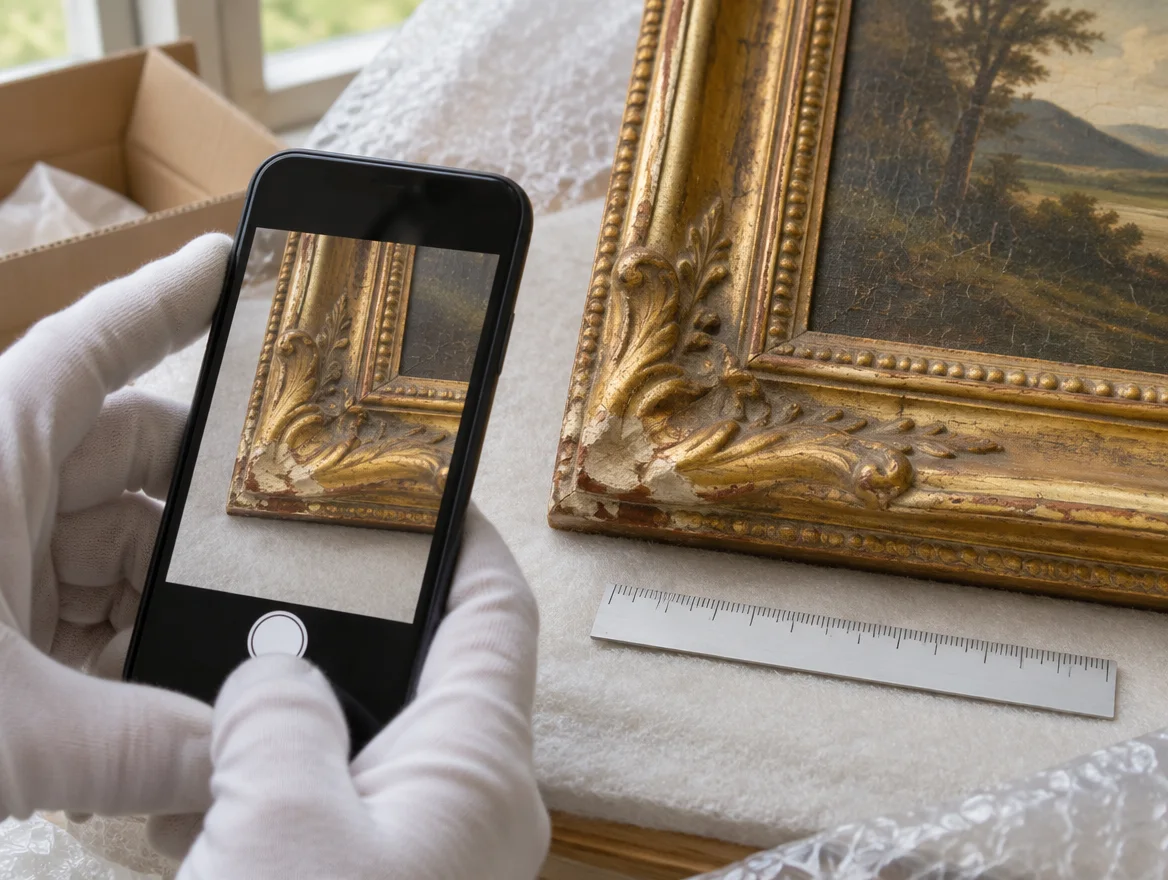
The same condition it was sold in, and that is worth knowing before you bid. Salerooms usually sell lots as they are, and their condition reports describe what they can see. Read the report, ask for one if there isn't one, and keep a copy.
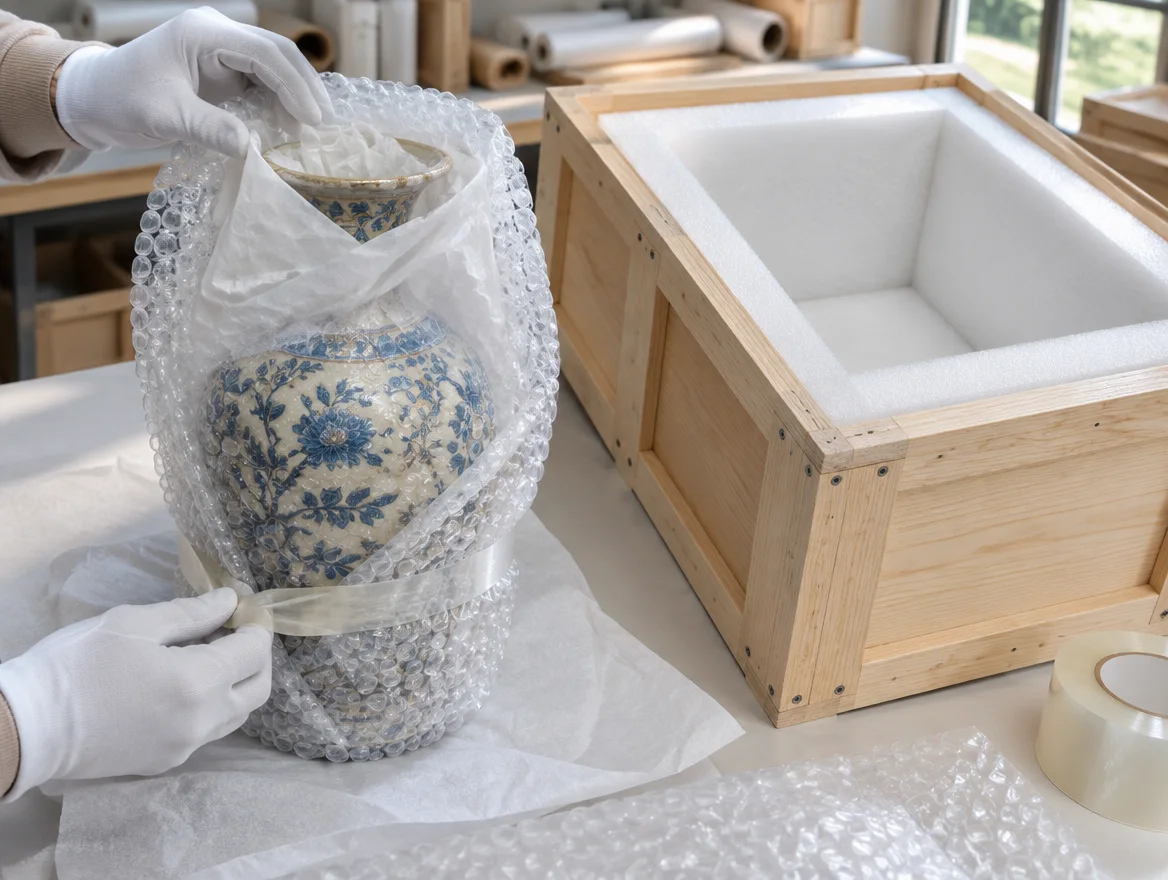
When we collect, we look the piece over against the saleroom's description before it leaves the room. If something doesn't look as described, such as a loose moulding, a crack in the glass or a missing finial, we tell you there and then, while the lot is still with the saleroom. After that it is wrapped for the drive: tissue paper first on any painted or gilded surface, then bubble wrap, corners padded, glass taped.
Send us a photo and the measurements.
We’ll recommend the crate, the lining and the supports, and come back with a bespoke quote.
Two ways to get your lot home
Most auction buyers want one of two things. Both start with us collecting from the saleroom.
If you or your shipper are collecting the lot yourselves and only need a crate, we can build one to your measurements and deliver it. For saleroom lots we usually suggest collection instead, because we then measure the piece itself, frame and base included.
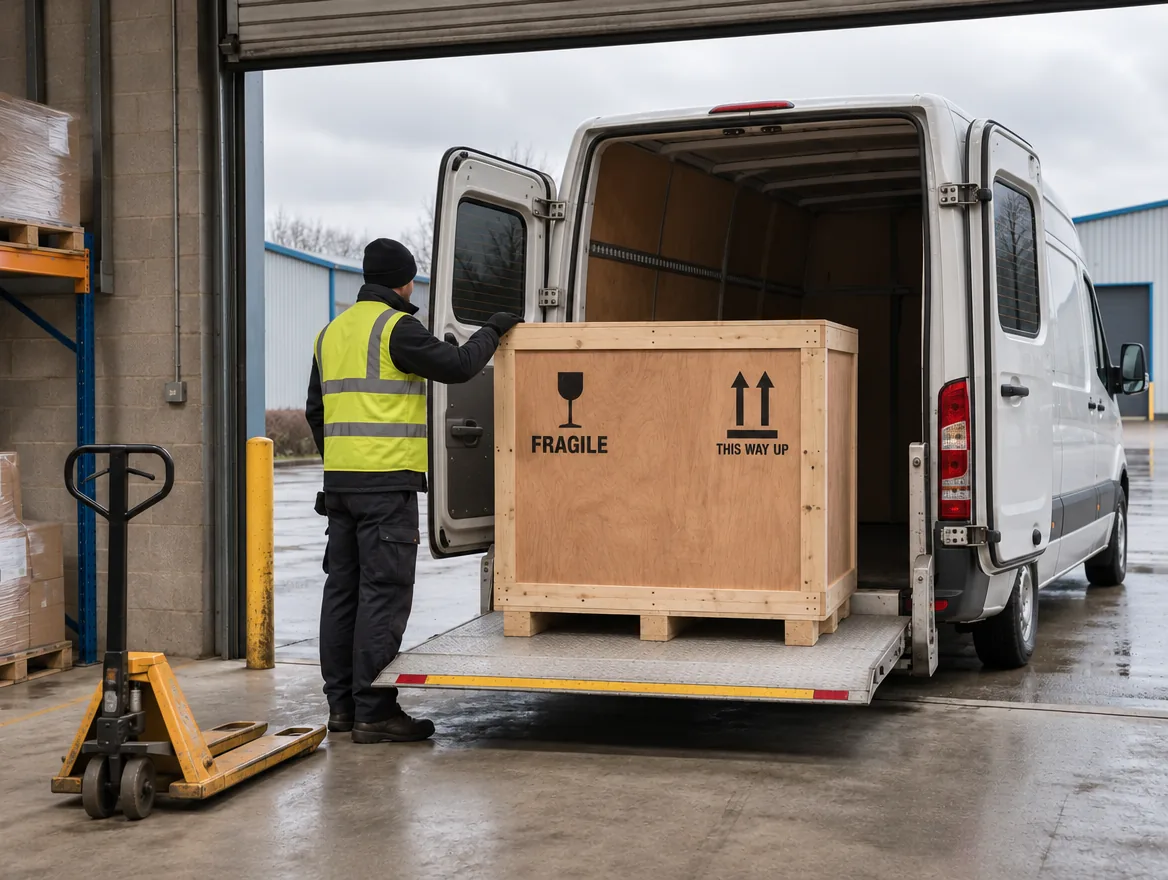
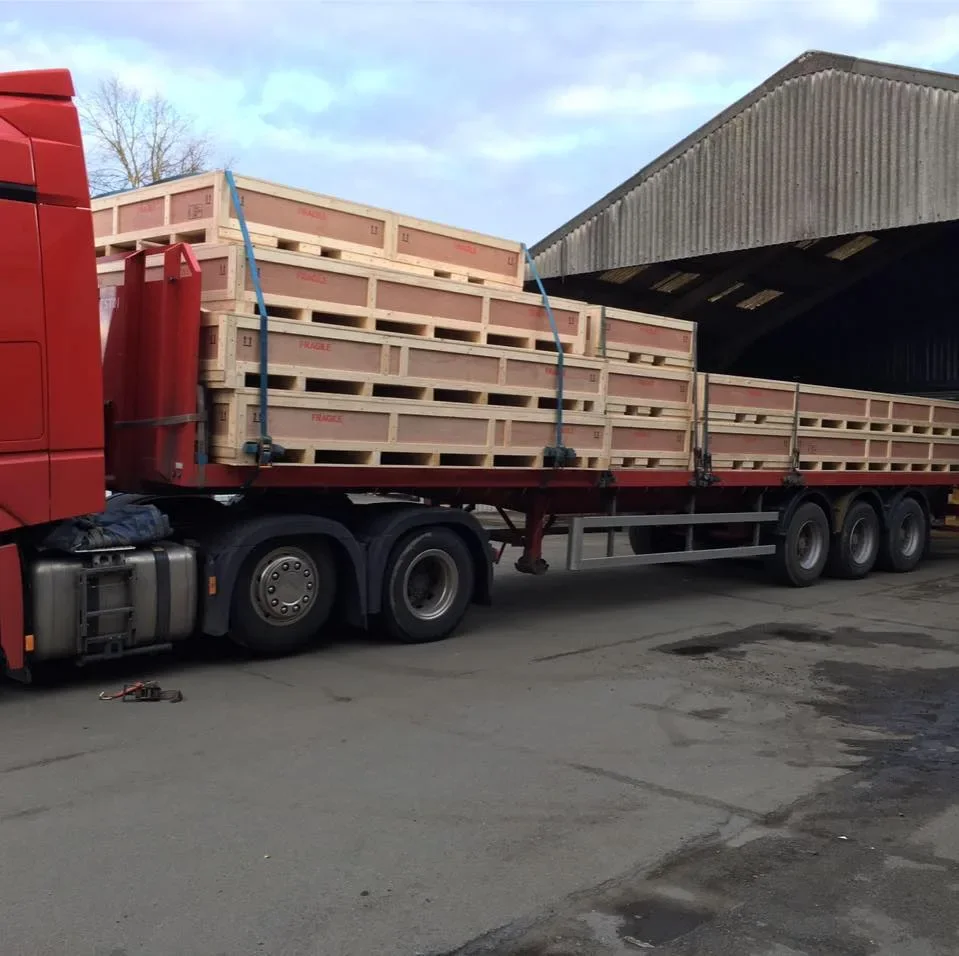
We collect, crate at our warehouse, and your own courier or shipper picks up the finished crate from us. Ideal if you already use a shipper. See collect and crate.
We collect, crate and arrange the onward shipping as well. You deal with one company from saleroom to front door, apart from customs paperwork.
Does my lot need an export licence?
It might, if it is old and valuable. Cultural objects made more than 50 years ago need a licence from Arts Council England to leave the UK if they are worth more than the value limit set for their kind of object. Below that limit, an open general licence usually covers them. The limits differ for paintings, drawings, photographs and other objects, so check the current figures for your lot.
Salerooms usually make the licence the buyer's responsibility, and a delay in getting one doesn't normally stop storage charges or the payment date. If your lot may need a licence, start early.
- Export licence. Check the current Arts Council England value limits for your kind of object.
- Protected materials. Ivory, tortoiseshell and some rosewoods can need CITES permits, and the UK Ivory Act restricts dealing in elephant ivory.
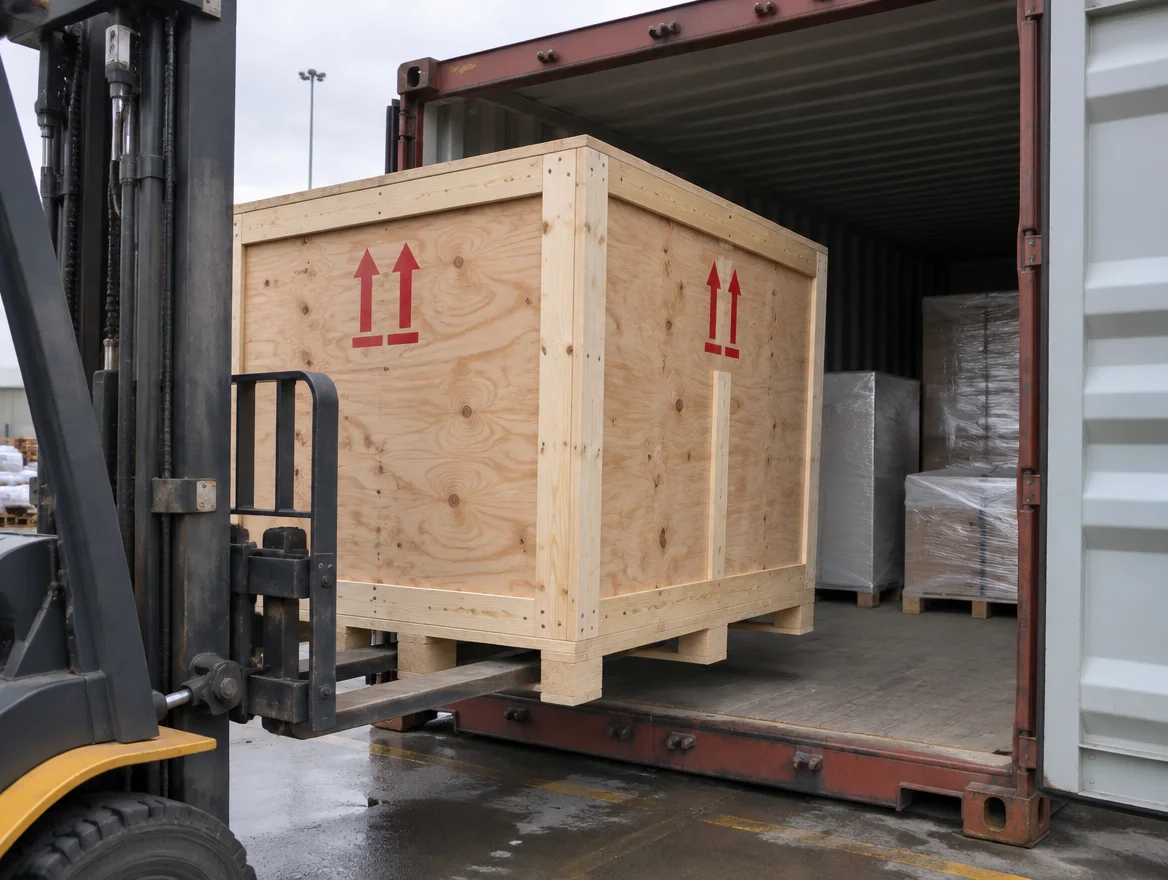
- The crate. Solid wood packaging going abroad usually has to meet ISPM 15.
We don't handle customs paperwork. Export declarations, licences and import entries are arranged by you, your shipper or a customs agent. This is general guidance, not legal or tax advice, so check the current position for your piece.
Buying from abroad: what to plan
Many auction buyers aren't in London at all. We ship a lot to the United States and Europe, and we can give you options for anywhere in the world. A few points to plan before your lot leaves:
- VAT on export. If you live outside the UK, some salerooms refund part of the VAT once the lot is exported within a set time and they receive proof of export. Some only do so when their own shipper exports it. Ask the saleroom before you choose how it ships.
- The United States. Original paintings and drawings done entirely by hand, and antiques over 100 years old, are generally duty free under chapter 97 of the US tariff, but US tariff rules have changed often recently. Check with a customs broker. See shipping art to the USA.
- Europe. Art and antiques arriving in the EU pay import VAT, at a rate each country sets. See shipping art to Europe.
- The Gulf. See shipping to Dubai.
- Insurance. Transit insurance is bought by you, for the value of the lot. See insurance.
What we collect from salerooms
Anything you can bid on. Paintings and works on paper, antique furniture, clocks, mirrors, ceramics and porcelain, chandeliers, marble and stone and sculpture. Each is packed its own way, and every crate is built around the piece. If you bought several lots, in one sale or several, we can gather them at our warehouse and crate them together.
Won something? Request a quote with the lot details and we'll come back to you. We work 9am to 4pm, 7 days a week.
Common questions
Do you work with a particular auction house? +
No. We are independent and act for you, the buyer. We collect from salerooms in and out of London with your written authority.
Do I need to pay the saleroom before you can collect? +
Usually, yes. Salerooms release a lot once the invoice is paid and the payment has cleared, unless you have a credit arrangement with them.
The free storage is about to run out. What should I do? +
Pay the invoice, send us the lot details straight away and tell us the date. Storage charges usually run until the lot is collected, so the sooner we book a slot, the better.
Can you collect lots from different sales and send them together? +
Yes. We can collect from more than one saleroom, bring the lots to our warehouse and crate them together or as a set, then ship them or hand them to your shipper.
Can my own shipper collect from your warehouse? +
Yes. Once the crate is ready, your courier or shipper collects it from our warehouse. We give the address when the collection is booked.
Will you tell me if the lot isn't as described? +
Yes. We look the piece over against the saleroom's description before it leaves, and tell you while it is still with the saleroom if anything doesn't match.
Who insures the piece while it travels? +
Transit insurance is bought by you, job by job, so the cover matches the piece and its value. We have public and product liability insurance. See insurance.
Do you handle the customs paperwork? +
No. Export declarations, licences and import entries are arranged by you, your shipper or a customs agent. We make sure the crate is ready for the journey, clearly marked and easy to open and close again if customs want to look inside.
How much will it cost? +
Every quote is bespoke, based on the piece itself: its size, weight, how fragile it is, where it is going and how quickly. Send us the details and we'll price your job, never from a standard rate card.
Related
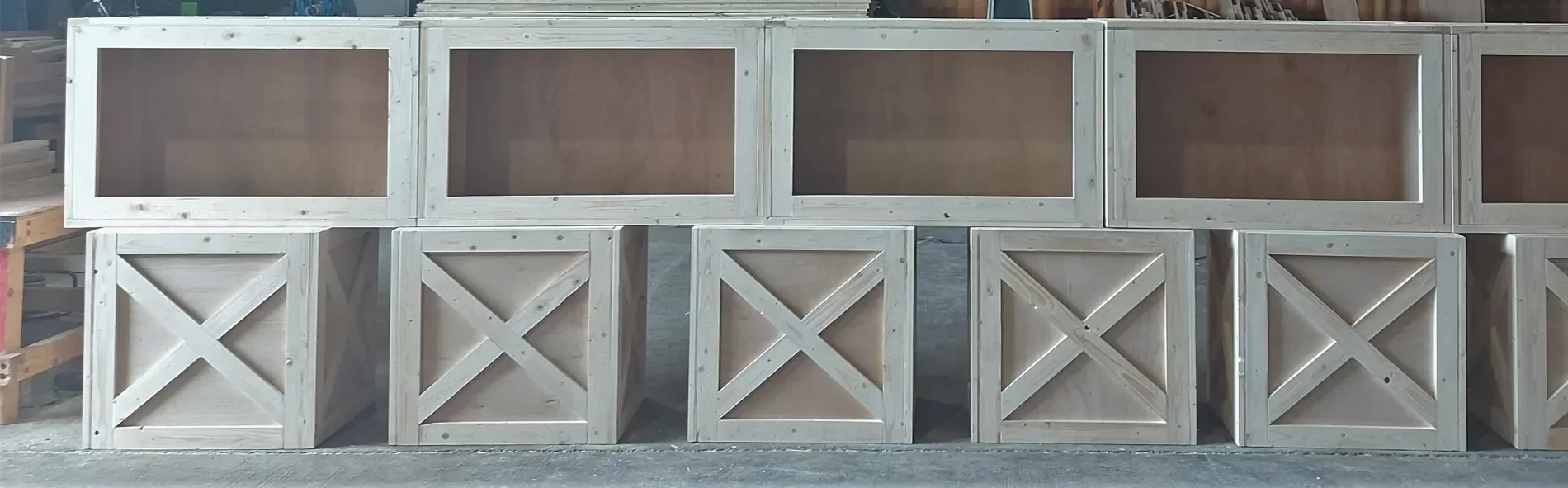
Nothing to measure. We build the crate around the piece.
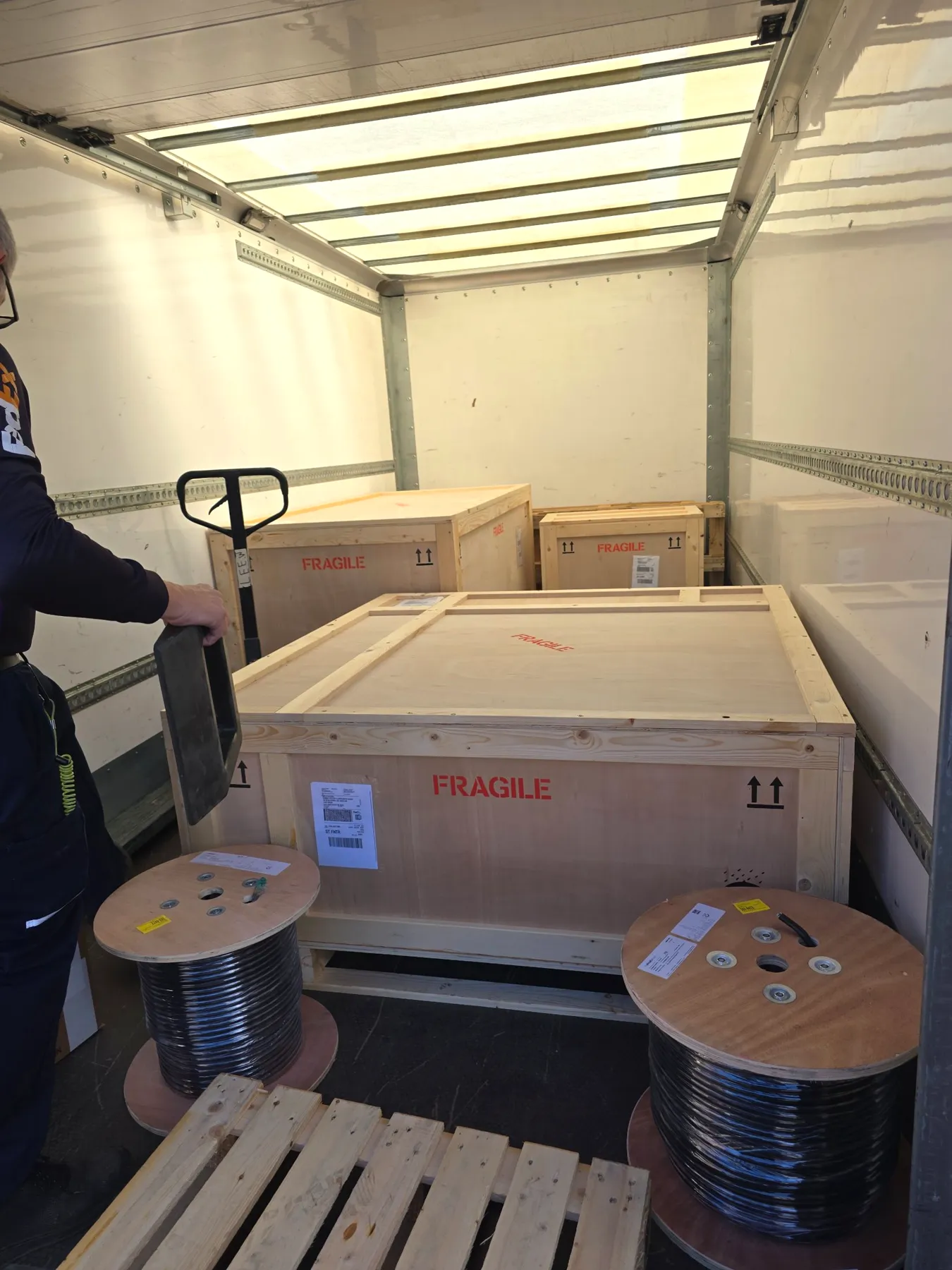
From London to anywhere in the States.
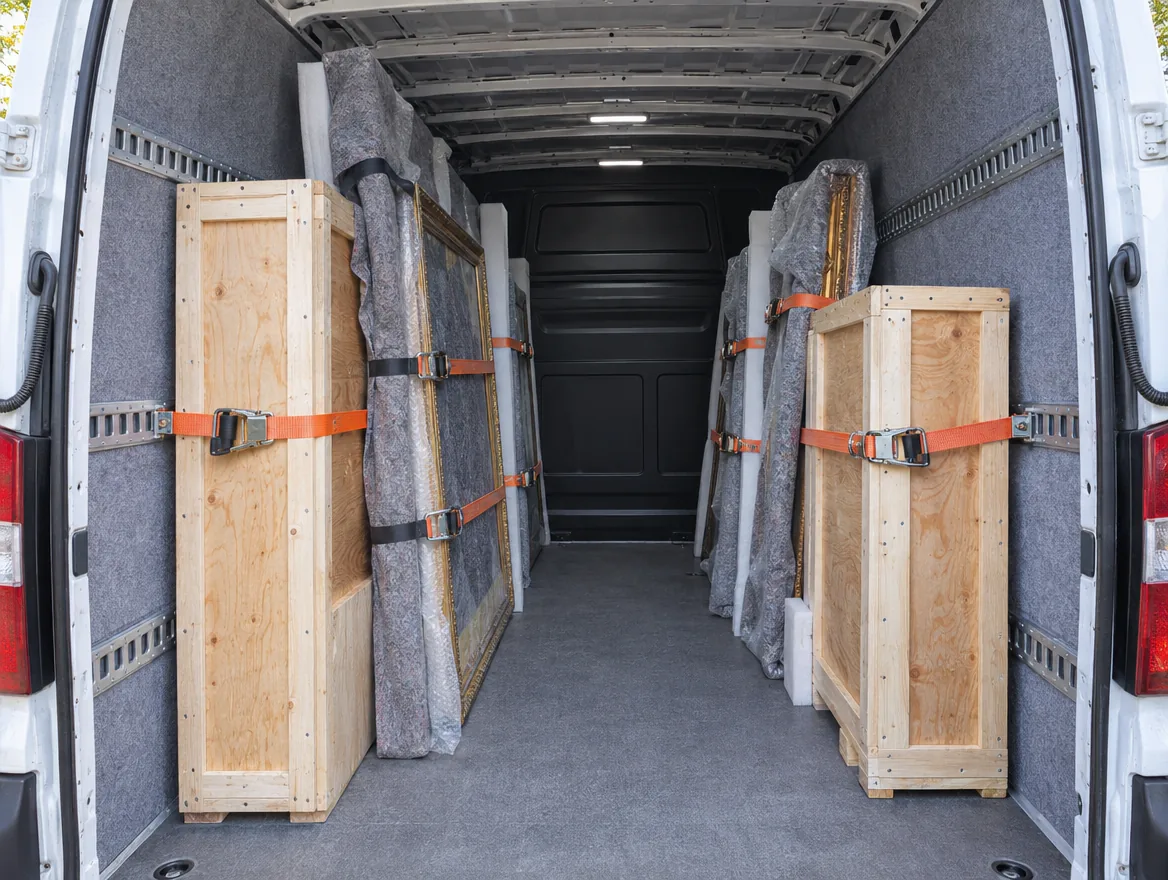
Collected by hand, carried upright, placed in the room.
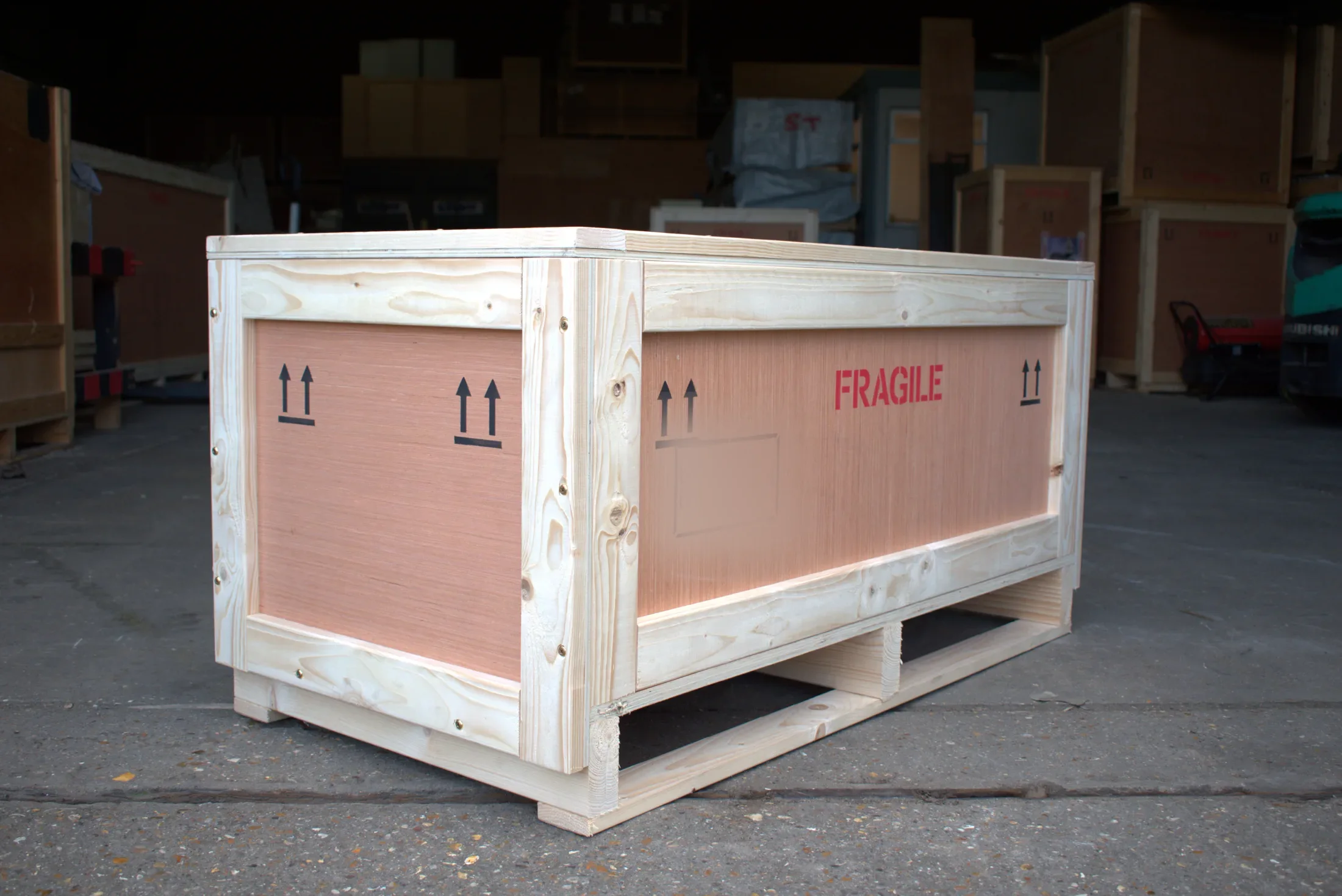
Clear cover for every export.
Swipe for more →
Tell us what needs to travel.
Every quote is bespoke, based on the piece itself. Send us the details and we'll come back to you.