

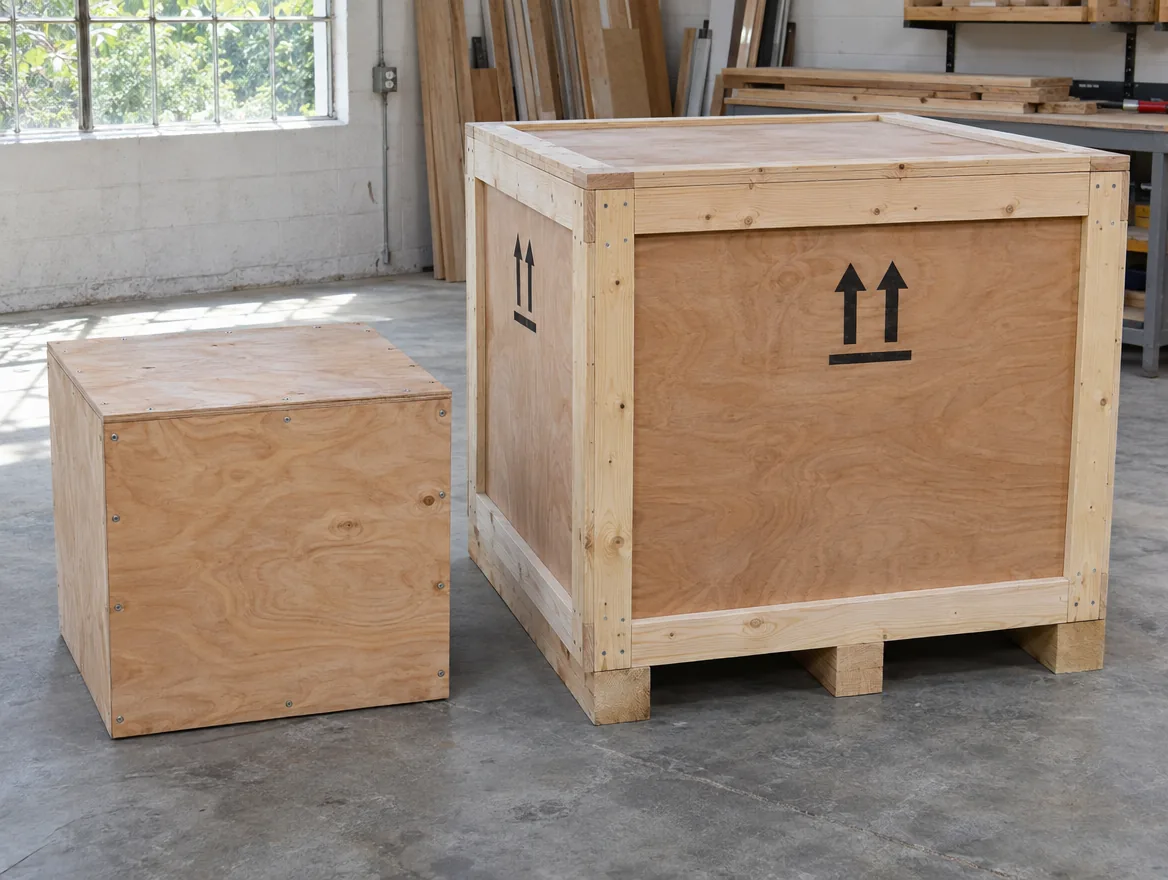
Plywood crates and plywood boxes, built to measure
Plywood crates come in two kinds: a plain plywood box, and a plywood crate built on a solid timber frame with skids underneath. Both are made to measure for the piece inside. Which one is right depends on how heavy the piece is, how big, how valuable and how far it is going, and this page explains the difference.
- Plywood box
- Light, smaller pieces
- Framed crate
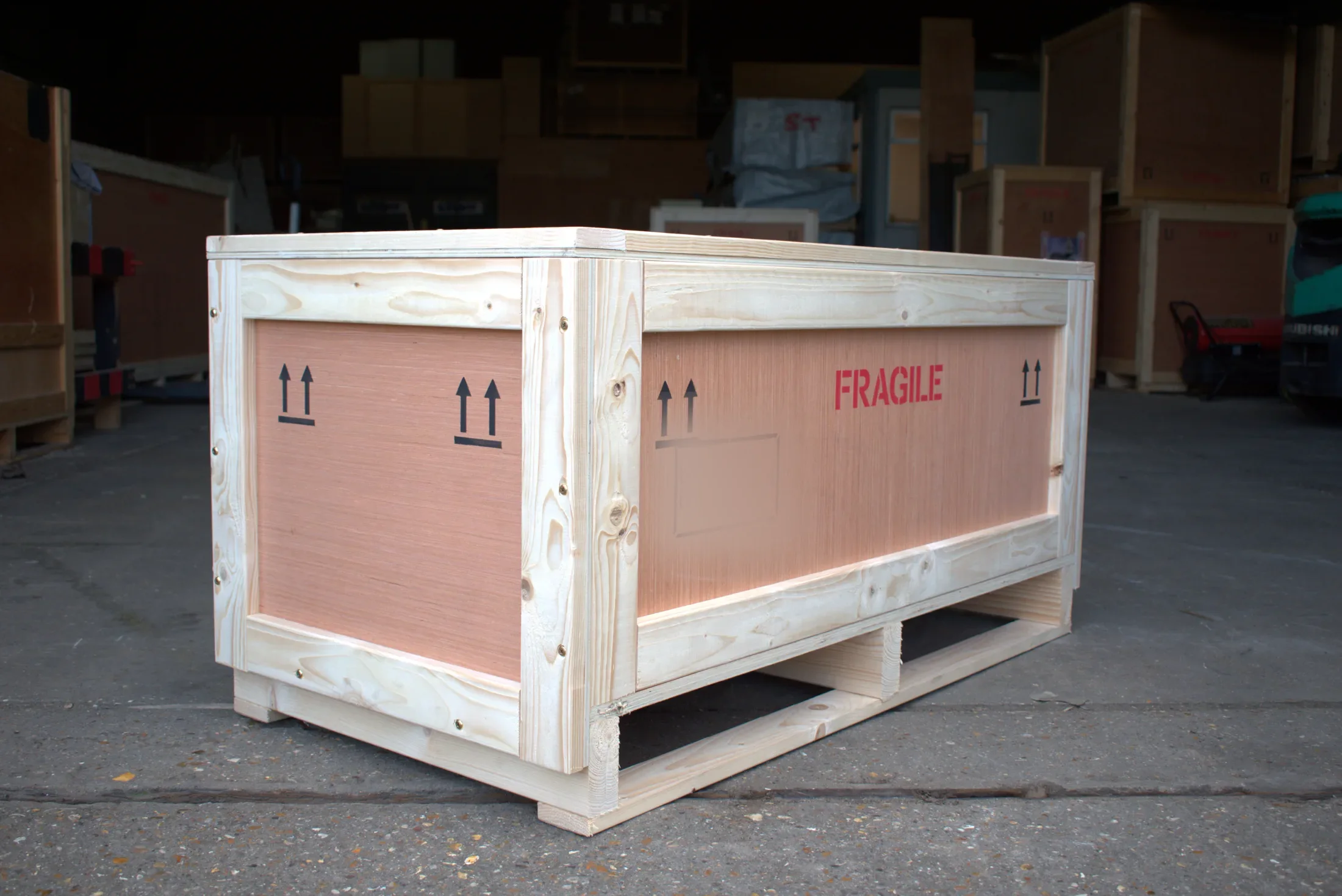
- Pine frame, plywood panels, skids
- Linings
- High density, HLB22, polystyrene
- ISPM 15
- Plywood exempt, solid timber not
What is the difference between a plywood box and a plywood crate?
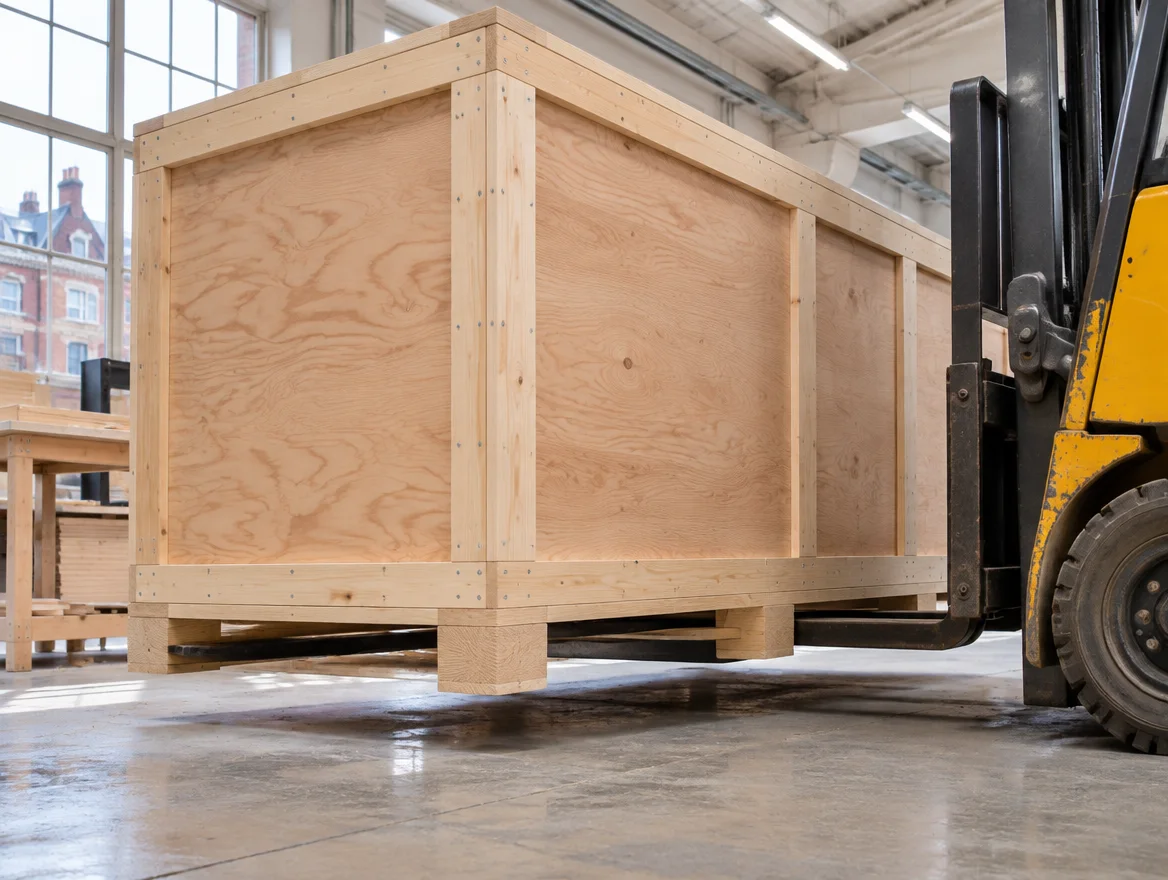
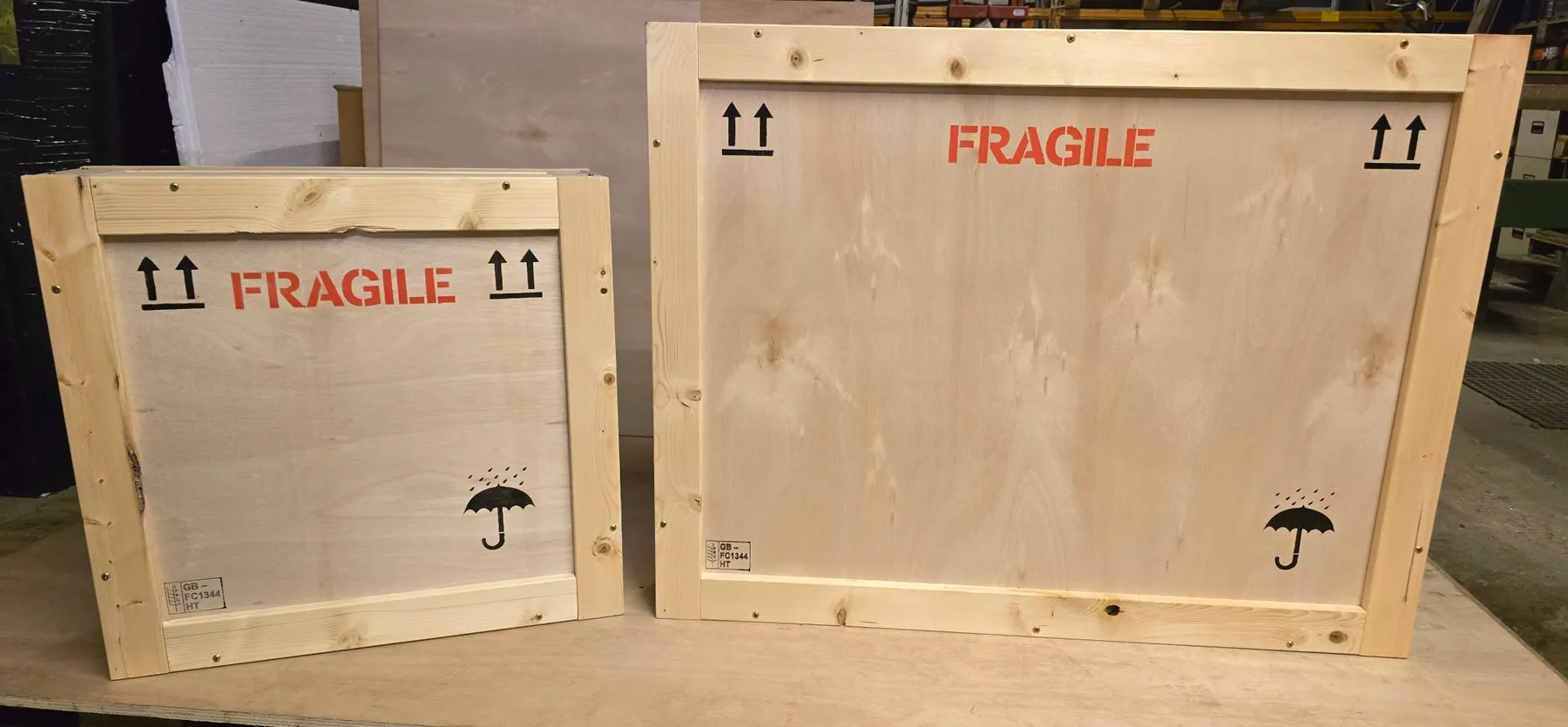
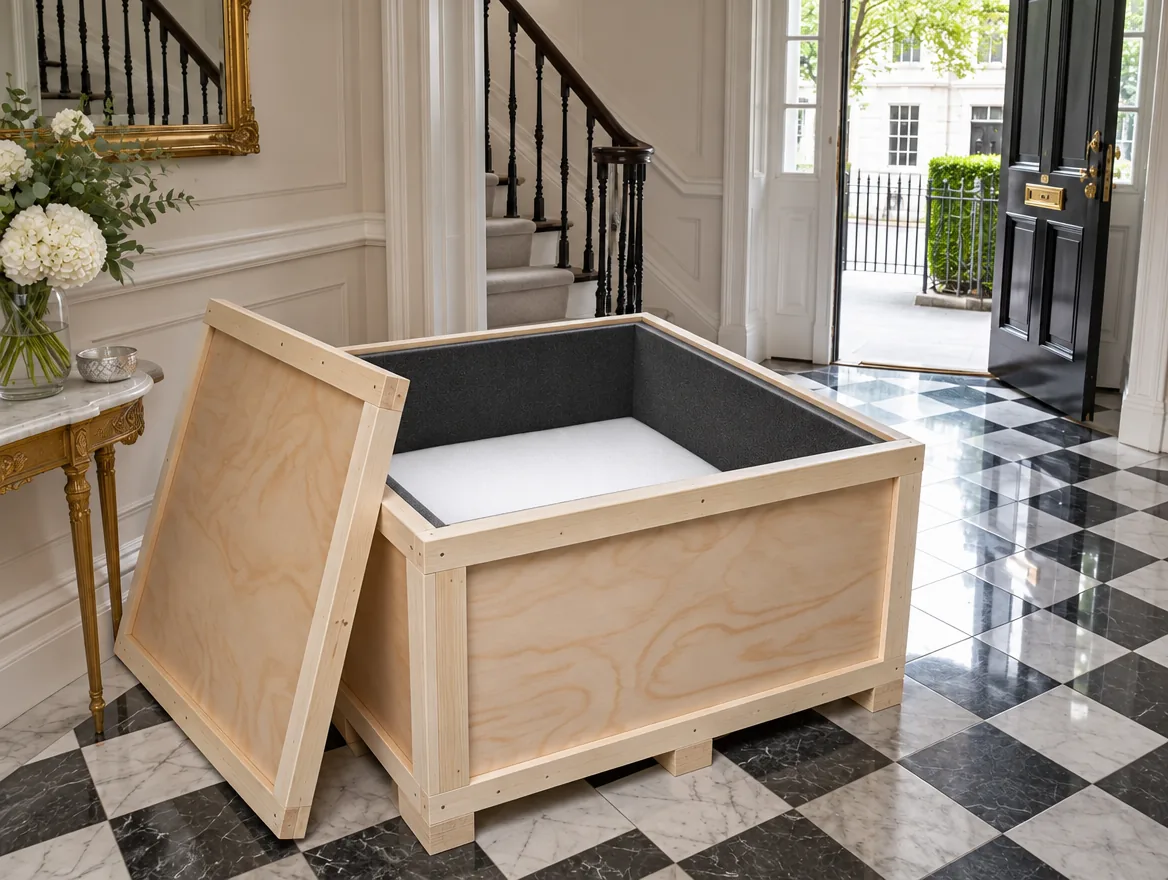
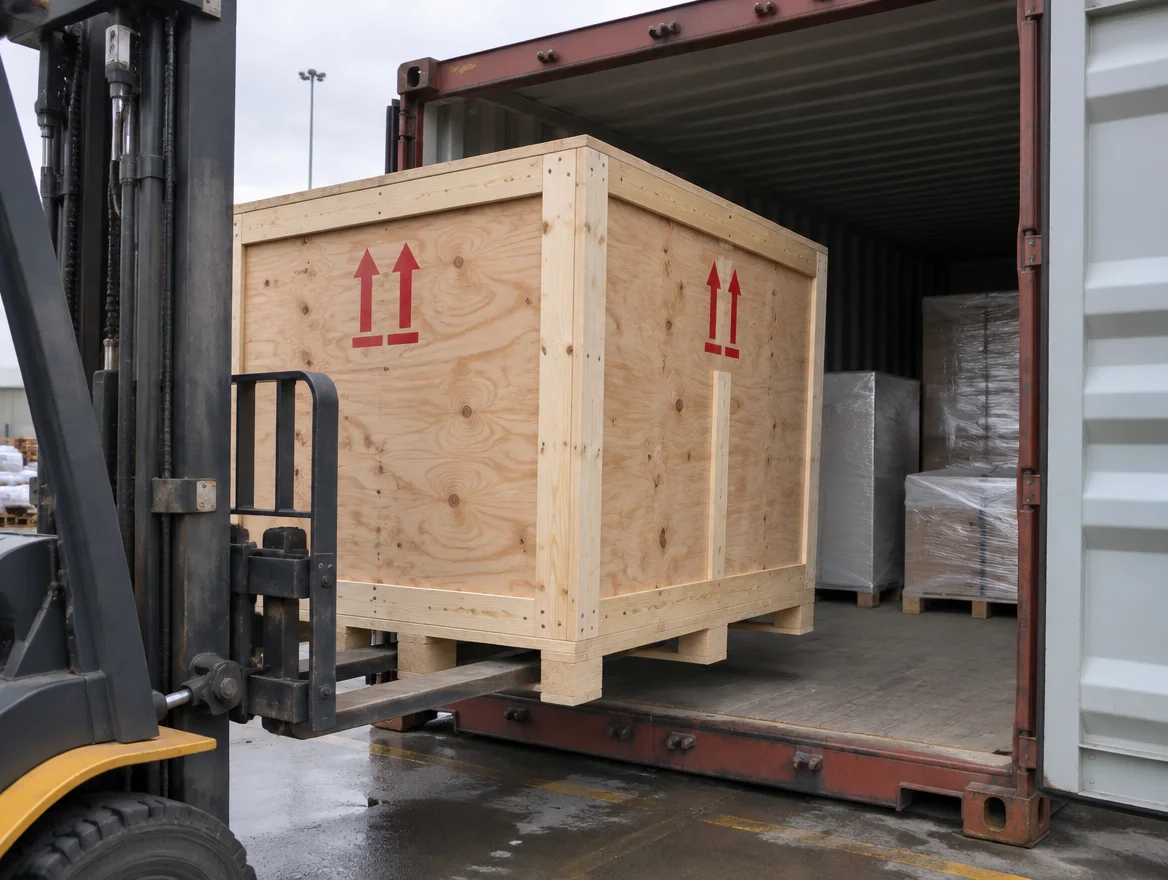
A plywood box is made from plywood panels joined at the edges, with no separate timber frame. A timber-framed plywood crate has a solid pine frame round every face, plywood panels closing the frame, and skids underneath so it can be lifted from below. The frame carries the weight and takes the knocks; in a box, the panels do all the work.
| Plywood box | Timber-framed plywood crate | |
|---|---|---|
| Built from | Plywood panels only | Pine timber frame, plywood panels, timber skids |
| Strength | Good for light pieces | Built to carry heavy and awkward weights |
| Lifting | By hand | By hand, pallet truck or forklift, from the skids |
| Best for | Small objects, short trips, gifts | Valuable, heavy, large or export pieces |
| ISPM 15 | Usually exempt if wholly plywood | Solid timber parts usually need treatment and marking |
When is a plywood box enough?
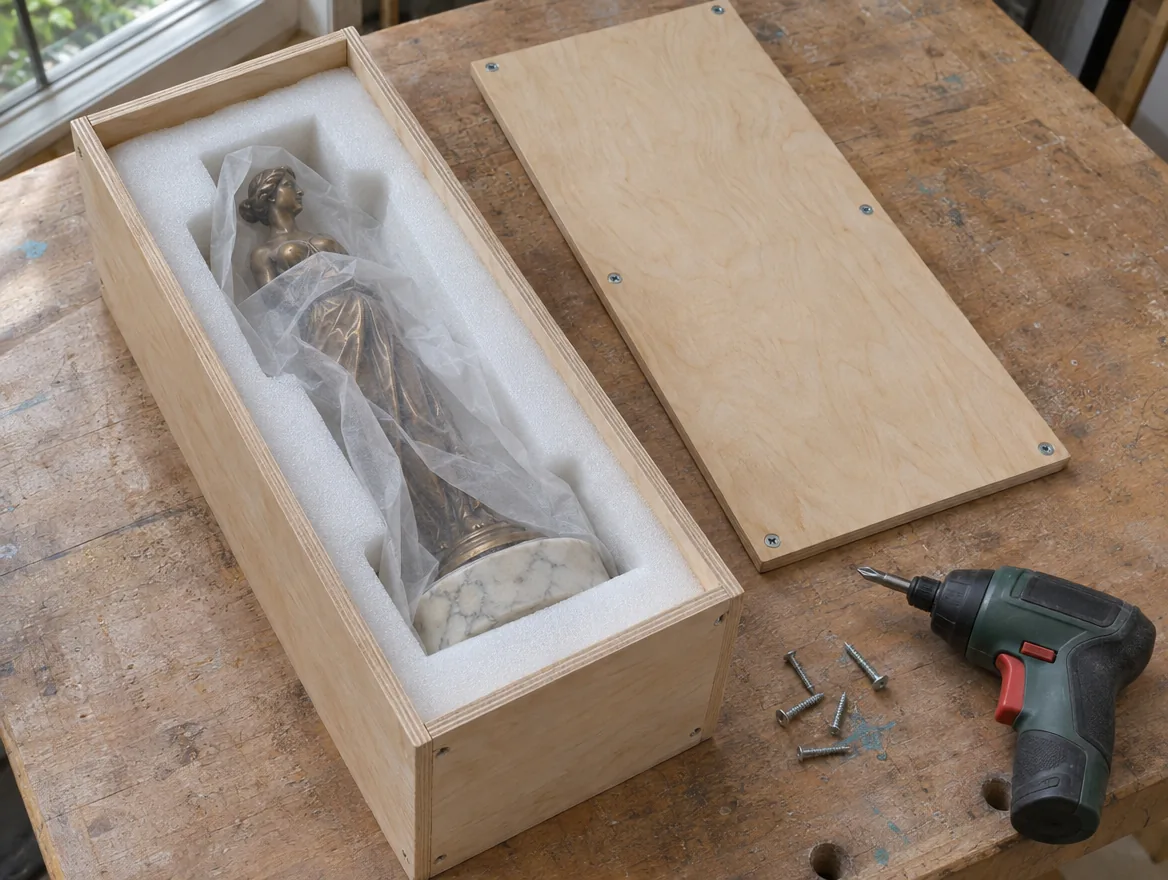
When the piece is small, light and sturdy, and the journey is short or gentle. A well-lined plywood box gives a small object a rigid shell that won't crush, which is already far better than cardboard.
- A small bronze, a carved object or a boxed ceramic going within the UK.
- A gift, a sample or a small piece that will be opened and admired as well as protected.
- Parts and fittings that need a rigid home on the way to a larger job.
For anything heavy, glazed, valuable or going abroad, a framed crate is usually the safer choice. If you're not sure, tell us what you're sending and we'll recommend what it actually needs. Our crate or box guide goes through the choice.
When do you need a timber-framed plywood crate?
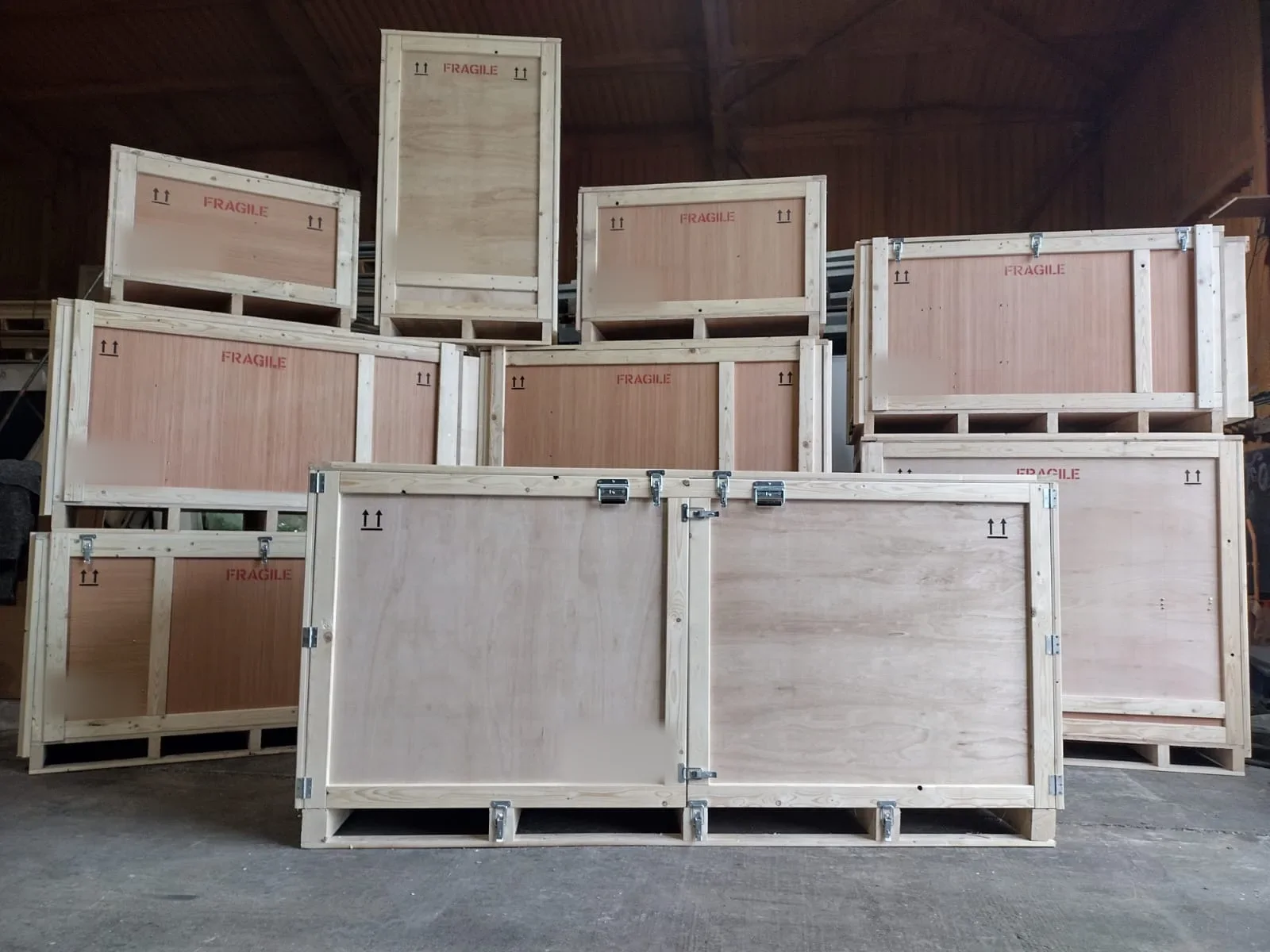
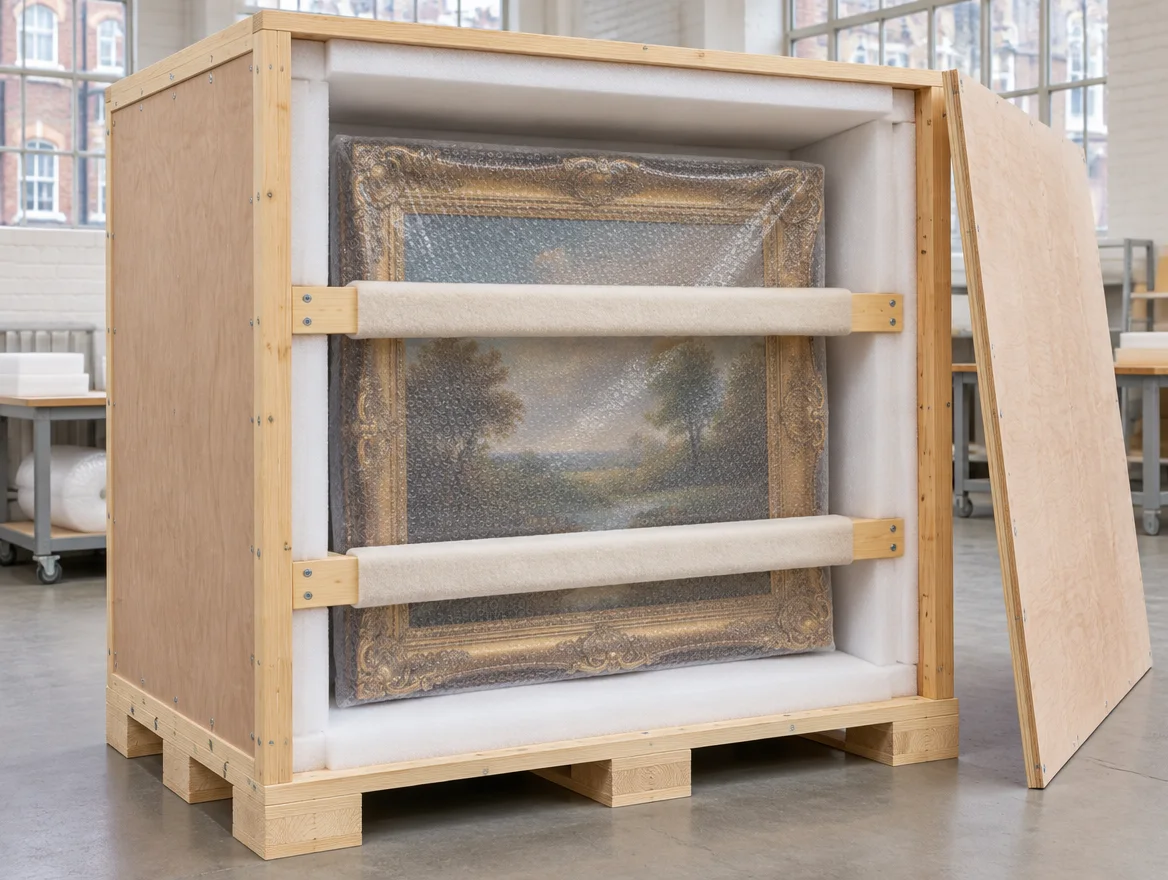
Whenever the piece is heavy, large, valuable or going a long way. The timber frame keeps the crate square under load, stops panels bowing and gives every corner a solid edge to take knocks. The skids lift the crate off the floor, so a pallet truck or forklift can get underneath without touching the panels.
- Weight. Furniture, marble, sculpture and anything too heavy to lift easily by hand.
- Size. Large paintings, mirrors and tall pieces, where a plain panel would flex.
- Value. Anything you can't replace, where the crate's job is to take every knock.
- The journey. Export, sea freight, air freight, or any trip where other people will lift the crate.
- Glass. Mirrors and glazed works, which must stand upright and must not flex.
- Several handovers. A crate that goes from us to a courier to a shipper to a delivery team.
Choosing by weight, size, value and journey
Most choices come down to the same four questions. Here is how they usually point:
If even one answer points to a framed crate, choose the crate. A light, valuable piece going abroad still needs one.
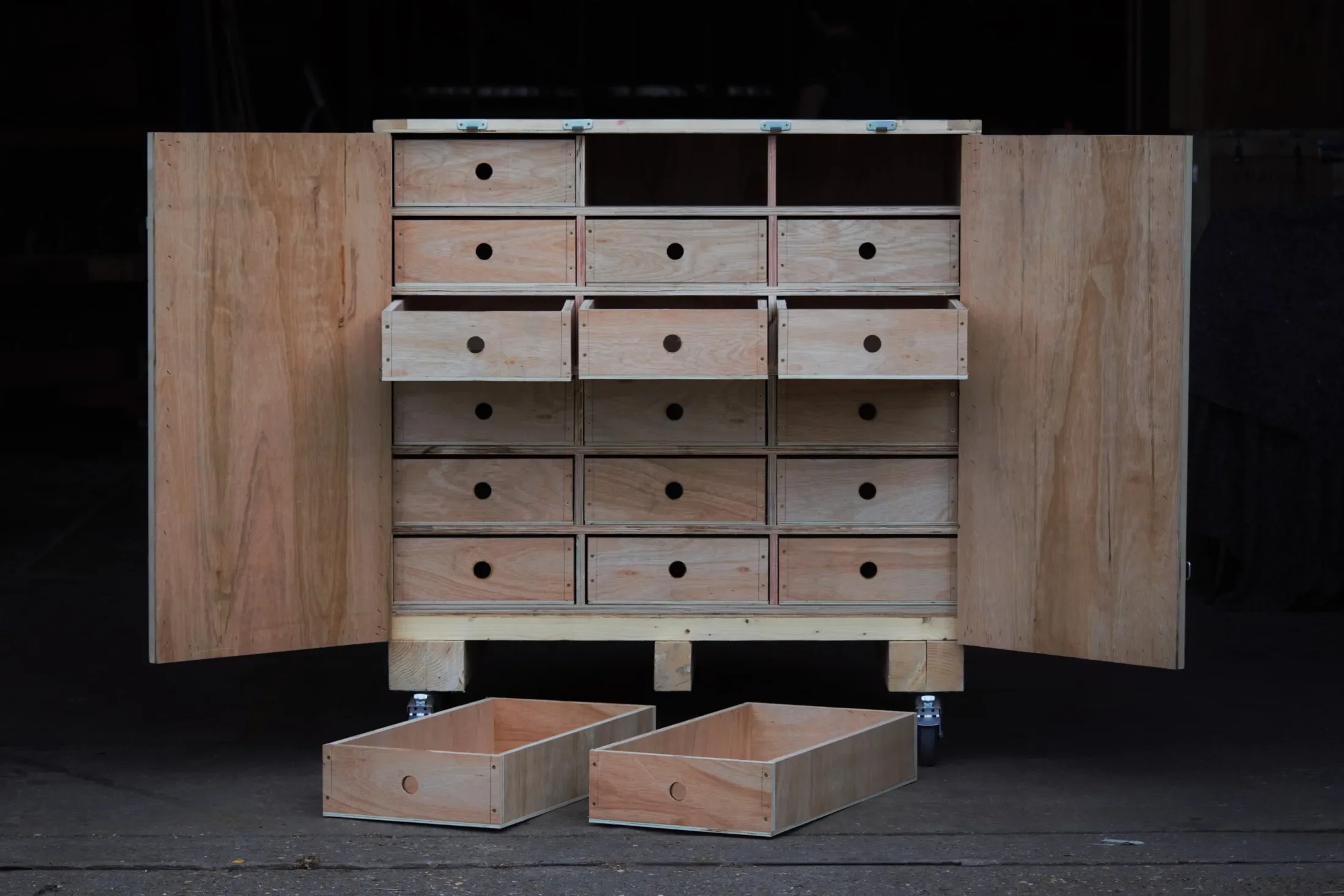
More on every crate we build, from export and rack crates to drawer crates, on our crate types page.
| Question | A plywood box usually suits | A framed crate usually suits |
|---|---|---|
| How heavy? | Light enough to carry comfortably by hand | Heavy, or needing a pallet truck or forklift |
| How big? | Small, compact objects | Large, tall, long or awkward shapes |
| How valuable? | Modest value, easy to replace | High value or irreplaceable |
| How far? | A short trip within the UK | Long journeys, export, sea or air freight |
Send us a photo and the measurements.
We’ll recommend the crate, the lining and the supports, and come back with a bespoke quote.
Which lining goes inside?
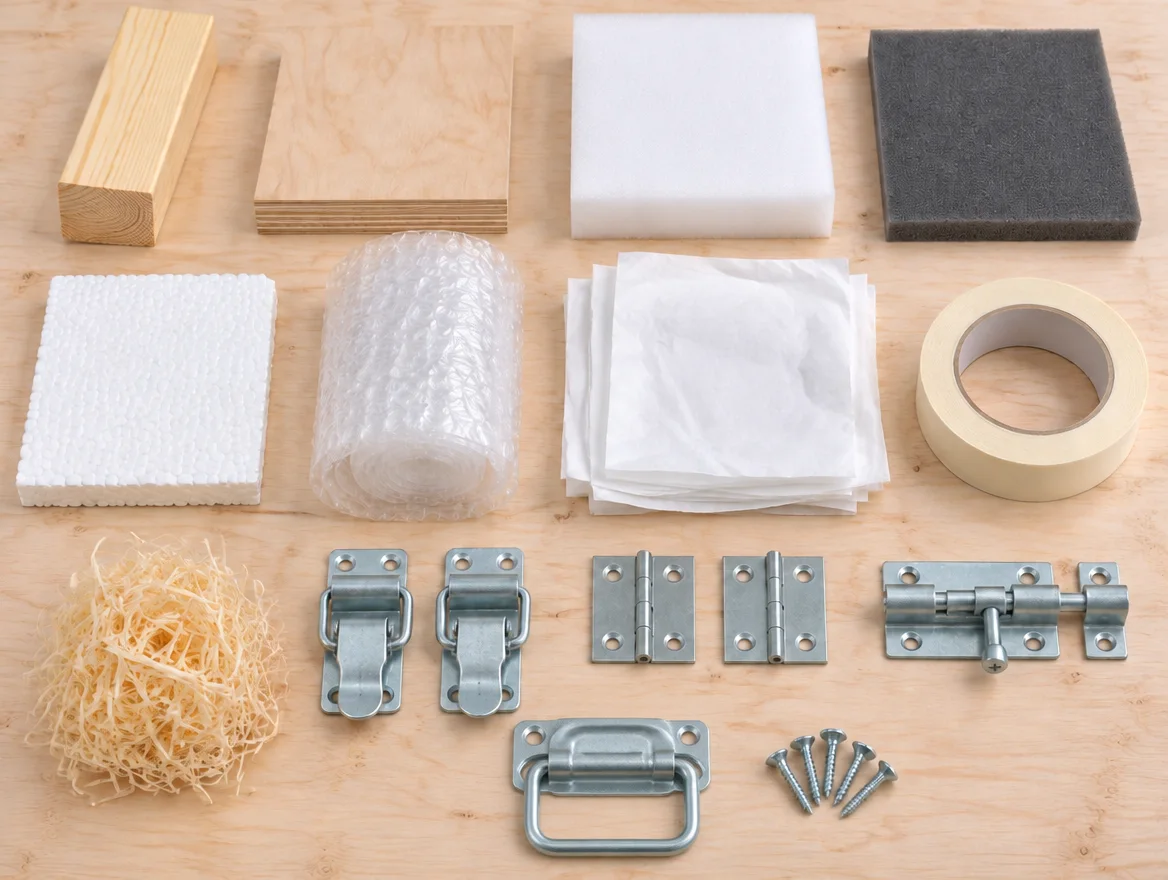
The lining is chosen for the piece, not the box. We use three foams, in 25 mm, 50 mm, 75 mm and thicker, and the rule is simple: firm foam where the weight sits, soft foam where a delicate surface is touched, and supports running the full length with no gaps, never just at the corners.
Everything we use is set out on our materials page.
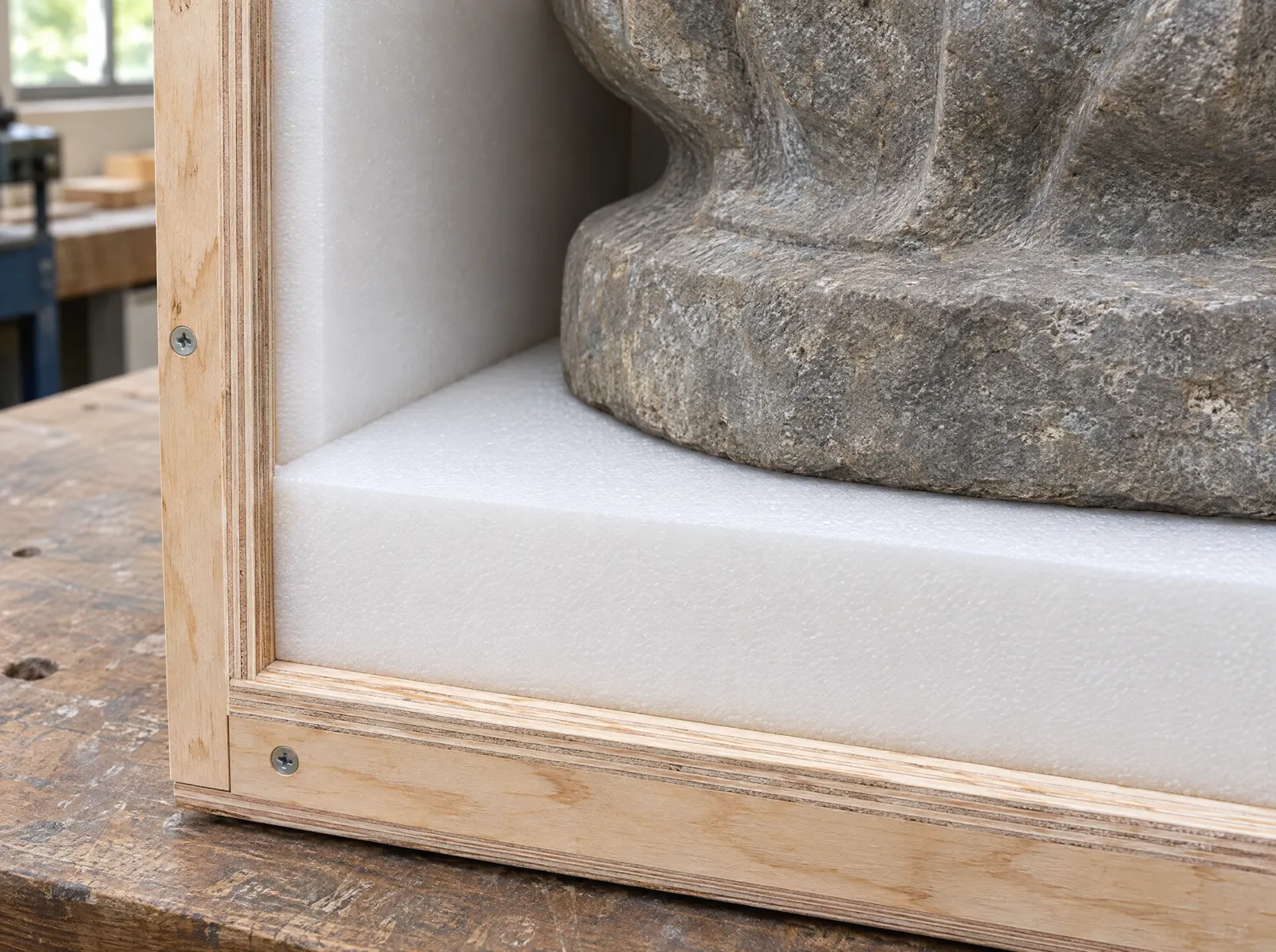
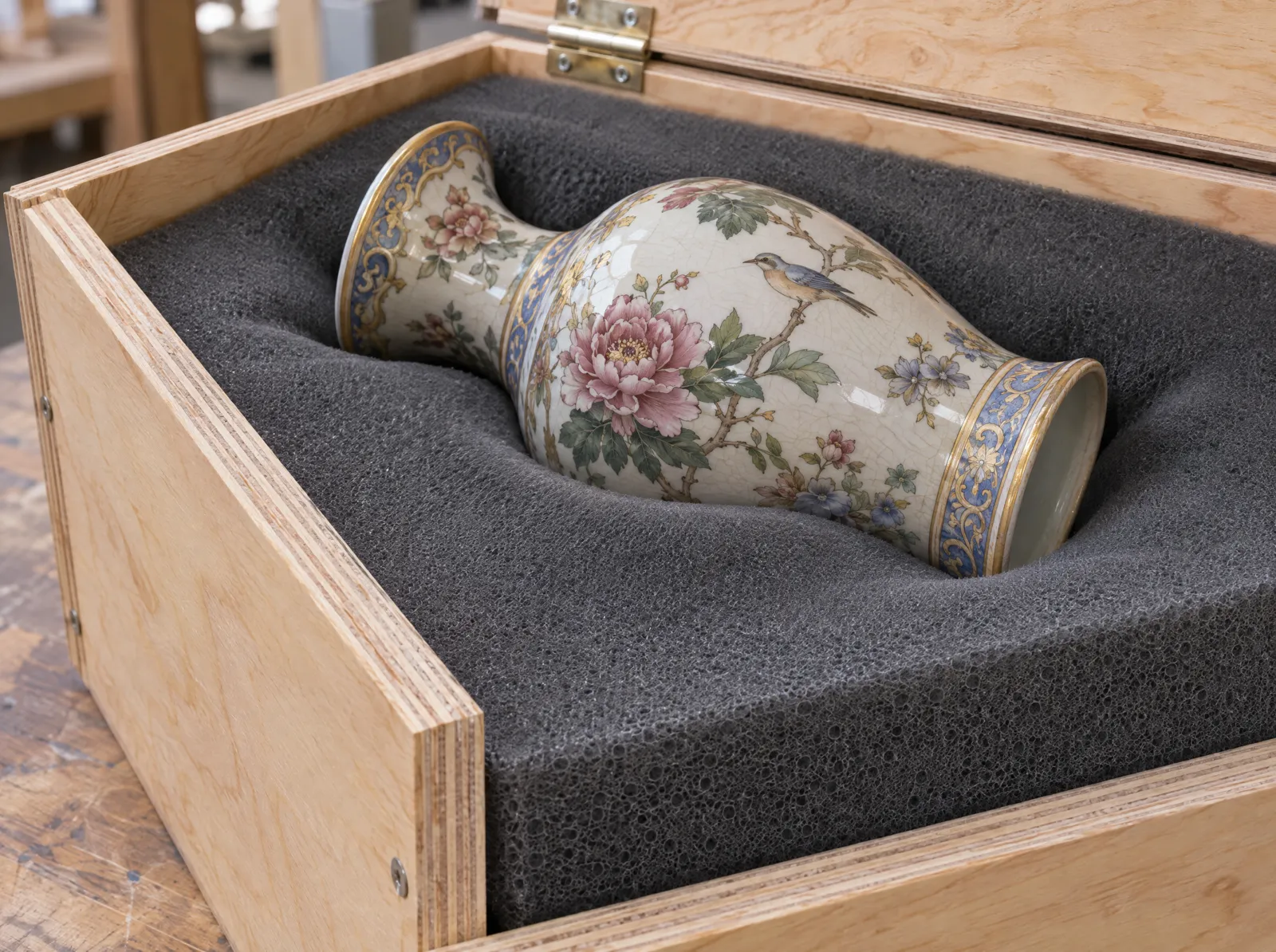
White and firm. Goes under the weight: the floor of a furniture crate, under the bottom edge of a painting or mirror, and as blocks holding sculpture and busts.
Charcoal grey and soft. Goes against fragile surfaces: wall linings beside a painted or polished face, gilding and finishes.
Rigid, light and the most affordable. Right where a light, firm lining is enough.
Are plywood crates exempt from ISPM 15?
The plywood is; a solid timber frame is not. ISPM 15 is the international standard for wood packaging that crosses a border. It does not apply to packaging made wholly of processed wood such as plywood, which is made with glue, heat and pressure. The UK government's guidance says the same: the rules don't apply to processed, non solid wood packaging like plywood.
A timber-framed plywood crate has solid wood in it: the frame, the skids and any battens. Those solid parts usually have to be heat treated or fumigated and marked before the crate is exported. US guidance is explicit that exempt material such as plywood, combined with solid wood parts, still has to be treated and marked. So an all-plywood box can usually travel without the mark, and a framed crate usually can't.
Is your crate going abroad? Our framed crates are heat treated and carry our own registered ISPM 15 stamp. Each country sets its own import rules, so check the current position with your shipper. Our ISPM 15 guide explains the mark.
Small presentation boxes with wood wool
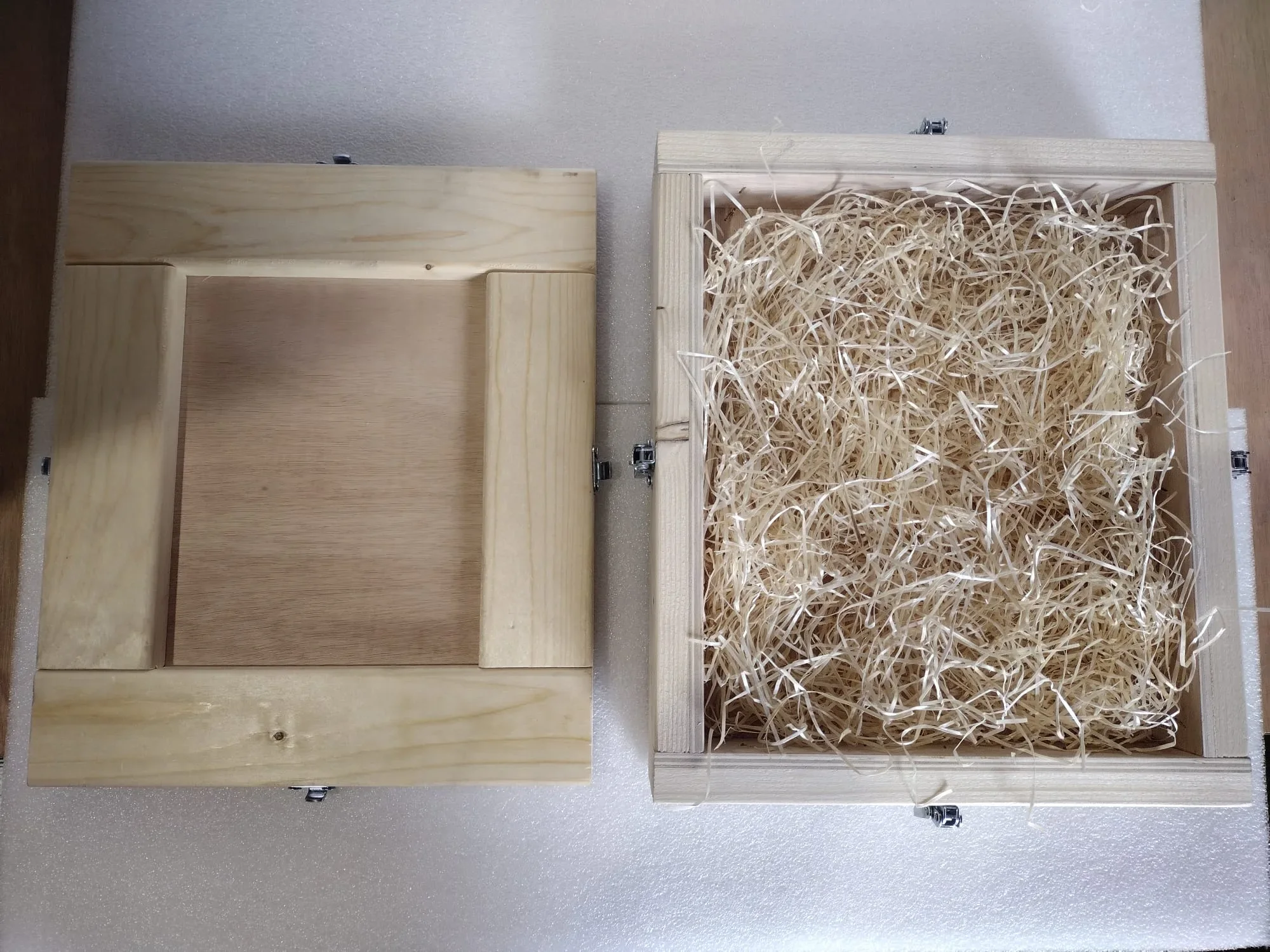
For small pieces and gifts, we build a small pine and plywood presentation box and bed the piece in wood wool. The wood wool holds it softly in place, and the box looks good when it is opened, which matters for a present, a client gift or a piece being handed over in person. Because it has pine in it as well as plywood, tell us if it is going abroad, so it is heat treated and stamped to ISPM 15 like our crates.
A presentation box is about the moment it is opened as well as the journey. For anything valuable or going a long way, ask us whether a foam-lined box or a full crate is the safer choice. See crate types for the full range.
How to order a plywood crate or box
There are two ways to work with us. We can collect the piece and build the box or crate around it at our warehouse, then your courier collects it or we arrange the shipping. Nothing for you to measure. Or you send us the measurements, we confirm them with you and build it to your measurements, then deliver it to your address.
Measuring yourself? Measure the widest, deepest and tallest points, including handles, mouldings, feet and frames, and tell us roughly what it weighs. Request a quote with the numbers and a few photos.
Common questions
Is a plywood box strong enough for shipping? +
For small, light, sturdy pieces on short trips, yes, especially with a good foam lining. For heavy, valuable or export pieces, choose a crate with a solid timber frame and skids.
Does a plywood crate need an ISPM 15 stamp? +
Packaging made wholly of plywood is usually exempt. A crate with a solid timber frame, skids or battens usually needs those parts treated and marked. Ours are heat treated and carry our own registered ISPM 15 stamp. See our ISPM 15 guide.
Why does a framed crate have skids? +
So it can be lifted from underneath by a pallet truck or forklift without anything touching the panels, and so it sits clear of a wet or uneven floor.
Can you make a plywood box with cut foam inside? +
Yes. A small piece can sit in a cavity cut into firm foam, so it can't move however the box is turned.
Can I reuse a plywood crate? +
Often, yes. Screwed lids open and close again, and a framed crate is built to take more than one journey. Keep the lining with it.
Can you build several boxes to the same size? +
Yes. Dealers and galleries often need the same size more than once. Send us the numbers you need.
What is wood wool? +
Fine, soft shavings of wood used to bed small pieces into presentation boxes. It holds a piece gently and looks good when the box is opened.
How much does it cost? +
Every quote is bespoke, based on the piece itself: its size, weight, how fragile it is and where it is going. We don't use a rate card. Send us the details and a few photos and we'll price your job.
Tell us what needs to travel.
Every quote is bespoke, based on the piece itself. Send us the details and we'll come back to you.