

How to ship a mirror without breaking it
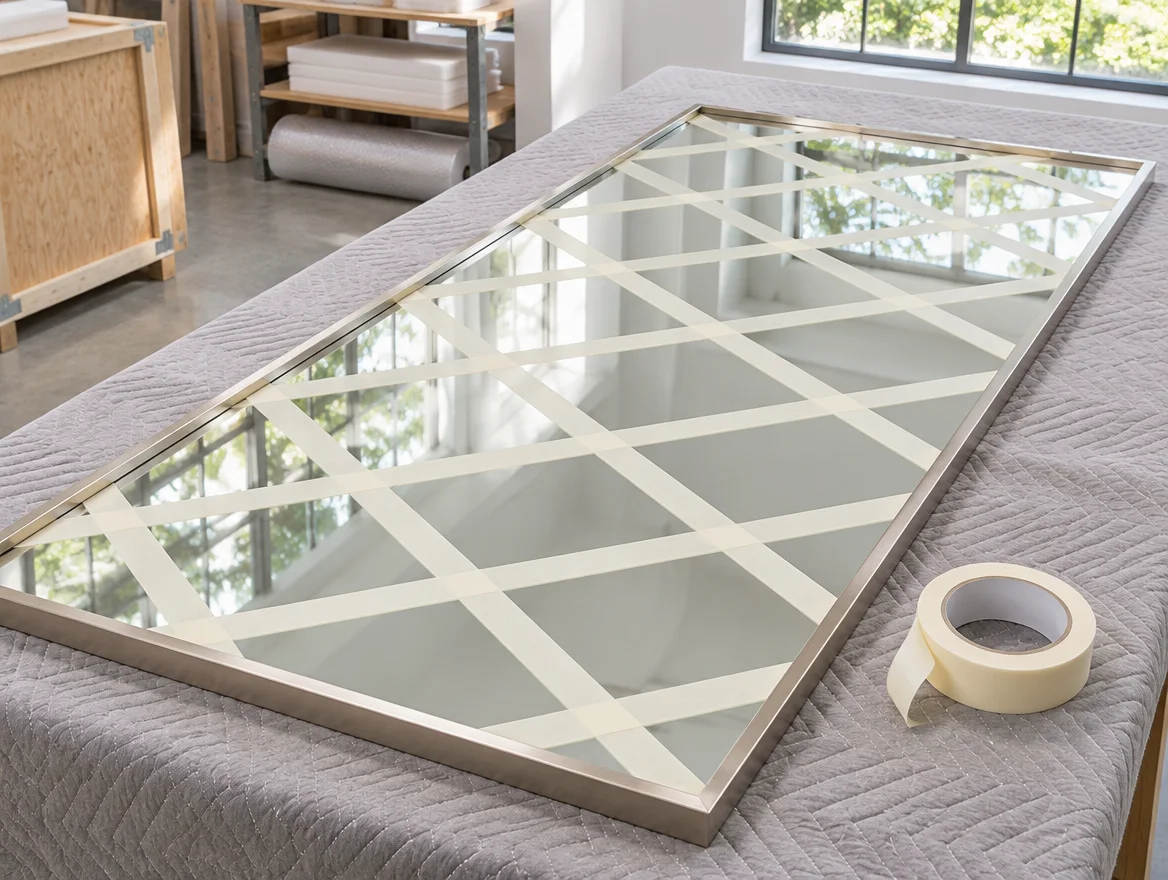
How to ship a mirror safely comes down to four things: tape the glass, protect the frame, carry the weight along the bottom edge and keep it standing on edge so it can't move. This guide takes you through each step, which mirrors need a crate, and the extra care antique glass and large overmantels need.
- Glass
- Taped in a lattice
- Stands
- On edge, never flat
- Weight
- Along the bottom edge
- Held by
- Padded battens
Why do mirrors break in transit?
Mirrors rarely break from one big knock. They break because they flex, because they move, or because something presses on the glass.
A blanket stops scratches but none of these. That is why method matters more than the amount of padding.
A large sheet of glass bends under its own weight and with vibration. Old frames, held by glue and a few nails, let it twist.
A mirror that can slide lands on a corner. All its weight goes through one small point, and the glass cracks.
Lying flat, anything set on top presses straight onto the face. Standing on edge, the face carries nothing.
How to ship a mirror: the method
Work in this order, whether you are using a box or a crate.
- 01Check the back first
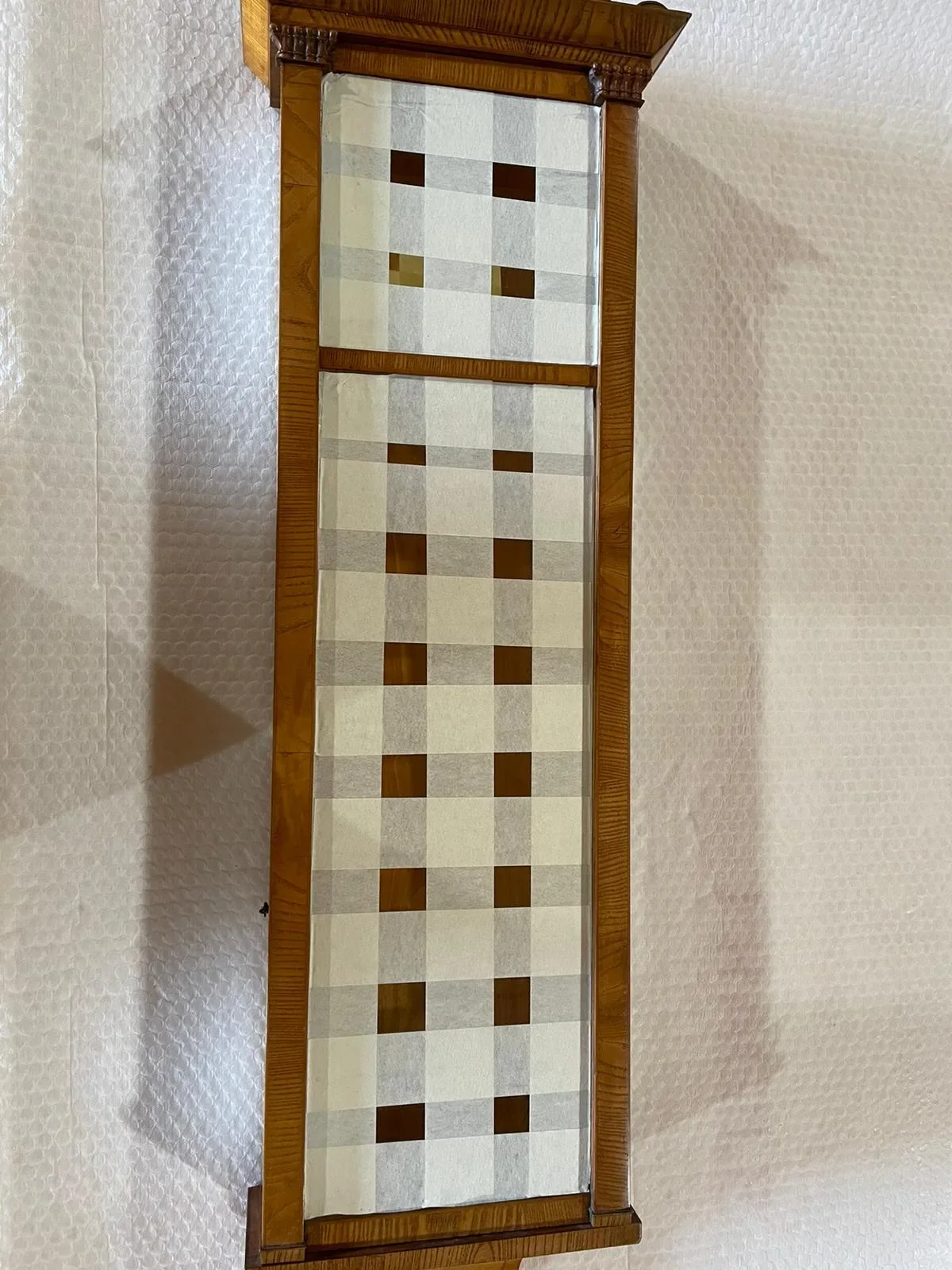
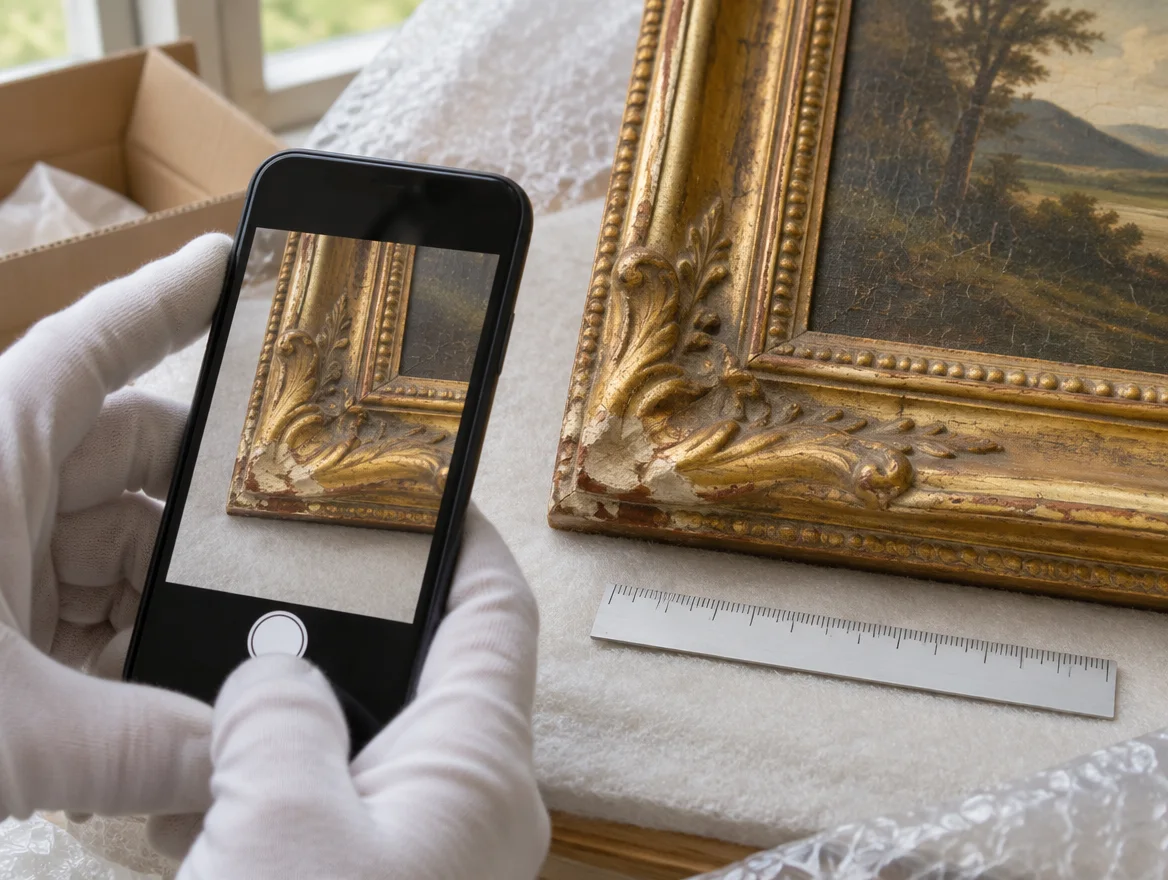
Old mirrors often have loose backboards, dried-out wedges or a plate that moves in the frame. Note anything loose and photograph front, back and corners.
- 02Clean and tape the glass
Tape sticks best to clean, dry glass. Run masking tape across it in a lattice or a large cross, on the glass only, never on the frame.
- 03Guard the corners
Card or foam corner guards over each corner of the frame, which takes the first knock.
- 04Wrap the frame
Acid-free tissue over gilding and carving first, then bubble wrap, bubbles facing out.
- 05Stand it on edge
In a box or crate only a little bigger than the mirror, upright, with its weight along the bottom edge.
- 06Stop it moving and mark it
Padding or battens on every side, then Fragile, This way up and the glass side marked on the outside.
Why tape the glass in a lattice or a cross?
Tape doesn't stop glass breaking. It holds the pieces together if it does, so they can't slide, cut through the wrap or scratch the frame and the silvering. A lattice suits a large mirror; a single cross, corner to corner, is enough on a small one.
- Use masking tape or a low-tack tape, not parcel tape.
- Keep it on the glass. Tape on gilding or paint pulls the surface off when it comes away.
- Take it off within a few days of arrival, slowly and at a low angle. Tape left on glass for weeks, especially somewhere warm, is harder to remove cleanly.
Don't tape an acrylic mirror or acrylic glazing. Acrylic scratches easily and tape can mark it. Tell us which you have.
How to protect a gilded or carved frame
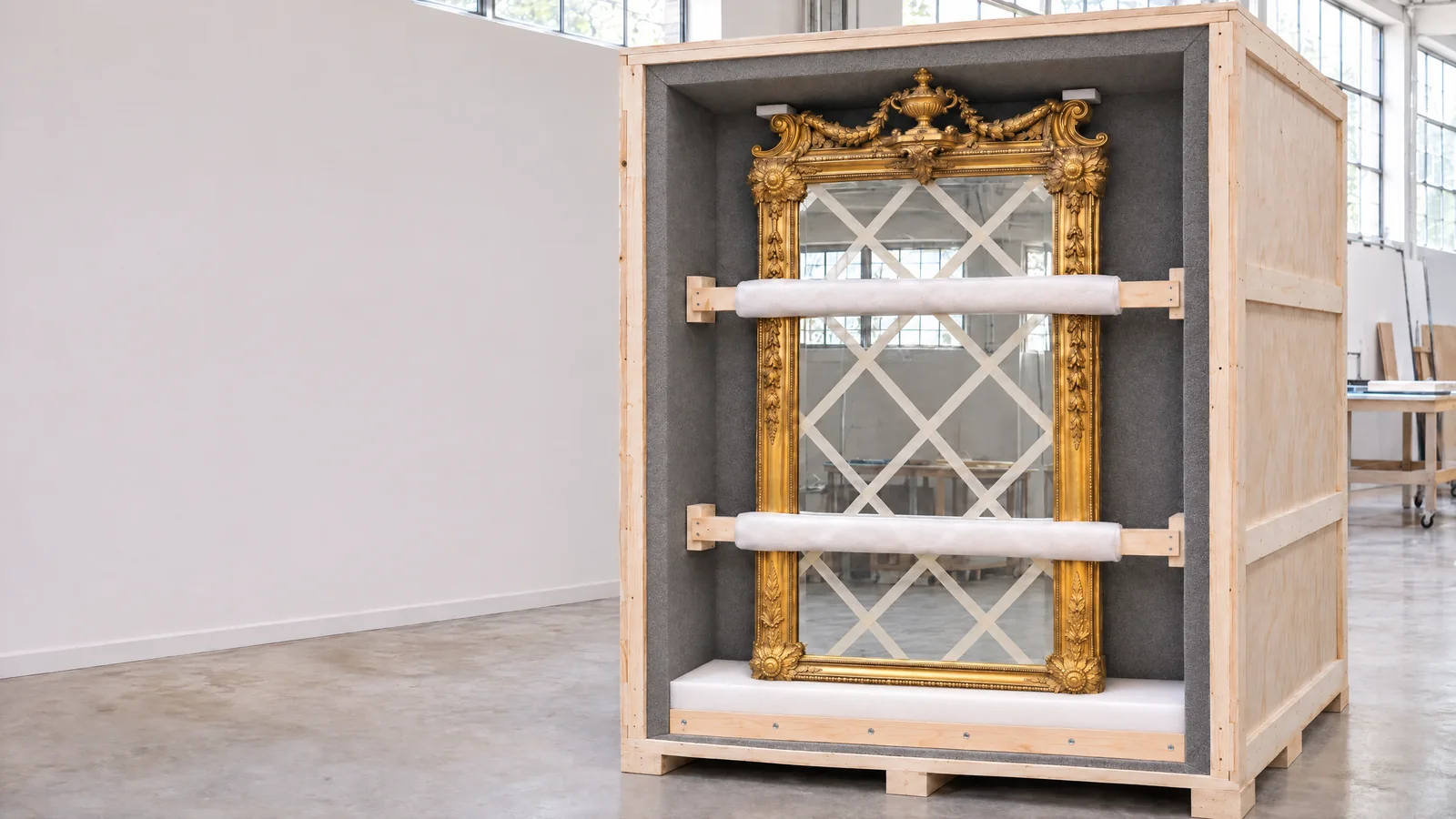
Gilded frames have a layer of gesso under the gold, and it chips at the corners and on carved detail first. Many gilded surfaces are also harmed by water, so keep glass cleaner well away from the frame.
- Corners: guards on all four, before anything else goes on.
- Tissue first: acid-free tissue against the gilding, then bubble wrap over it. Bubble wrap pressed straight onto soft gilding can leave its pattern behind.
- Loose parts: crests, candle arms and finials that come off travel separately, wrapped and labelled.
- No tape on the frame, ever. Tape the wrapping to itself.
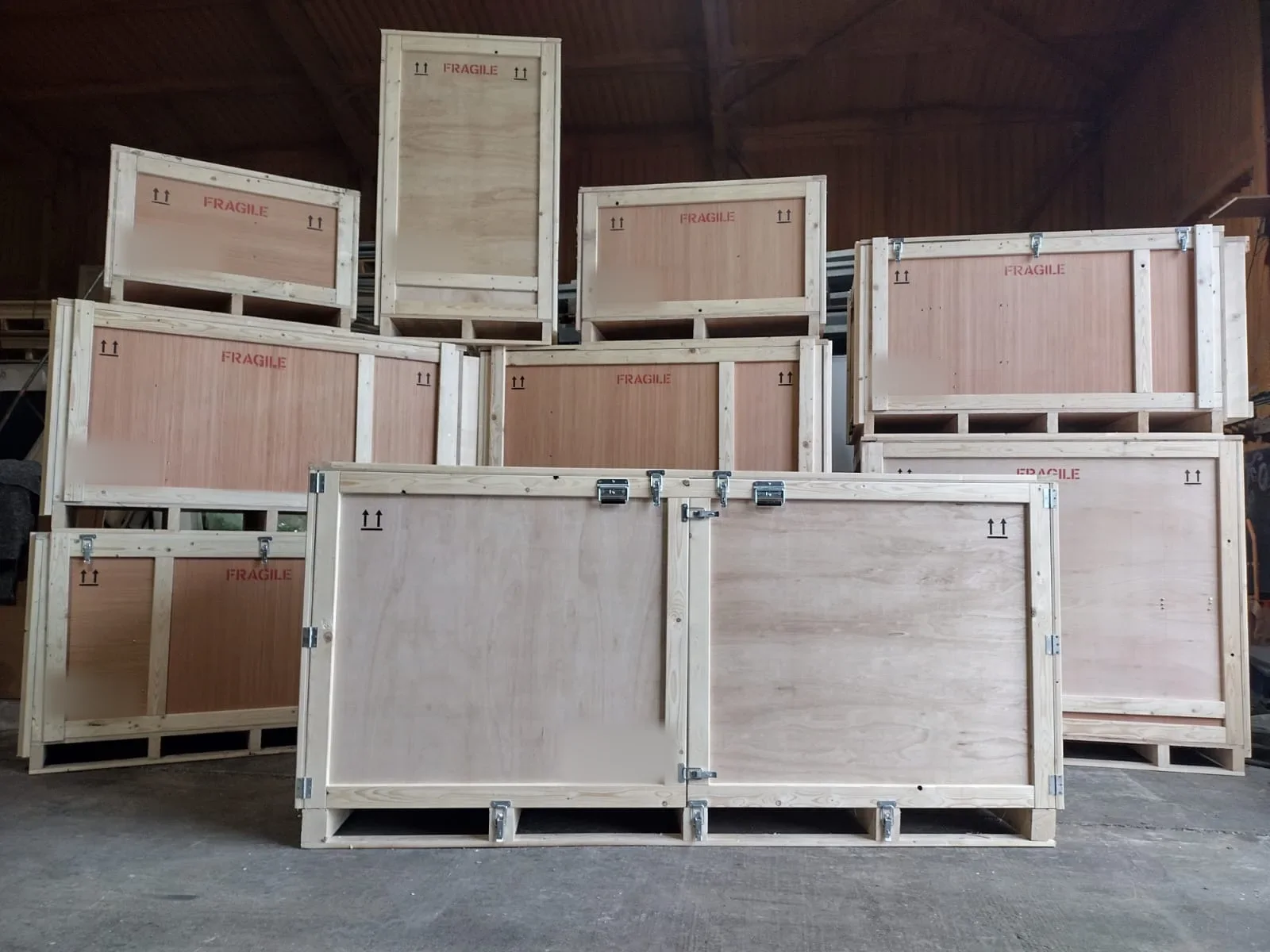
Inside our crates we line around gilded frames with HLB22 soft foam, which gives gently against carved edges. See what our crates are made of.
Why mirrors travel standing on edge, never flat
Glass is far stronger along its edge than across its face. Lying flat, a big mirror can sag and flex with every bump, and anything stacked on the crate presses down on it. Standing on edge, it carries its weight the way it was made to, and nothing rests on the glass.
The weight should sit on a firm cradle along the whole bottom edge, never on the corners. Old frames are often held together by glue and a few nails, and two corners can't carry a heavy plate on a long journey.
Send us a photo and the measurements.
We’ll recommend the crate, the lining and the supports, and come back with a bespoke quote.
What holds a mirror still in a crate?
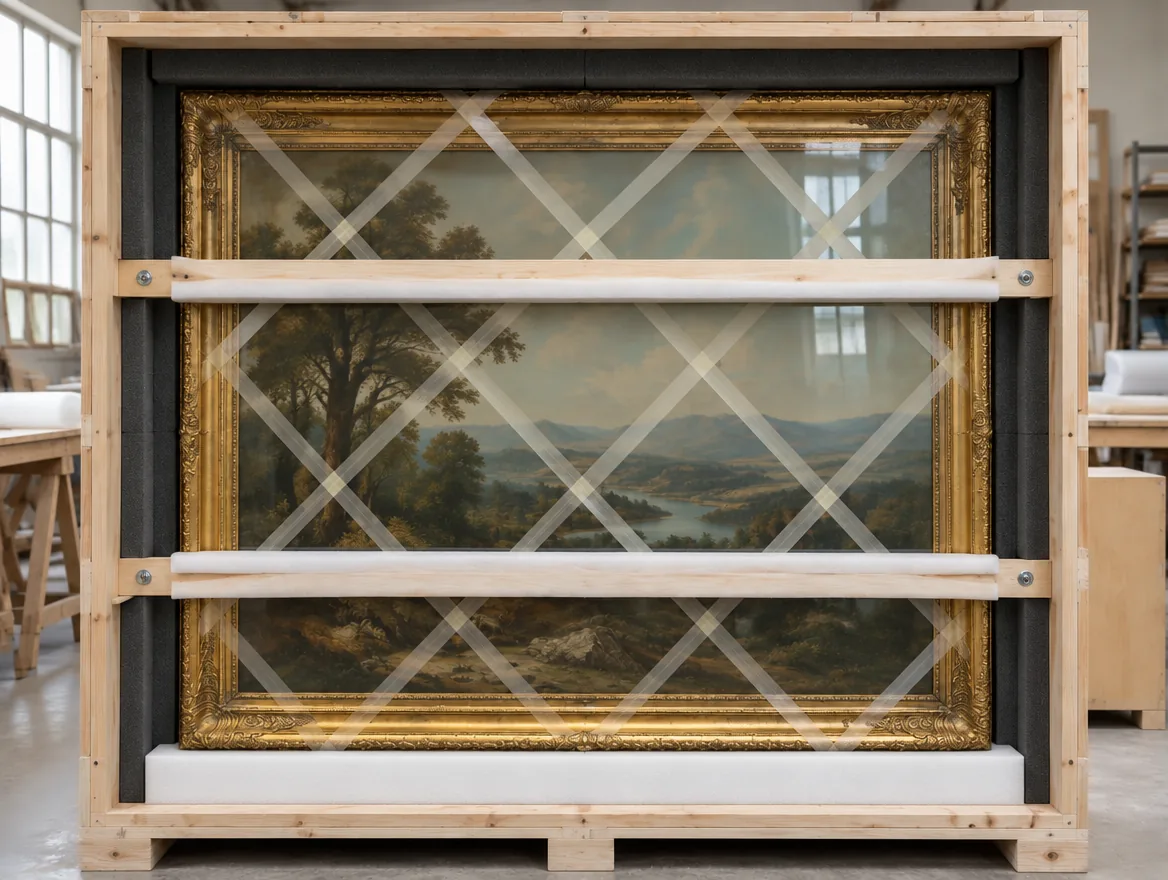
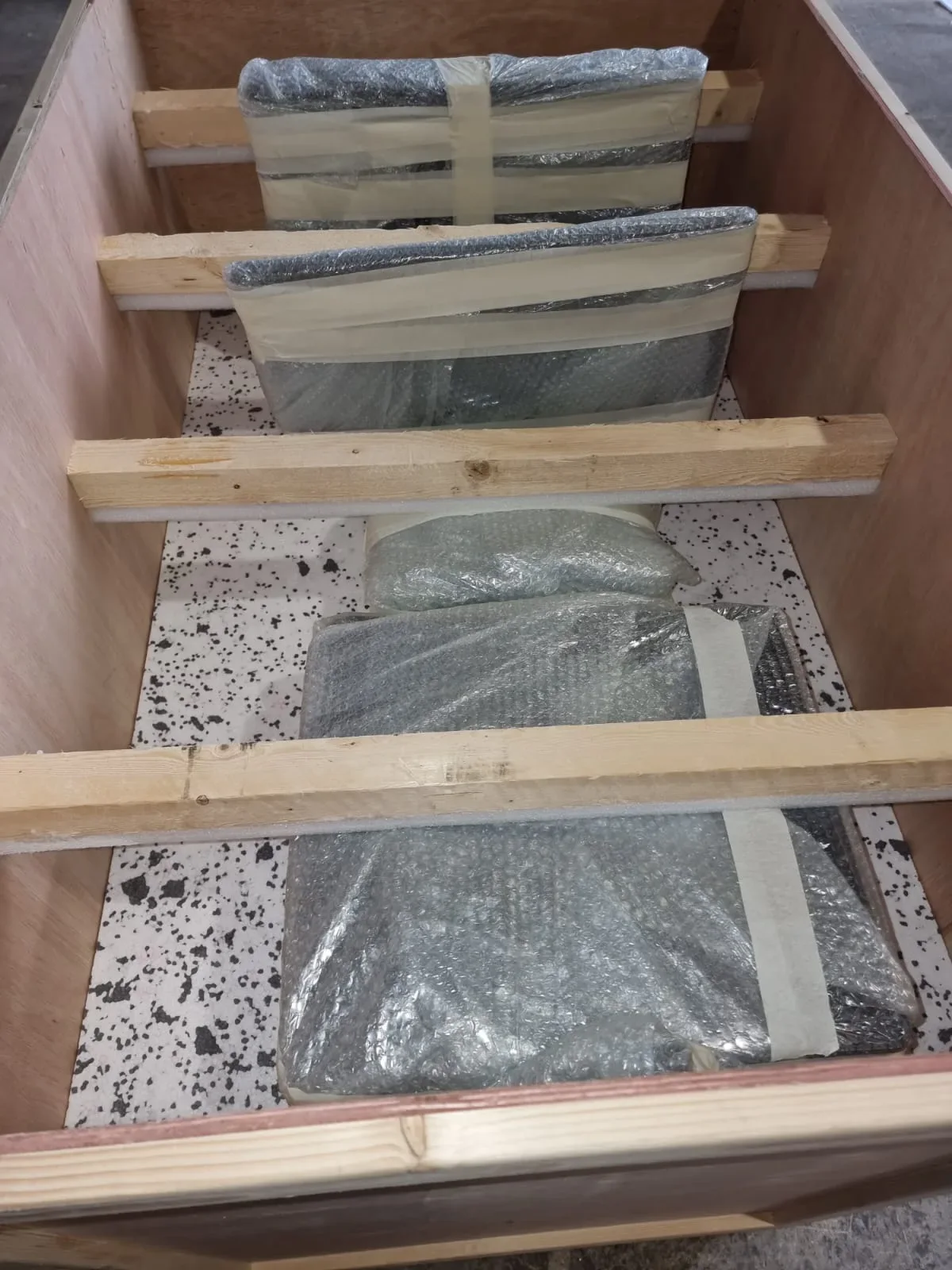
Padded battens. These are lengths of timber faced with foam, fixed across the frame front and back and screwed to the crate walls, so the mirror is held by its frame and never by its glass. Battens are what we use for mirrors and flat works; busts and sculpture are held with blocks of high density foam instead.
We make that cradle from white high density foam, because it carries the weight: it is firm and stops the bottom edge sinking over a long journey. The softer charcoal foam goes where the frame is touched, not under it.
Crate or box: which does your mirror need?
It depends on size, value and how far it is going.
Our guide crate or box explains the choice in more detail, and mirrors and glass shows how we crate them.
| Your mirror | A strong box | A bespoke crate |
|---|---|---|
| Small modern mirror, short UK trip | Usually enough, packed as above | Rarely needed |
| Large or heavy mirror | Risky: a box can't hold it on edge | Yes |
| Antique or gilded frame | Risky | Yes |
| Going abroad or by freight | Rarely | Yes |
| Overmantel or pier mirror | No | Yes |
Antique mirrors: mercury and silvered glass
Old mirror glass needs more care than new. For centuries mirrors were backed with an amalgam of tin and mercury. In 1835 the chemist Justus von Liebig developed a way of silvering glass chemically, and silvered mirrors gradually took over.
Mercury mirrors. Over time the amalgam breaks down: it turns grey and crystalline, and tiny drops of liquid mercury can collect at the bottom of the frame. Mercury is toxic, so:
- Wear gloves and keep bare hands off the back
- Keep the mirror steady and avoid bumps and shocks
- Don't open the back or try to clean up droplets; that is a job for a conservator
- Keep it cool and away from heat, as mercury gives off more vapour when warm
- Tell us if you think your mirror is mercury-backed, before we plan the packing
Silvered glass. The silvering on the back scratches easily and can lift if it gets damp. Protect the back as carefully as the front, and keep it dry. More in antique shipping.
Large overmantel and pier mirrors
Overmantels and pier mirrors are tall, heavy and often fixed to the wall, sometimes with a crest or candle arms and more than one plate of glass. They need planning before anyone lifts them.
- Find out how it is fixed. Mirror plates, hooks, a timber cleat or screws through the frame. Never pull it forward until you know.
- Have enough people. Two at least, often more, so nobody takes the weight on a corner.
- Take off what comes off. Crests, arms and finials travel separately.
- Measure the route out. Doors, stairs and turns can decide the crate's shape as much as the mirror does.
Tell us how yours is fixed, and ask us whether taking it down is something we can do.
Two ways we can take over
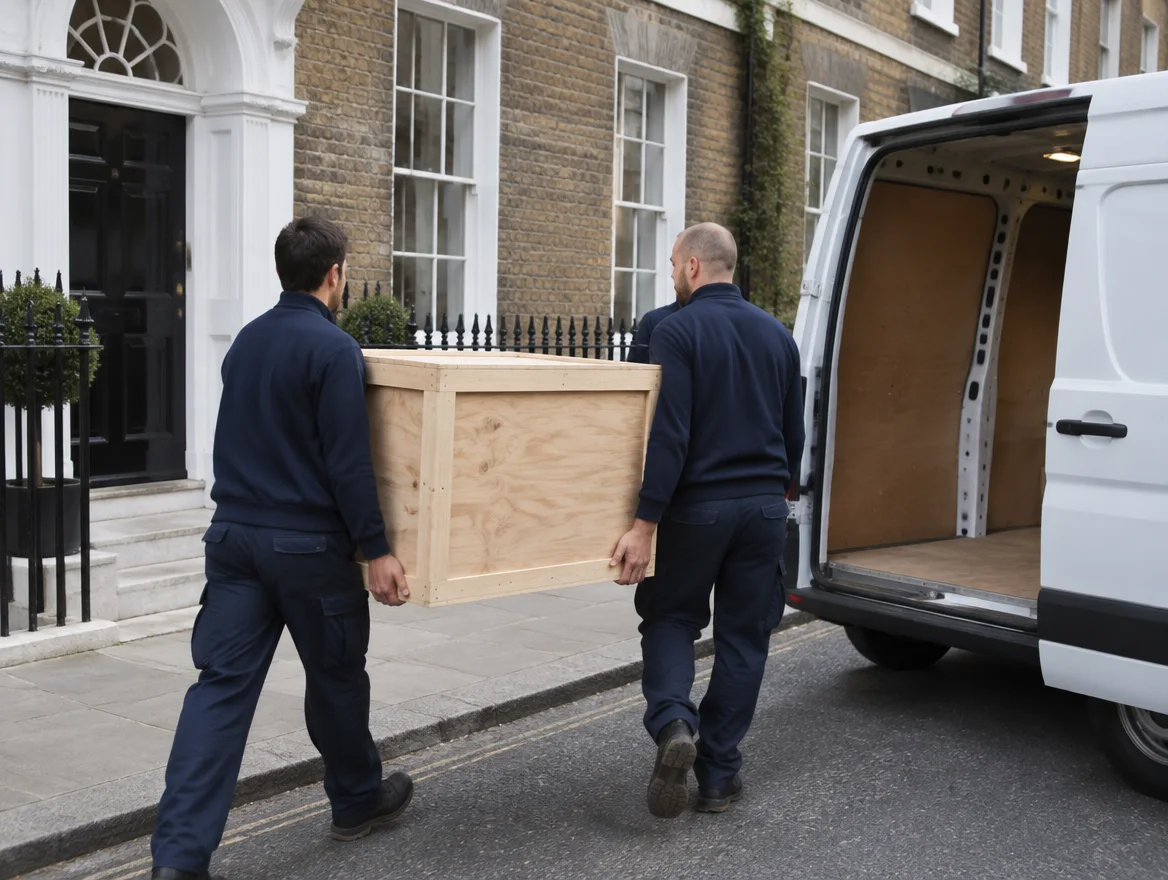
If your mirror is too big, too old or too valuable to trust to a box, we can take over in one of two ways.
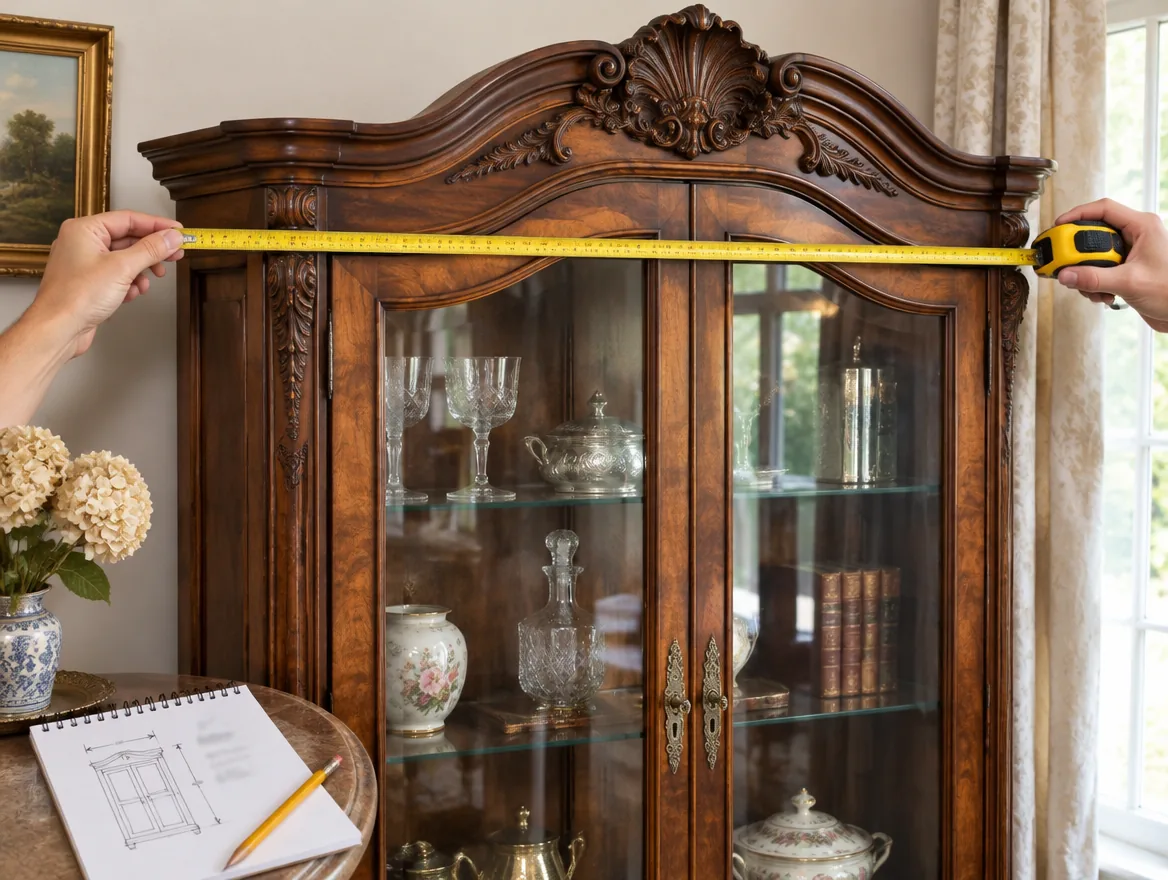
Measuring for the second way? Measure the frame, not the glass: height and width at the widest points, including any crest, carved ornament or candle arms, and depth at the deepest moulding. Tell us roughly what it weighs (one person or two) and whether the frame is gilded.
If you want, we can also arrange the onward shipping. We don't handle customs paperwork; your shipper or a customs agent arranges that. Transit insurance is bought by you, job by job. Buying a mirror at auction? See crating for auction buyers. Then request a quote.
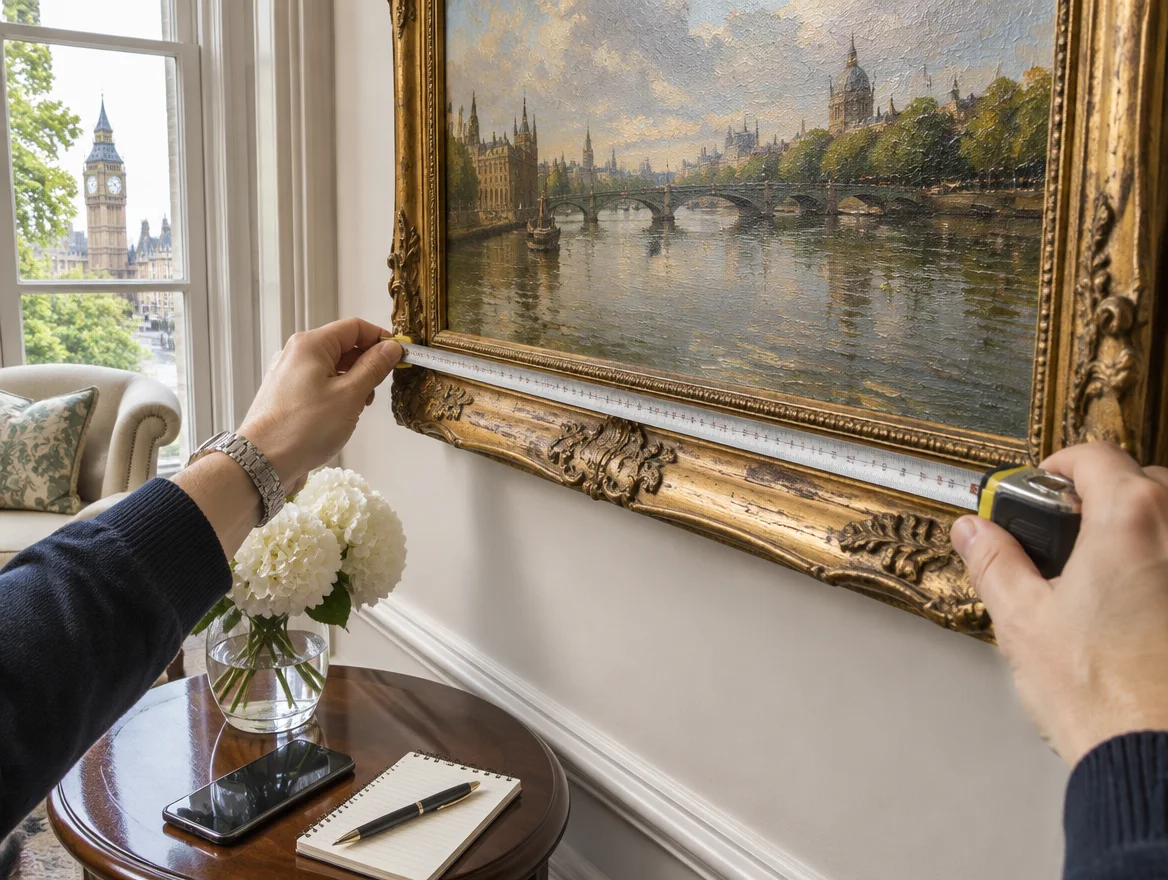
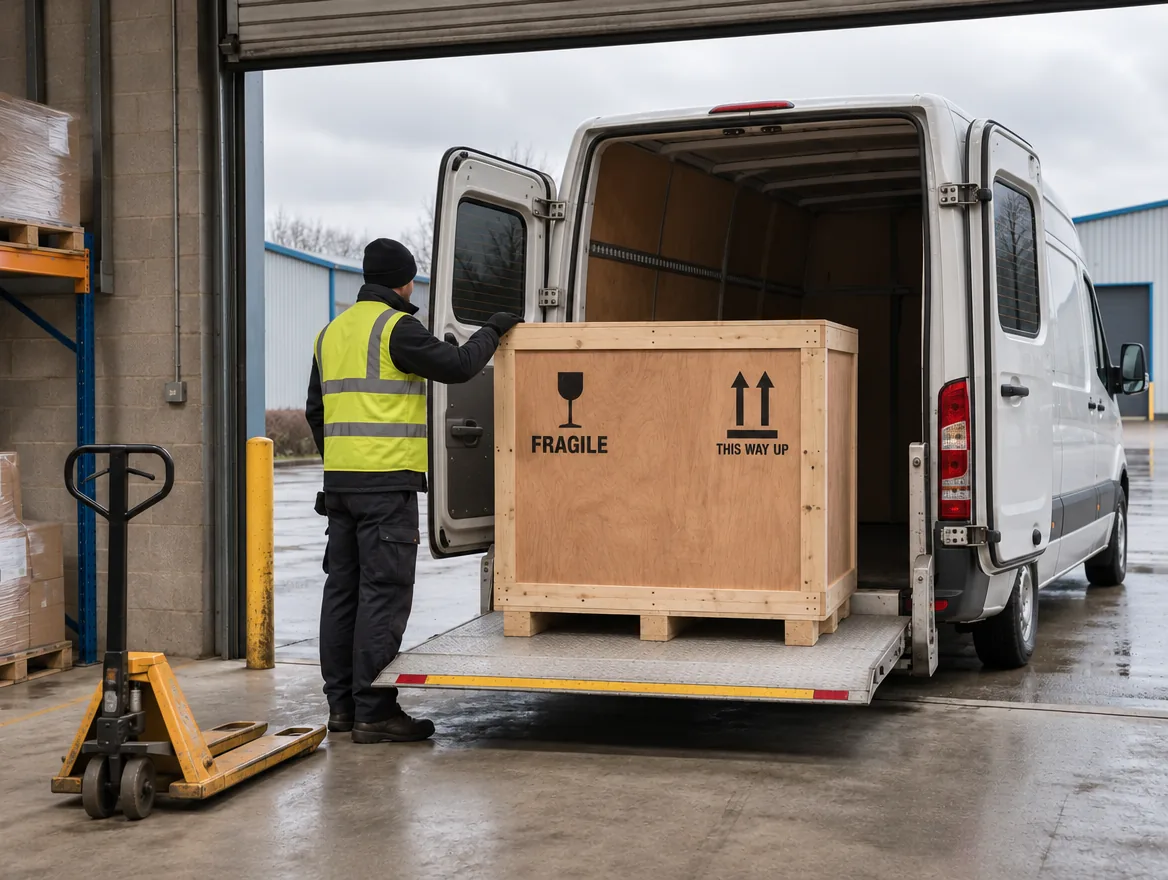
We collect the mirror, tape and wrap it, and build its crate around it at our warehouse. Your courier or shipper collects the finished crate from us. Nothing to measure. How collect and crate works.
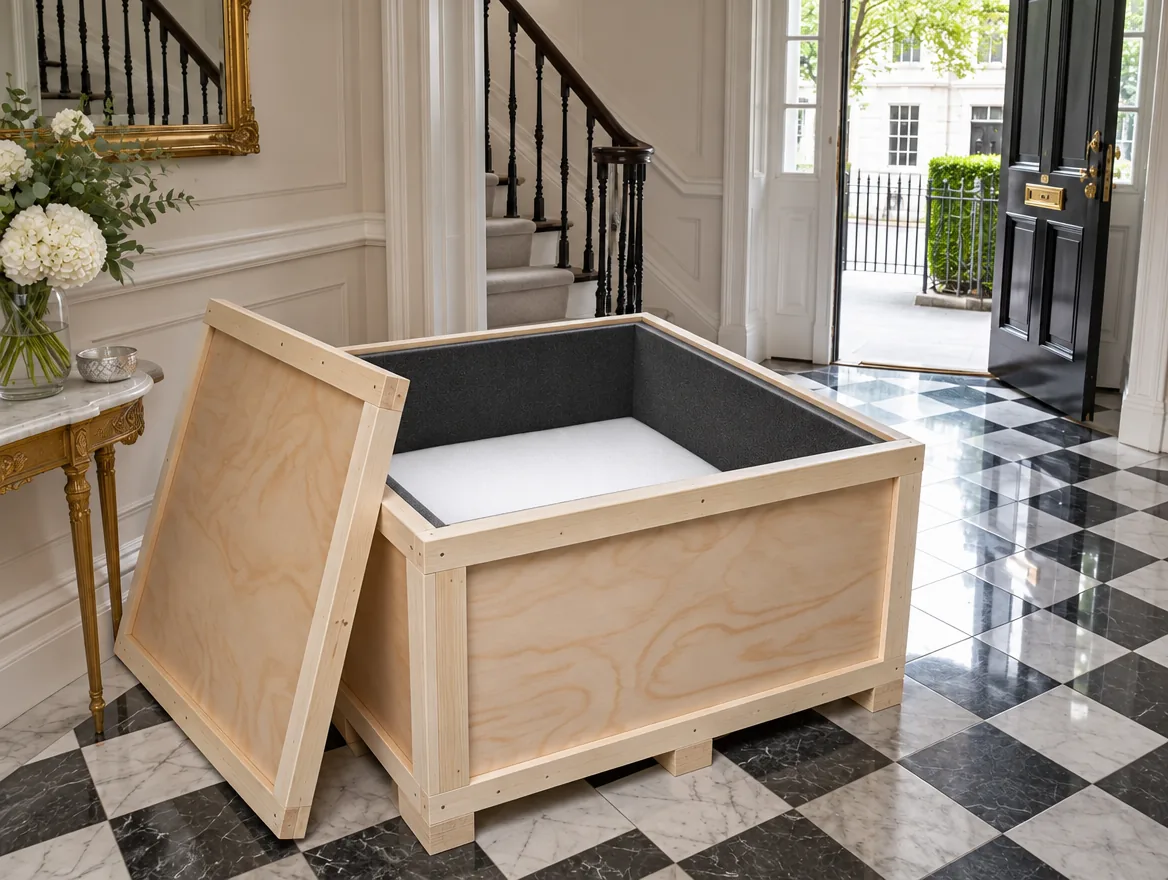
Send us the sizes, we confirm them with you, then build the crate and deliver it to your address for you or your shipper to pack. Crates built to your measurements.
Common questions
Should a mirror be shipped face up or face down? +
Neither. A mirror should travel standing on edge, upright, with its weight along the bottom edge. Lying flat, the glass flexes and anything on top presses on it.
What tape should I use on mirror glass? +
Masking tape or a low-tack tape, on the glass only. Avoid parcel tape, which is hard to remove, and never tape gilding, paint or acrylic.
Can I ship a mirror by parcel courier? +
A small modern mirror, well packed and standing on edge in a strong box, often can go. For a large, antique or gilded mirror, a crate is far safer, because parcel networks sort by machine and stack boxes.
How do I know if my antique mirror is mercury glass? +
Mercury mirrors often look soft and grey, with a crystalline or patchy backing, and you may see tiny silver droplets at the bottom of the frame. If in doubt, treat it as mercury and ask a conservator.
Should the mirror come off its frame to travel? +
Usually not. The frame protects the glass edges. The exception is a mirror whose plate is loose in the frame; tell us and we'll plan the support around it.
Can you crate a very large mirror? +
Yes. We crate any object, item or weight. Send the sizes, including any crest, and tell us about the route out of the building.
How much does it cost to ship a mirror? +
Every quote is bespoke, based on the size, weight, frame, where it is going and how. Send us the details and photos and we'll come back with a price.
More on mirrors and glass
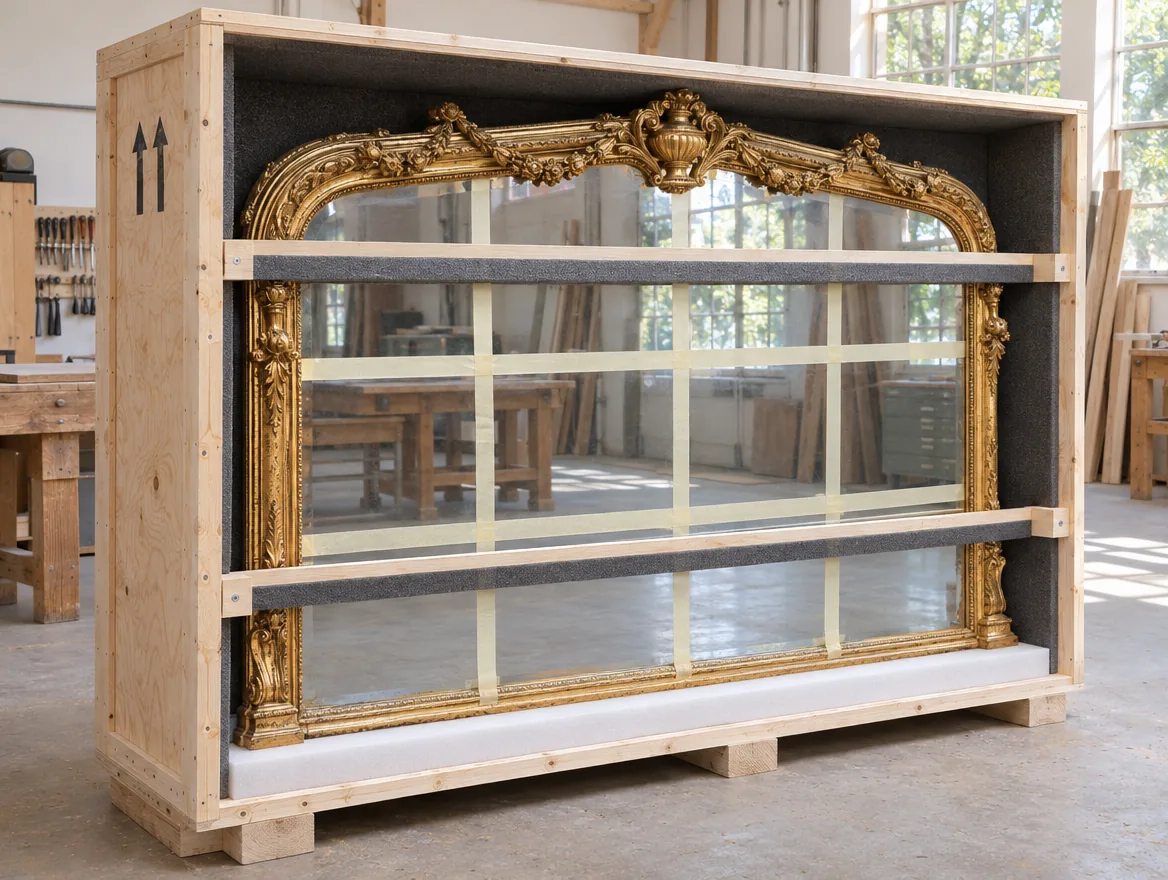
Glass taped, frame padded, crate to measure.
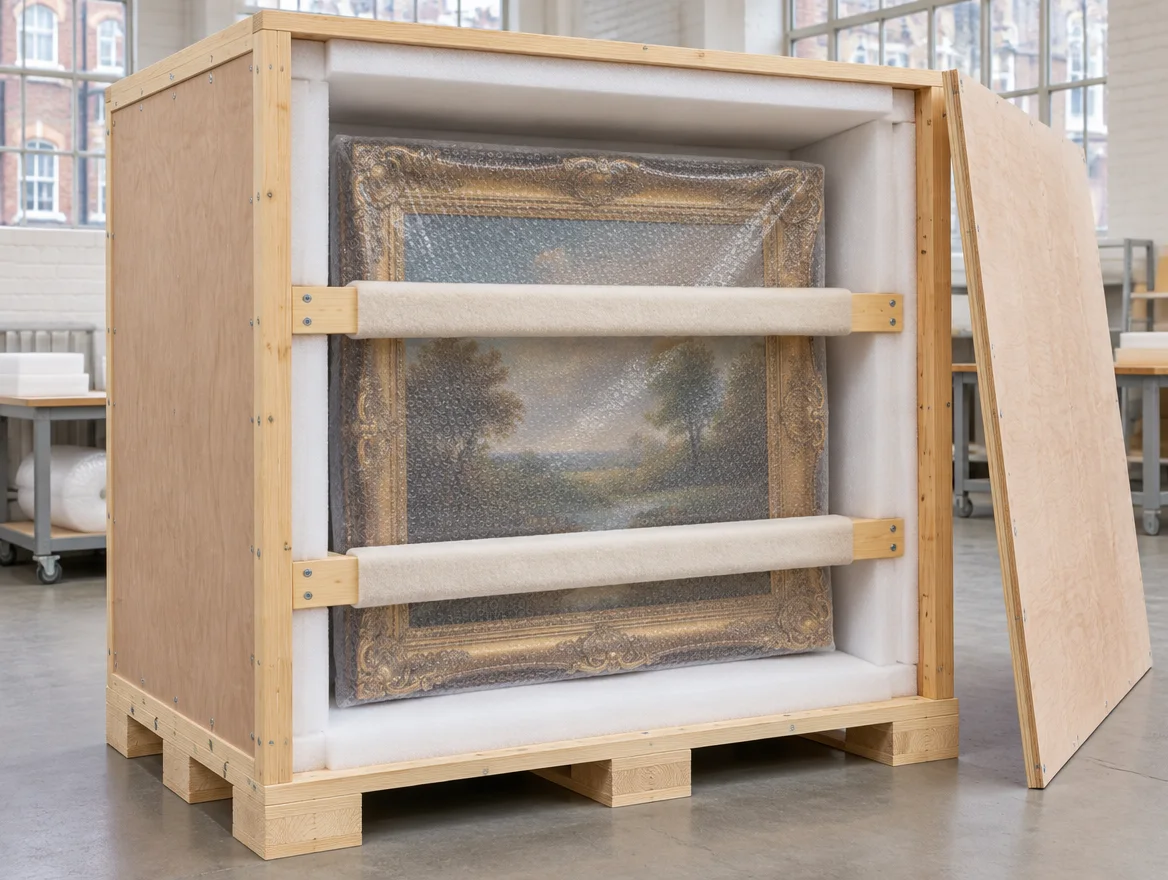
Wooden crate or box: what your piece needs.
Nothing to measure. We build the crate around the piece.
You measure, we confirm, build and deliver.
Swipe for more →
Tell us what needs to travel.
Every quote is bespoke, based on the piece itself. Send us the details and we'll come back to you.