

Moving a grandfather clock, step by step
Moving a grandfather clock safely comes down to one rule: it never travels as one piece. Stop it, take out the pendulum and weights, secure the chains or cables, lift off the hood and keep the case upright. Here is the full method, when to call a clockmaker, and when a crate is the right answer.
- Pendulum
- Out and packed apart
- Weights
- Labelled left, centre, right
- Case
- Travels upright
- Movement
- Ask your clockmaker
Can you move a grandfather clock yourself?
Yes, for a short move, if you take it apart first and have two people for the case. A longcase clock is tall, top-heavy and full of parts made to hang still, not to be carried.
Here is what usually goes wrong:
For a long journey or a valuable clock, the method is the same, but the case and its parts finish in a crate.
Left hanging, it swings and bangs, and the thin suspension spring at its top bends or snaps.
They swing into the case, the glass or the pendulum.
With the weights off, chains slip and cables unwind and tangle.
In many antique clocks it simply rests on top of the case sides. Tip the case and it can slide.
What do you need before moving a grandfather clock?
- Cotton gloves, so no fingerprints go on the brass weights, the pendulum bob or the dial
- Masking tape and a pen, for labels
- Acid-free tissue, soft cloths and bubble wrap
- Cable ties or soft string, for chain-driven clocks
- Small pads of foam or folded card, for cable-driven clocks
- A box lined with towels for the small parts, keys and finials
- A second person, and a clear route out of the room
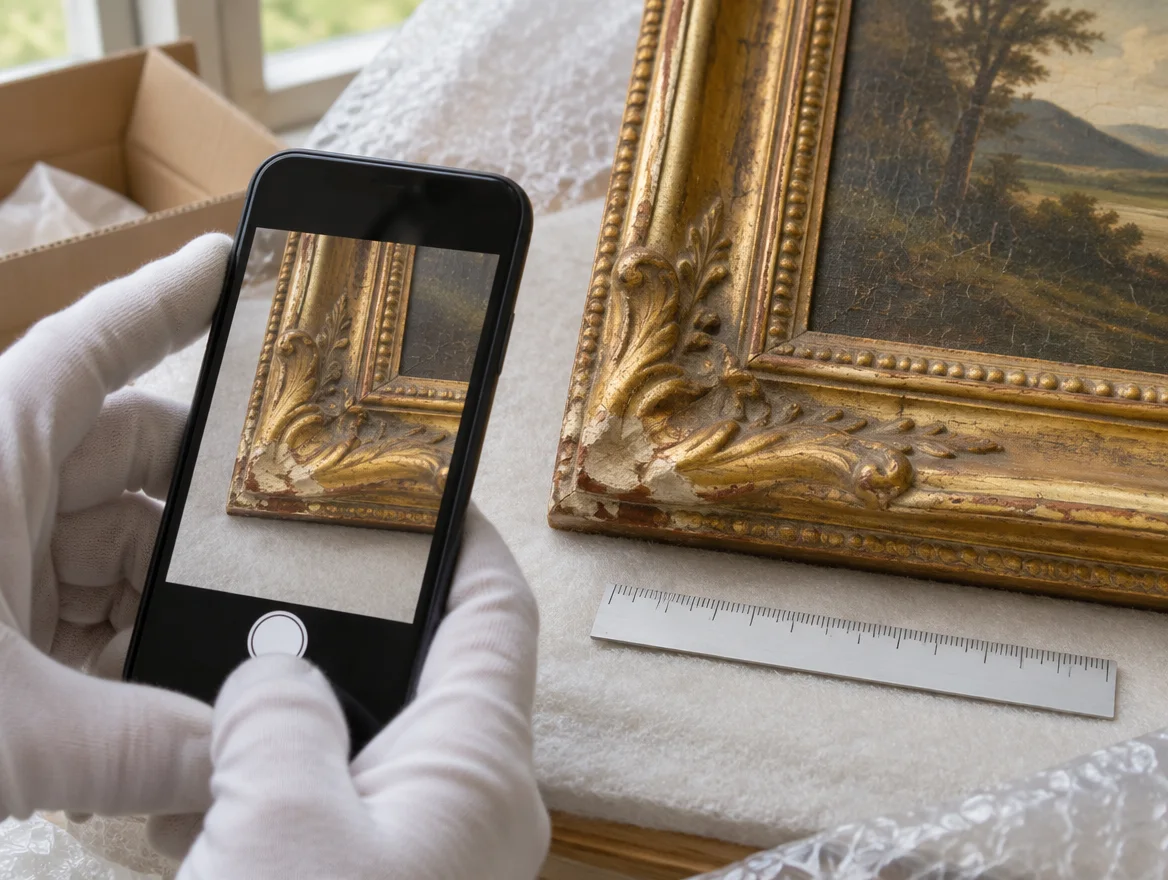
Photograph the dial, the weights hanging in the trunk and the back of the hood. They are your best instructions for setting it up again.
How to take a grandfather clock apart for a move
Stop it, secure the lines, take off the weights, unhook the pendulum, then lift off the hood. Do it in that order.
Why label the weights? They are often not the same, and restorers disagree about which side takes the heavier one on old English clocks. Note where each came from. One weight usually means a thirty-hour clock, two an eight-day, three a chiming clock.
- 01Stop the pendulum
Open the trunk door and bring the pendulum to rest with a hand on the rod. Don't move the hands while the clock is striking.
- 02Secure the chains or cables
Chains: thread a cable tie or string through the links just below the sprockets, so they can't run off. Cables or gut lines: wedge a small pad above each pulley, or tape over the barrels, so the line stays wound when the weight comes off.
- 03Take off the weights and label them
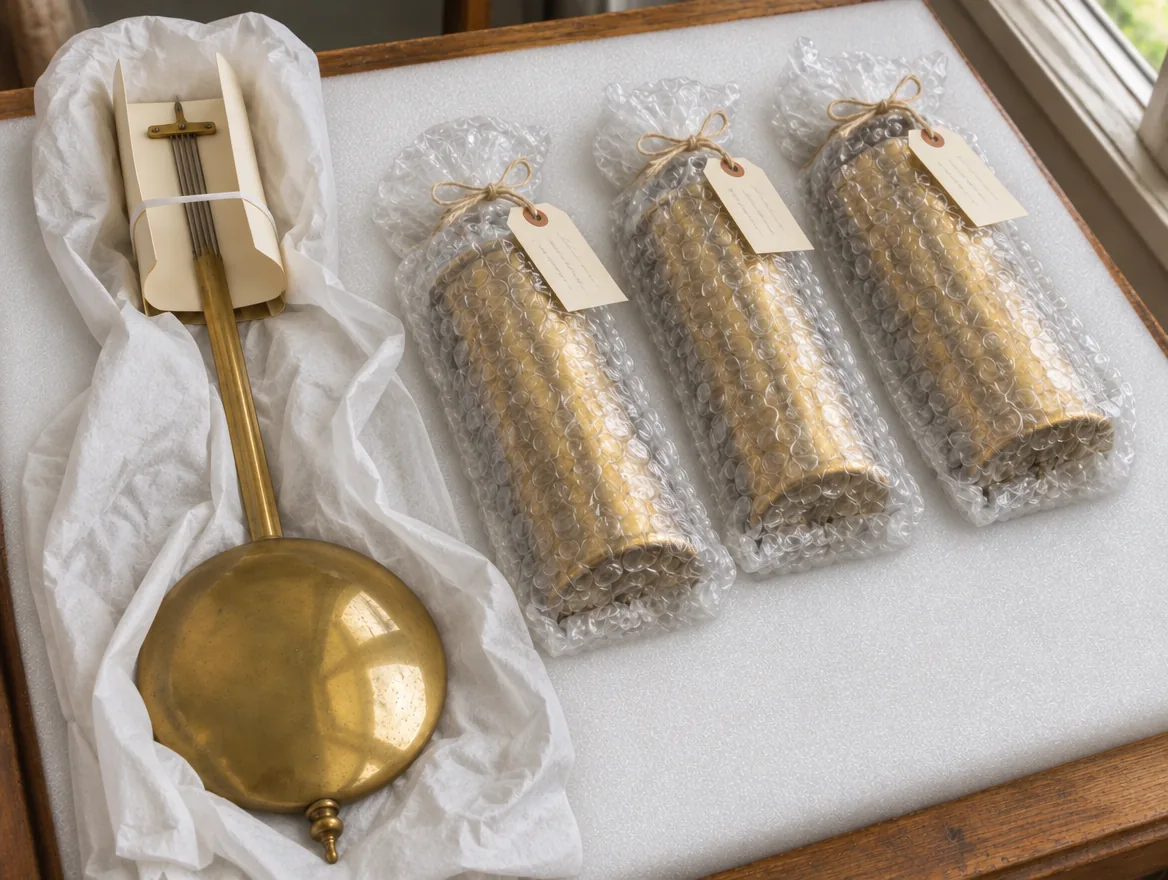
One at a time, in a gloved hand. Before each one comes off, label it left, centre or right as you face the clock.
- 04Unhook the pendulum
Lift it gently up and forward to free it from the crutch and the suspension. Never force it: the suspension spring is a thin strip of steel and bends easily. Wrap it on its own, flat.
- 05Take off the hood
Most hoods slide forward off the case; some older ones lift upward, and a few are held by a catch inside the trunk. Check before you pull.
- 06Bag the small parts
Finials, keys and anything loose go into the lined box, wrapped and labelled.
Should you take the movement out?
Sometimes. In many antique longcase clocks the movement and dial sit on a seatboard resting on top of the case sides, and the pendulum's weight helps hold them steady. With the pendulum out, the movement can rock or slide if the case is tilted.
- Short move, case kept upright: the movement can often stay in, once you have checked it is steady.
- Long journey or a crate: the movement and dial usually come out and travel in their own padded space.
- Valuable, musical or temperamental clocks: leave the movement to a clock specialist.
If you can't see how the movement is held, don't lift it. Ask a clockmaker. The British Horological Institute lists accredited repairers across the UK.
We take out the pendulum and weights and pack every part for travel. For the movement, many owners prefer their own clockmaker, and for a valuable clock that is usually the right call. Ask us what we can do on the day.
Send us a photo and the measurements.
We’ll recommend the crate, the lining and the supports, and come back with a bespoke quote.
How to protect the dial, glass and hood
Painted and silvered dials mark easily. If the movement stays in with the hood off, cover the dial with a sheet of acid-free tissue and a loose pad of bubble wrap, held at the edges, not pressed on.
The hood is the most fragile part of the case, and awkward to hold.
- Take off finials and anything that unscrews, and wrap them separately.
- Cover the hood glass with tissue, then bubble wrap. Old glass is thin, so don't press on it.
- Keep the hood upright, travelling on its own, with nothing on top of it.
- Lock the trunk door, or hold it shut with tape over a pad of tissue, never straight onto polish or veneer.
How to move the case
Keep it upright. One person takes the weight at the base, the other steadies the top. Hold the case by its sides, never by the mouldings or the trunk door.
- Walk it, don't drag it. Dragging catches the feet and can snap them or split the plinth.
- In a van, stand it against a bulkhead or wall, padded, and strap it so it can't tip or slide.
- If it truly has to tilt to pass a low doorway, empty it first and support it along its whole length.
- Don't leave it in a cold van overnight. Damp lifts veneer and rusts steel parts.

When does a grandfather clock need a crate?
A crate is the safer answer when:
- It is going abroad, or by air or sea freight
- It will pass through depots and warehouses on the way
- It has been sold and has to arrive as described
- It is valuable, and you want packing that matches its insured value
- The movement and parts must travel with the case and not go astray
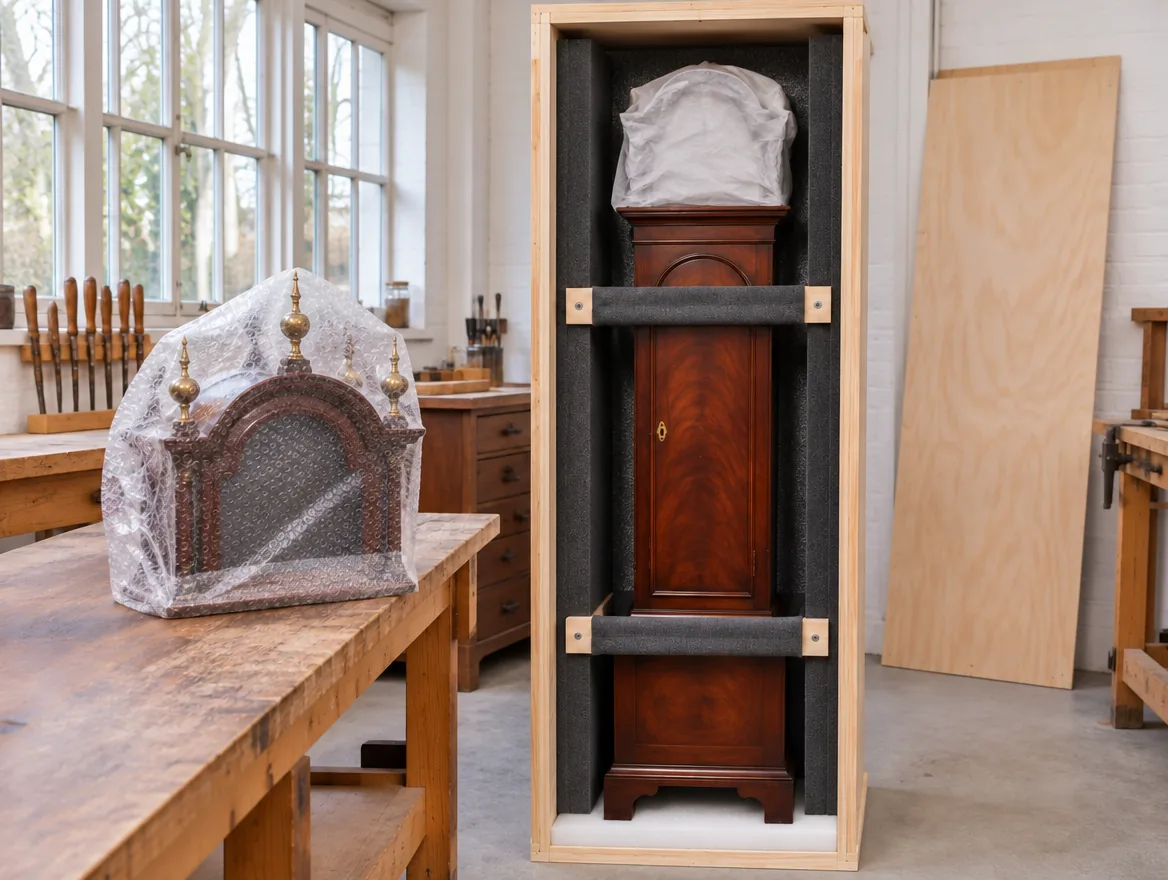
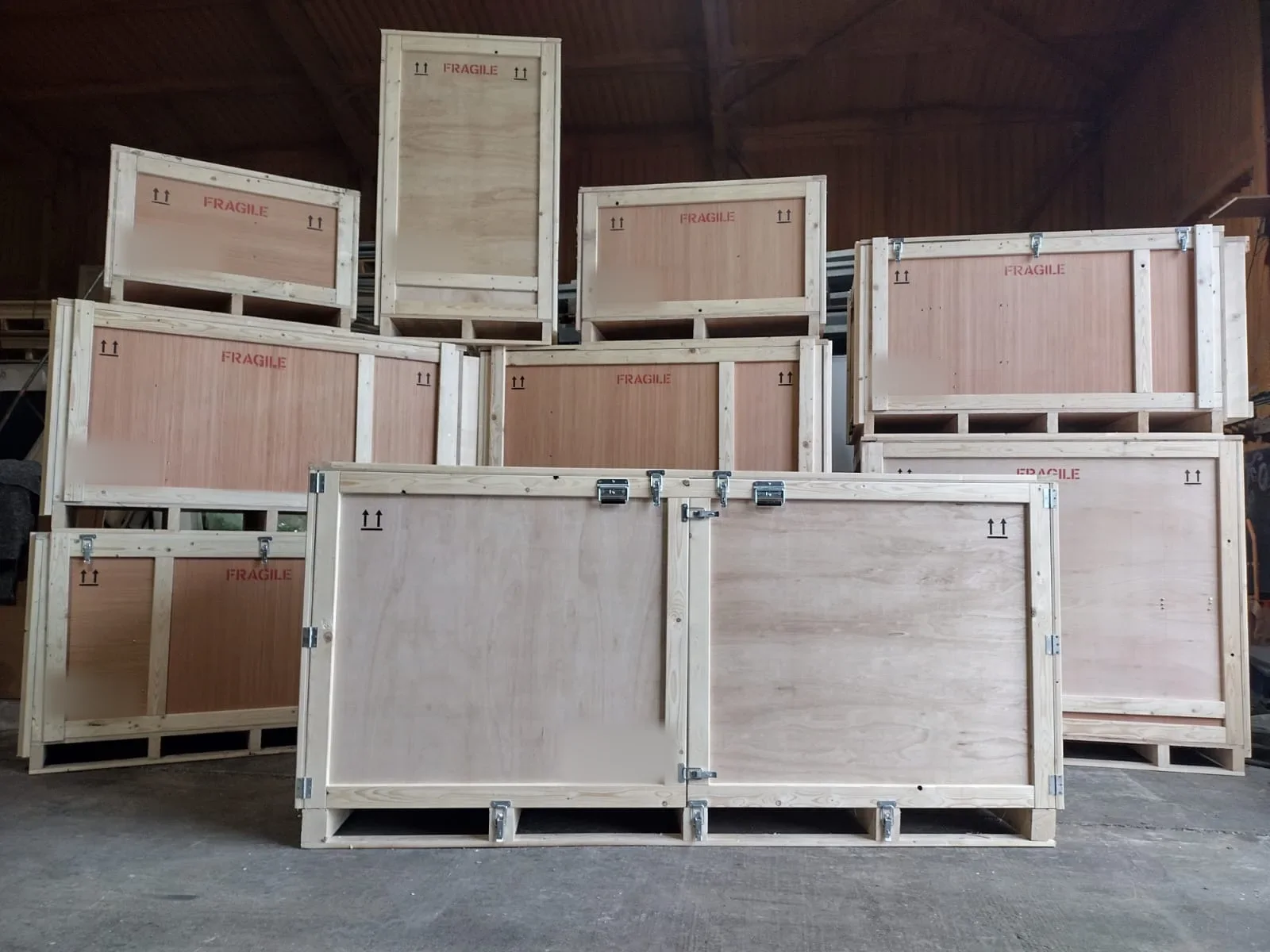
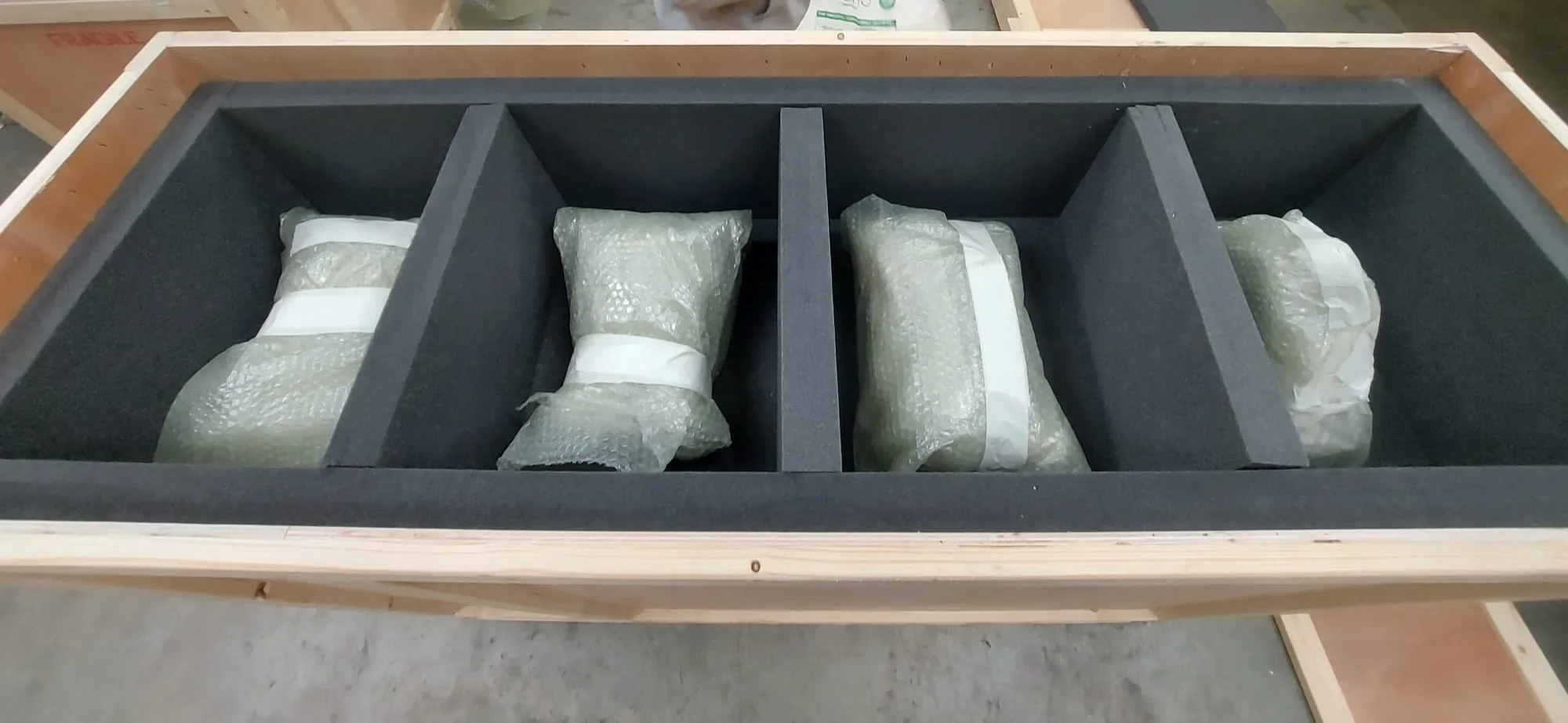
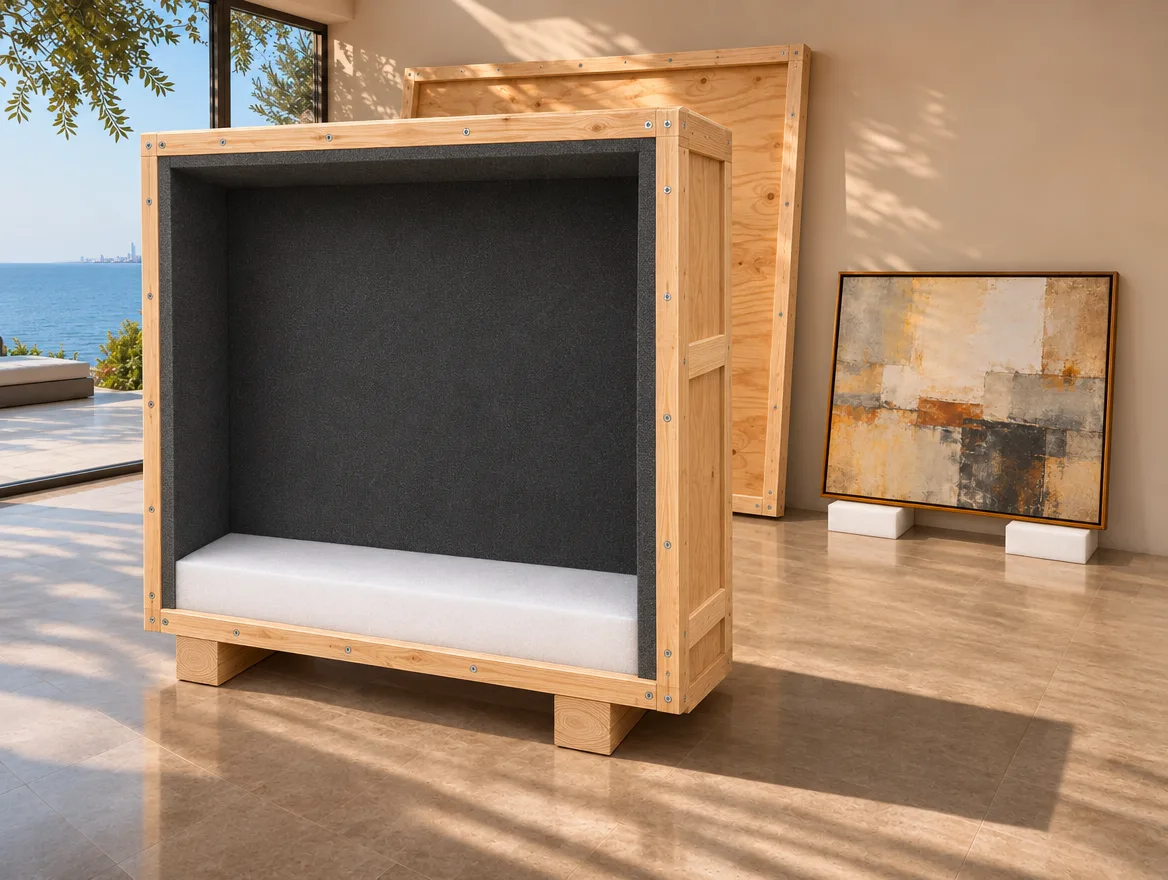
In our clock crates the case stands upright, held by padded battens and foam so it can't rock. The parts sit in their own cut foam compartments: the pendulum in one, each weight in firm high density foam, the movement and hood in theirs. Around the case we use HLB22 soft foam, which is gentle on veneer and glass. See what our crates are made of.
Going abroad? Wooden crates usually need to meet ISPM 15; ours are heat treated and carry our own registered stamp. Older clocks above certain values need an individual export licence; for many antiques over 50 years old the Arts Council threshold is £65,000. Check the current position on GOV.UK. We don't handle customs paperwork: export declarations, licences and import entries are arranged by you, your shipper or a customs agent.
Setting it up again and getting it level
Put the case where it will live, level it, fix it to the wall, then refit the movement, weights and pendulum and set it in beat.
Wind gently, and don't let the weights bang against the seatboard. If it won't run, call a clockmaker rather than forcing anything.
- 01Let it settle
If it has come from the cold or a long journey, let everything sit indoors for a day first.
- 02Level the case
A spirit level on the trunk, side to side and front to back. Thin packers under the front feet deal with uneven floors.
- 03Fix it to the wall
Restorers recommend screwing the case to the wall through the backboard, with a block to clear the skirting. A case that shifts lets the pendulum rub, and the clock stops.
- 04Refit the movement
Seat it centrally, check the lines are on their barrels or the chains on their sprockets, and take out every pad and tie you added.
- 05Hang the weights
Each one back where its label says. Check they hang clear of the pendulum.
- 06Pendulum and beat
Hook the pendulum gently onto the suspension and start it. The tick and the tock should be evenly spaced. If not, the clock is out of beat, and a very small bend of the crutch puts it right.
Two ways we can take over
If you would rather not do this yourself, we can help in one of two ways.
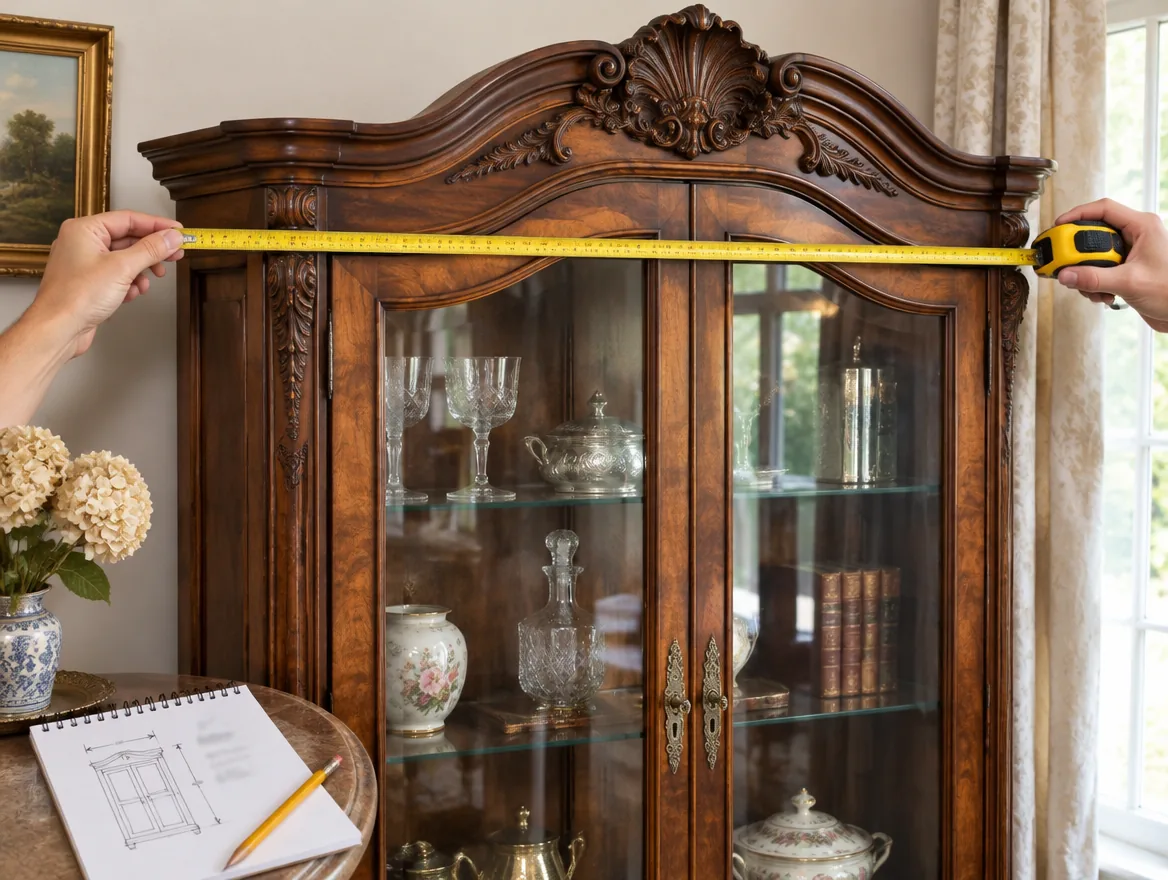
For the second way, measure carefully, because the crate is built to your numbers:
- Height from the floor to the top of the highest finial (tell us if the finials come off)
- Width across the widest point, usually the hood cornice or the plinth moulding
- Depth from the back to the furthest point of the hood or base
- Whether the hood, movement, weights and pendulum travel in the same crate
- A rough weight, and what the clock is: type, age and maker if known
If you want, we can also arrange the onward shipping. Transit insurance is bought by you, job by job; see insurance. Dealers, see dealers and interior designers. More on how we crate antique clocks, then request a quote.

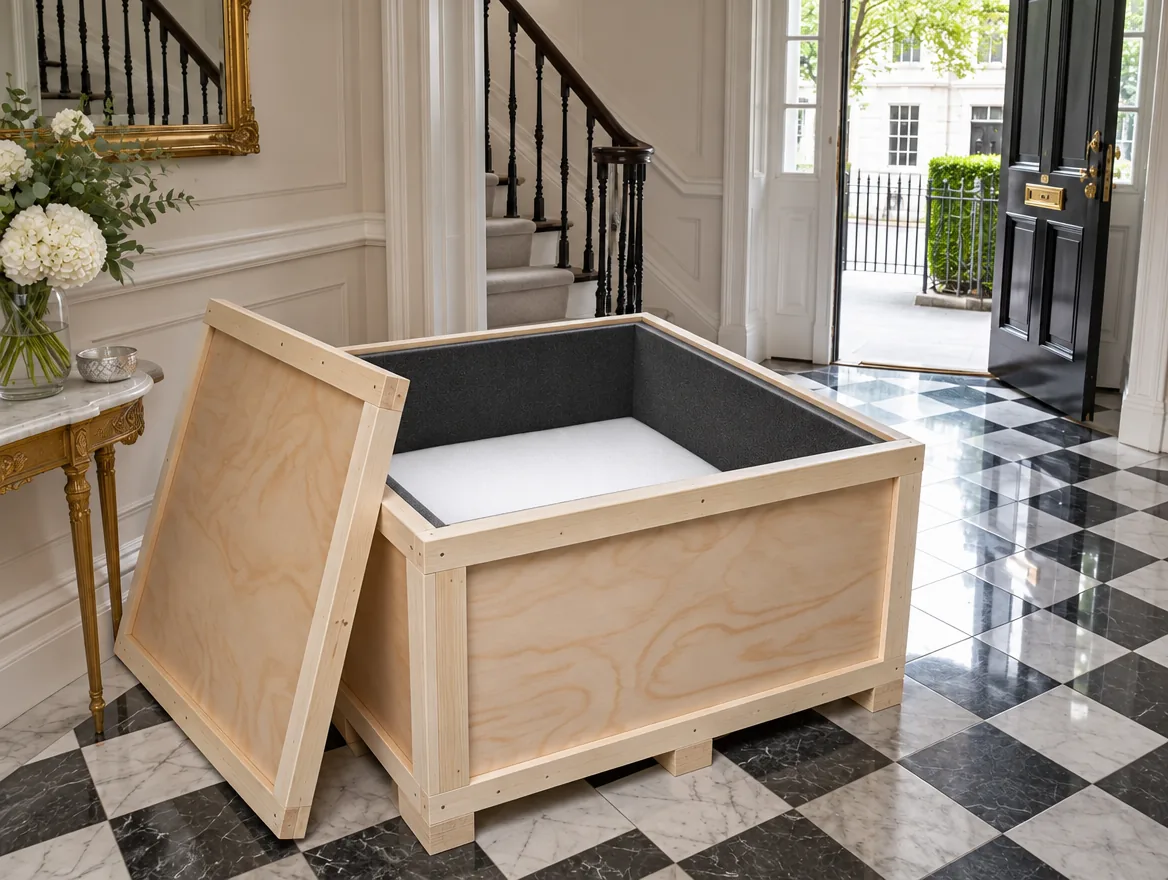
We collect the clock from the house, saleroom or dealer, pack each part and crate it at our warehouse. Your courier or shipper collects the finished crate from us. You don't measure anything. How collect and crate works.
You send us the sizes. We confirm them with you, build the crate to fit and deliver it to your address, ready for you, your clockmaker or your shipper to pack. Crates built to your measurements.
Common questions
How long should a grandfather clock settle before it is started again? +
There is no fixed rule, but letting the case and parts sit indoors for a day after a cold or long journey helps the wood and metal adjust. Then level it, fix it to the wall and start it.
Can I move a grandfather clock with the weights still on? +
It isn't a good idea. Hanging weights swing into the case, the glass and the pendulum. Take them off, label each one with its position, and pack them separately.
Why won't my grandfather clock run after moving it? +
Usually it is out of beat or not level. Listen for an even tick and tock, check the case with a spirit level and make sure it is fixed to the wall. If it still stops, call a clockmaker.
Does a grandfather clock need to be fixed to the wall? +
Clock restorers recommend it. A case that moves as the pendulum swings can stop the clock or let the pendulum touch the backboard. A screw through the backboard into a plugged wall usually does it.
Is it safe to lay a grandfather clock down? +
Upright is safest. If it really must tilt, take out the pendulum, weights, hood and usually the movement first, and support the case along its whole length.
Who should take the movement out? +
For a valuable, musical or temperamental clock, a clock specialist. The British Horological Institute lists accredited repairers. Many owners have their own clockmaker remove the movement and set it up again at the other end.
Can you ship a grandfather clock abroad? +
Yes. A lot of our crates go to the United States and Europe, and we can give options for anywhere in the world. Older, valuable clocks may need an export licence, which you, your shipper or a customs agent arranges.
How much does it cost to crate a grandfather clock? +
Every quote is bespoke, based on the clock itself, where it is going and how. Send us the details and photos and we'll come back with a price.
More on clocks and antiques
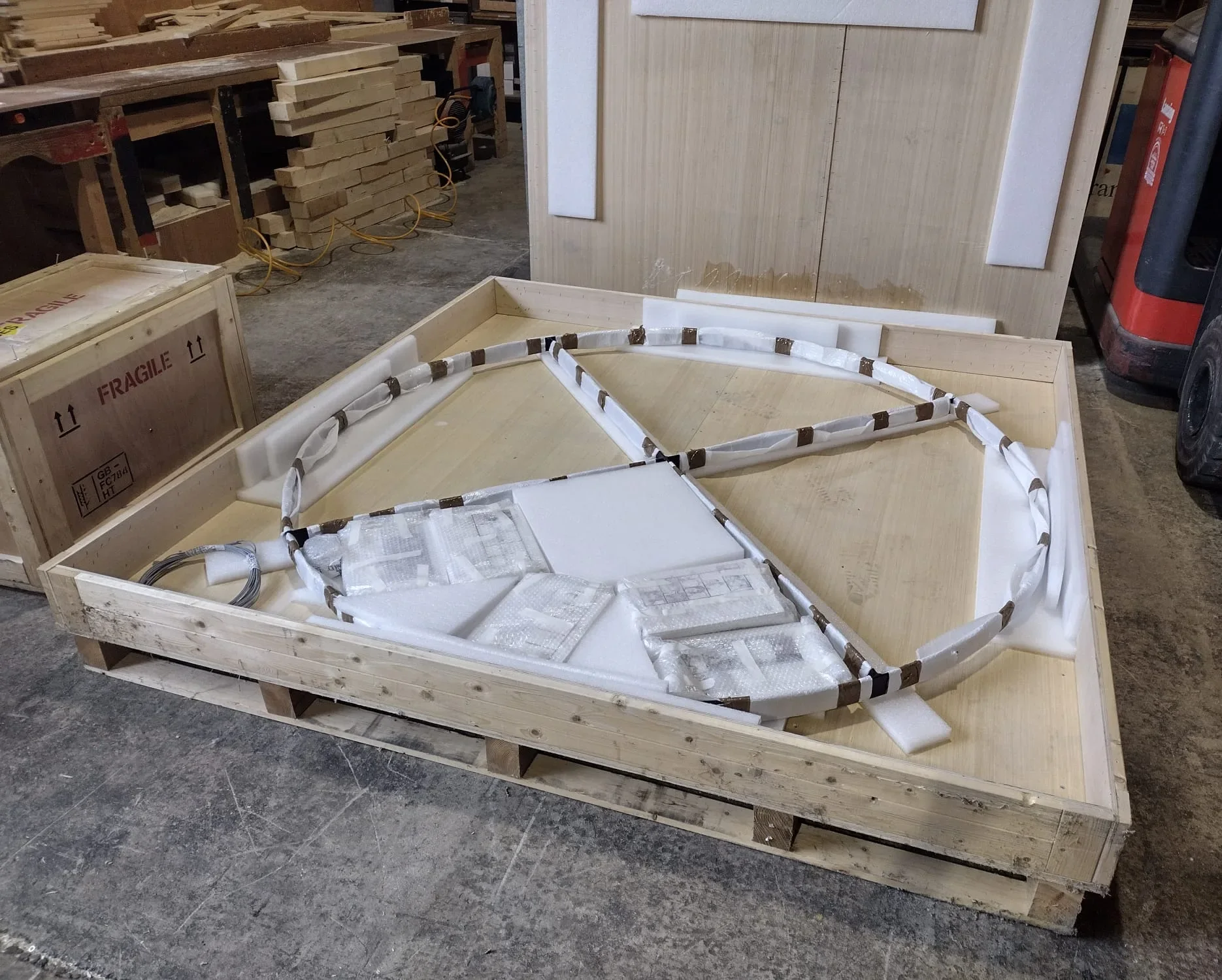
Every part in its own compartment.

Nothing to measure. We build the crate around the piece.
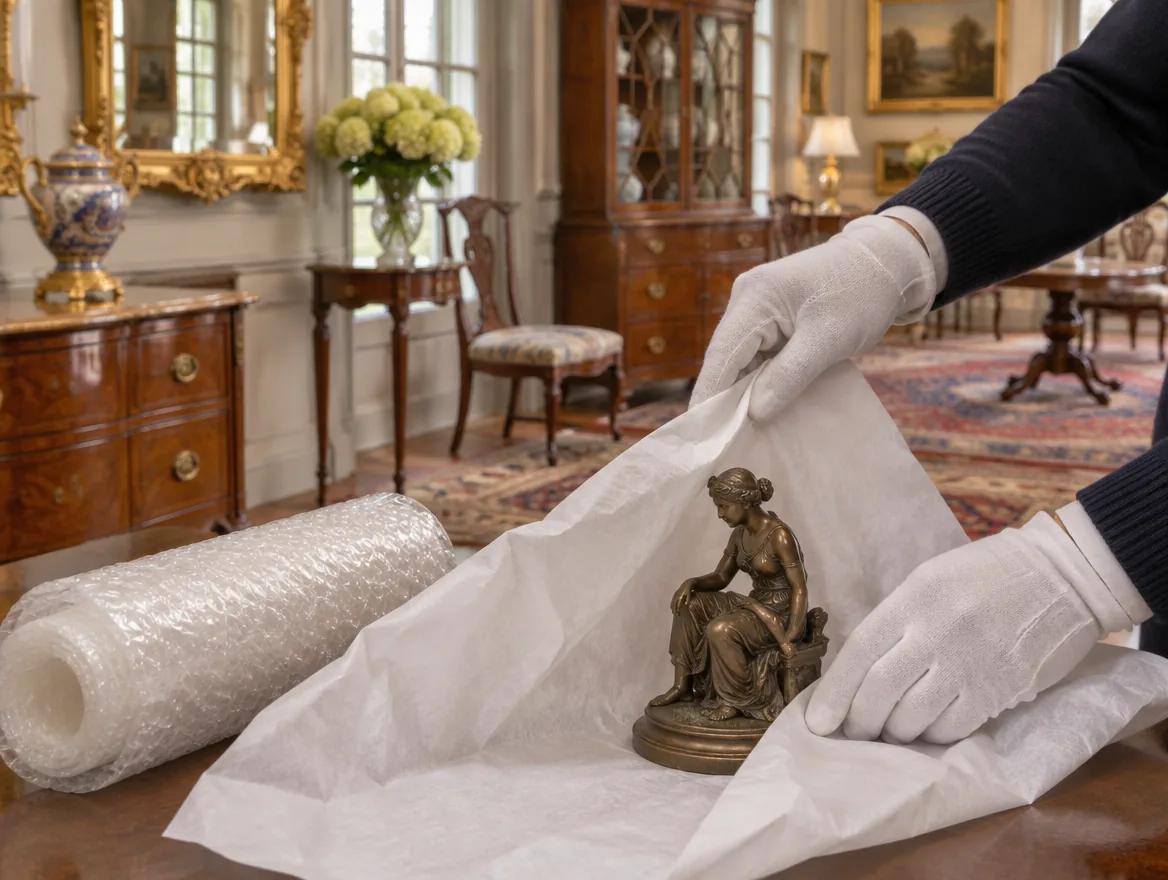
You measure, we confirm, build and deliver.
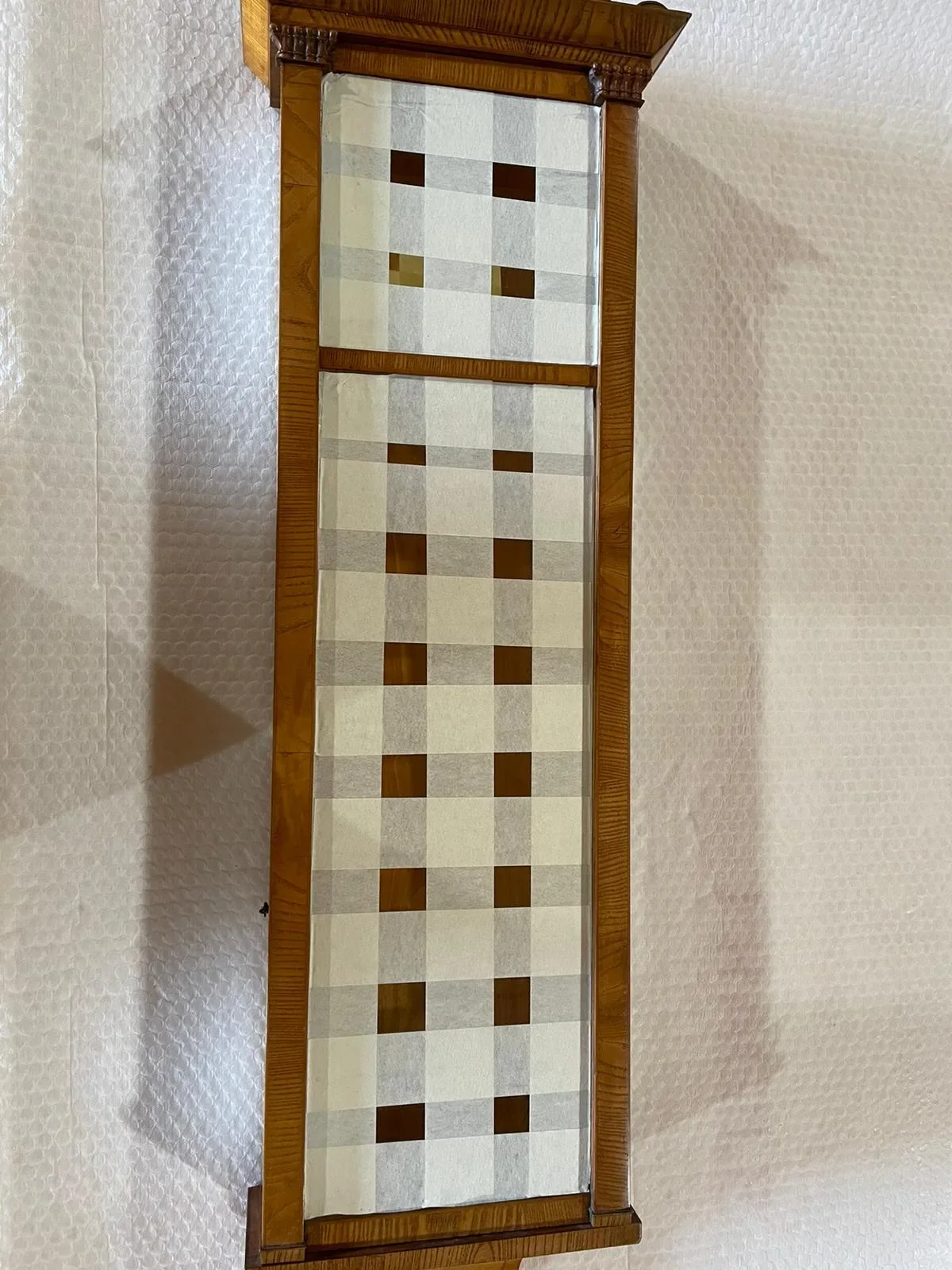
Clocks, mirrors, glass and collections.
Swipe for more →
Tell us what needs to travel.
Every quote is bespoke, based on the piece itself. Send us the details and we'll come back to you.